
Problem behaviours
How to stop a dog bolting out the door
A dog who bolts is not being defiant. For many dogs the open door is the most exciting thing in the day, and speed has been paying. What waits outside is the problem: a road, an icy street, a neighbour's dog. We treat this as two jobs that run at the same time: physical management that never comes off, and threshold practice that makes waiting worth the dog's while.
Last reviewed September 29, 2026
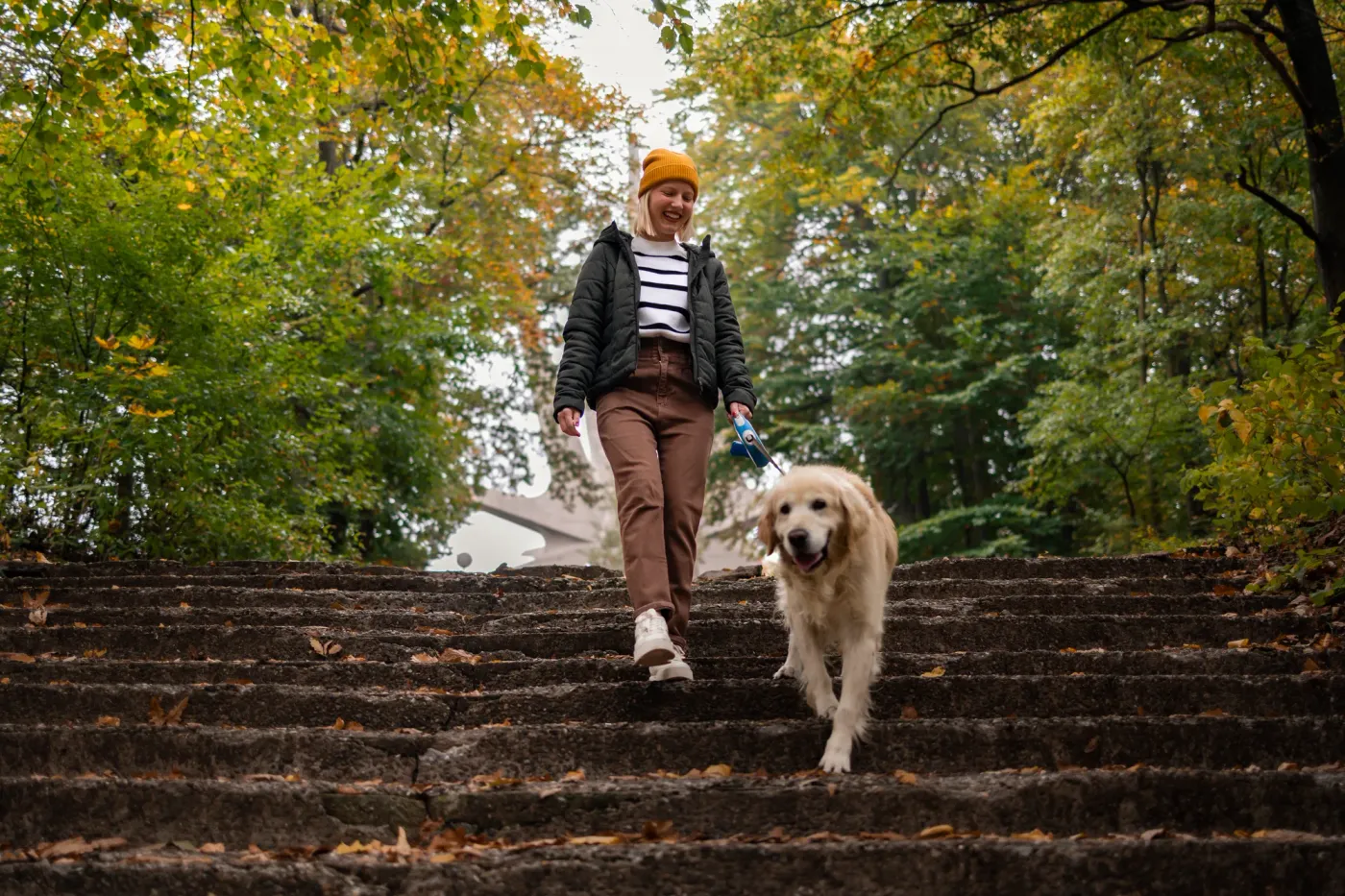
Leash, gate, then practice
Secure the dog before the handle moves, every single time.
We begin with management, and we are honest that it lowers the risk rather than removing it. A leash goes on before anyone touches the handle, with an adult holding the other end, and it hangs by the door so nobody has to hunt for it. A gate across the hallway means the front door opens into a closed space rather than a runway. Closing the garage and back doors behind us becomes a habit for the adults in the house.
Practice happens with the leash held and the gate closed. We ask for a sit, touch the handle, and reward the dog for staying put. Next rep, the door opens a finger's width, then closes gently and slowly, never on the dog. If the dog gets up, we simply guide it back with the leash and make the next rep smaller. The door opens wider only as the dog stays settled, and a release word becomes the only thing that ends the wait.
- Leash held before the handle
- Gate between dog and door
- Door never closes on the dog
- Release word ends the wait
Winter and visitors
Early dark, icy sidewalks and the visitor who props the door.
In Calgary the door problem has a season. By late afternoon in December the street is dark, sidewalks ice over, and a loose dog on a snow-packed road is hard for a driver to see and harder for an owner to catch. A dog who slips out in July and trots back is a different risk in January. If a bolt has happened once in winter, we treat the leash and the gate as fixtures, not as a phase.
The weak link is often another person: the visitor who props the door, the contractor who leaves the side gate open, the child racing for the school bus. An adult holds the leash or closes the gate before any door opens, and guests are told the dog waits. Children are not given door duty; they stay on the far side of the gate from the dog. Where the history is long, a professional can assess the risk and tailor the practice to your doors.
Asked and answered
The questions people ask us.
How do I stop my dog bolting out the door?
We secure the dog first: a leash held by an adult, or a closed gate between the dog and the door, before the handle moves. Then we practise small door movements, reward waiting, and add a release word that ends the wait. The leash and gate stay in use while the cue is being built and after.
My dog runs out the door every time it opens. Is that fixable?
Door dashing is a habit built on a big reward, and it is something we work on without promising an outcome. Management removes the reward while threshold practice teaches waiting, and a professional can assess the risk in your household and tailor the practice. Private Training, a one-hour session at $150 plus GST, comes with a written weekly plan customized to your home; the consultation is where we recommend a program, or a smaller one when it is enough.
What do I do with a door dashing dog when guests arrive?
An adult clips the leash on or closes the gate before the door opens; a place cue is a training goal, not a physical safeguard, so it is never the only thing between the dog and the street. We tell guests the dog waits and ask them not to call it to the door. Children stay away from the door and the dog while people are coming in.
Should I punish my dog for running out the door?
No. A dog who is punished on return can learn that coming back is the unpleasant part, which can make the next return slower. We reward the return every time, then go back to the door and rebuild the management and the wait.
Keep reading
Make the door boring
Book a consultation and we will talk through your doors, your household and your dog before recommending a program.
From real owners
Rated 5.0 on Google.
Real Northline dogs