
The method
How to get a dog to accept a new puppy or dog
Bringing home a second dog feels like a gift for the first one. The first one rarely reads it that way. To an adult dog, a new puppy is a stranger who took the toys, the lap and half the attention in one afternoon. Acceptance is built, not assumed, and the build has a sequence: neutral introductions, separated resources, and an adult whose rights stay intact.
Last reviewed August 26, 2026

The slow merge
Neutral ground, parallel walks and separate everything.
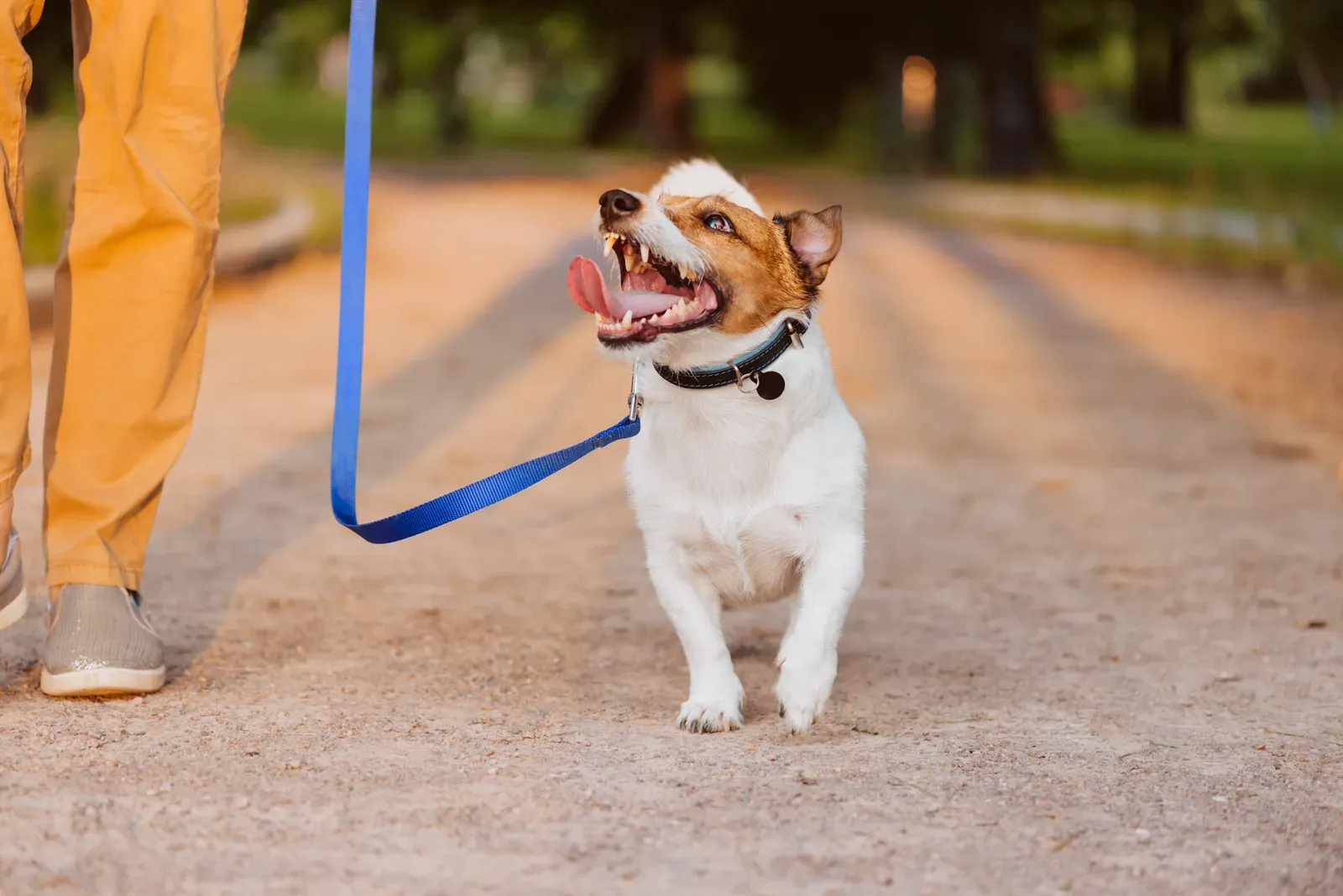
Skip the driveway meet-and-greet. Start with a parallel walk on neutral territory: two handlers, two leashes, a few metres apart, everyone moving the same direction. Walking together builds familiarity without the pressure of a nose-to-nose greeting. Close the gap gradually, letting brief sniffs happen in motion rather than in a frozen standoff. Only when both dogs look loose and easy outside does the newcomer enter the house, and the resident dog walks in first.
Inside, run two households for a while. Separate crates, separate bowls fed in separate rooms, toys picked up off the floor, and rotating one-on-one time so the adult still gets you to itself. The resident dog keeps its rights: its bed is off limits to the puppy, and it is allowed to leave. A low growl at a rude puppy is communication, not a crisis. Plan on weeks of managed coexistence before unsupervised time together. Days are not enough.
- Parallel walks before greetings
- Separate bowls, crates, toys
- The adult keeps its bed
- Weeks of supervised coexistence
Harder cases
Reactive residents and senior dogs need a longer runway.
A resident dog that already lunges at dogs on walks will not magically adore one in the kitchen. Work the reactivity first, or at minimum run a long decompression period: baby gates, crate rotation and scent swapping for a week or more before the dogs ever share a room. With seniors, the math is different but the answer is similar. An arthritic twelve-year-old cannot enforce boundaries with a bouncing puppy, so you do it instead, with pens and scheduled puppy naps.
If the resident dog's issue is bigger than rusty manners, deal with it as its own project. Our Behaviour Rehab board and train takes on reactivity and aggression over five to six weeks, customized after a full assessment, so the newcomer meets a calmer dog. For a puppy arriving without skills, Puppy Fundamentals covers crate comfort, name and manners in three weeks. Two trained dogs merge far more smoothly than two untrained ones, and we will tell you honestly which dog needs the work.

The programs
Extra hands for the introductions.
When the mix needs a professional read, these are the options.
W · One-hour session
Private Training
One-on-one coaching with you on the other end of the leash.
Includes a written weekly plan to work from
S · 5–6 week board & train
Behaviour Rehab
Kaitlin's specialty, and the work she loves most.
Includes assessment-built plan, 2 follow-ups, deep owner education
Asked and answered
The questions people ask us.
How do I get my dog to accept a new puppy?
Introduce them on a parallel walk on neutral ground before the puppy ever enters the house. Then keep resources separate, protect the adult's rest, and supervise every interaction for the first weeks. Acceptance grows from dozens of boring, managed encounters, not one big meeting.
How do I get my dog to accept a new adult dog?
The same staged process applies, with more care around status. Two adults negotiate harder than an adult and a puppy, so extend the parallel-walk phase, feed in separate rooms indefinitely, and remove contested items like chews entirely. Watch for stiffness and hard staring, and separate before trouble, not after.
How do I get my dog to be friendly with other dogs?
Set the bar at calm indifference rather than friendship. A dog that can pass other dogs without fireworks has a better life than one that must greet everyone. Build it with distance, engagement rewards and controlled setups, and let real friendships form slowly with a few well-matched dogs.
How long does it take for a dog to accept a new puppy?
Plan for a few weeks of managed coexistence at minimum, and a few months before the relationship truly settles. Some pairs click sooner; pushing rarely speeds it up. The clock resets if a scuffle teaches the wrong lesson, which is the strongest argument for going slow.
Keep reading
Two dogs, one plan
The newcomer or the resident, one of them needs work first. Book a consultation and we will map the merge.
From real owners
Rated 5.0 on Google.
Real Northline dogs