
The method
How to calm a hyper dog down
The dog is bouncing off the couch at nine at night, mouthing sleeves, unable to lie down for more than a minute. The instinct is to run it out of them. Usually that makes things worse, because the dog ends up tired and wired at the same time. Calm is a skill, and it starts with rest, structure and a way to switch off that the dog understands.
Last reviewed August 26, 2026
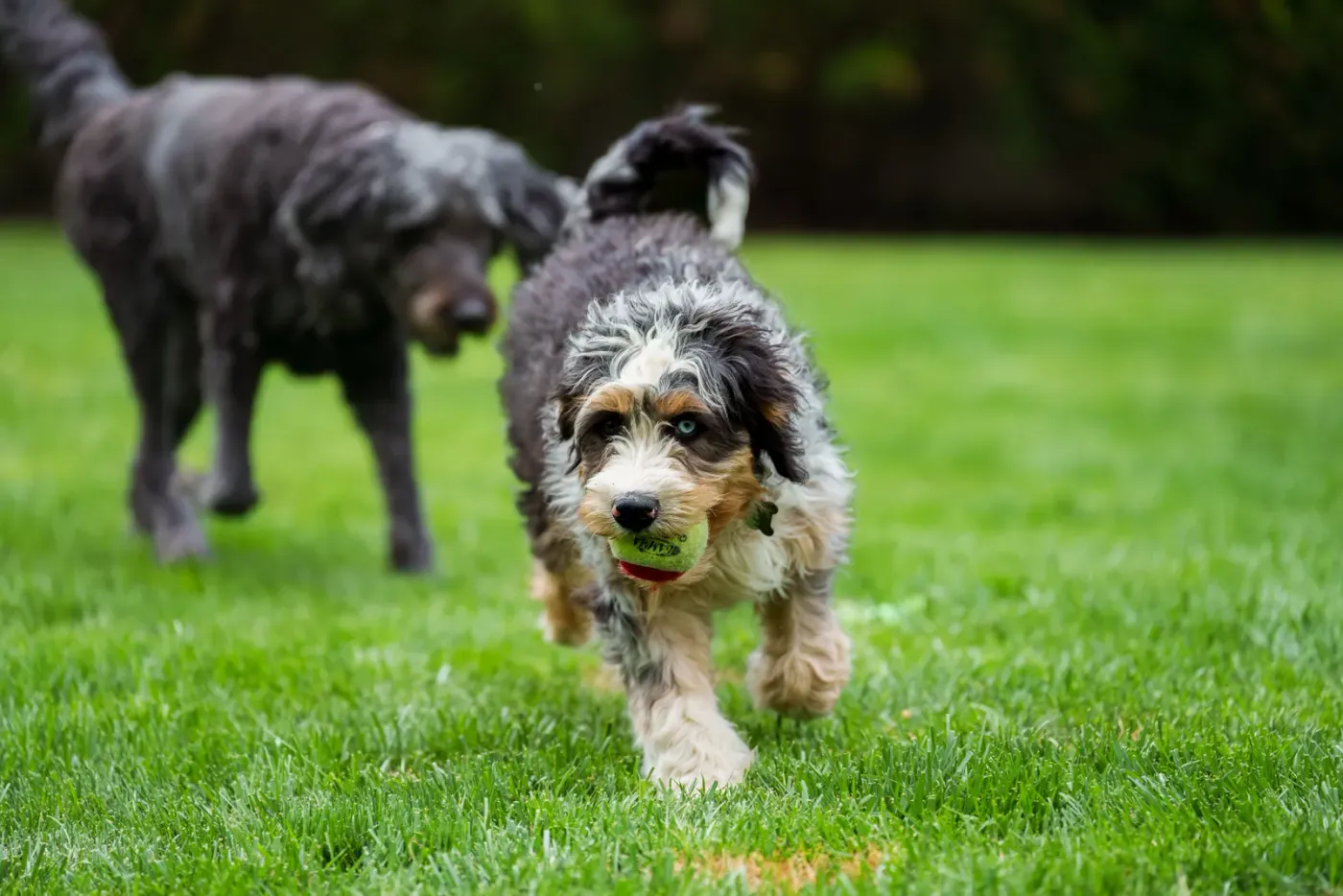
Tired and wired
Under-slept dogs cannot settle, so start with sleep.
Run a sleep audit before anything else. Write down when the dog actually sleeps, deeply and undisturbed, over two ordinary days. Many hyper dogs are dozing in a hallway with the family stepping over them and never getting real rest. Give the dog a crate or a quiet room, door closed, on a schedule: a rest block mid-morning, another in the afternoon, lights out at a fixed time. Overtired puppies get frantic, not sleepy, and the crate is where the frenzy stops.
Then teach the settle. Put a mat down, leash the dog to your chair, and pay for lying down with nothing asked. Stretch the time between rewards until the dog dozes off. Replace one frantic play session a day with a decompression walk: long line, quiet green space, no commands, just sniffing at the dog's pace. The off-switch is the final piece: a word that means the game is over, taught by ending play calmly on that word, every time.
- Log two days of real sleep
- Scheduled crate rest, door closed
- Pay the mat for doing nothing
- One word ends the game
Normal or not
Some breeds and ages are supposed to be like this.
A five-month-old retriever, a young herding dog or an adolescent bully breed is meant to have an engine. Hyper at that age is not a defect; it is a dog with a job description and no job. The fix is not less energy but better outlets: a few minutes of obedience that use the brain, something legal to chew, and a routine so predictable the dog stops anticipating. Adolescence is when the wheels come off and structure matters most.
When the household cannot supply that structure on weekdays, day training is the reset. Drop-off is between 8 and 10 am, the day runs on a structured routine of one-on-one training, rest and enrichment, and pick-up is between 5 and 7 pm with a dog ready to sleep rather than spin. It costs $650 per week plus GST and includes a one-hour go-home lesson each week, so you learn the settle, the off-switch and the sleep schedule the dog has been living on.
The programs
When teaching it yourself stalls.
The guide above is the real method. These are the faster routes.
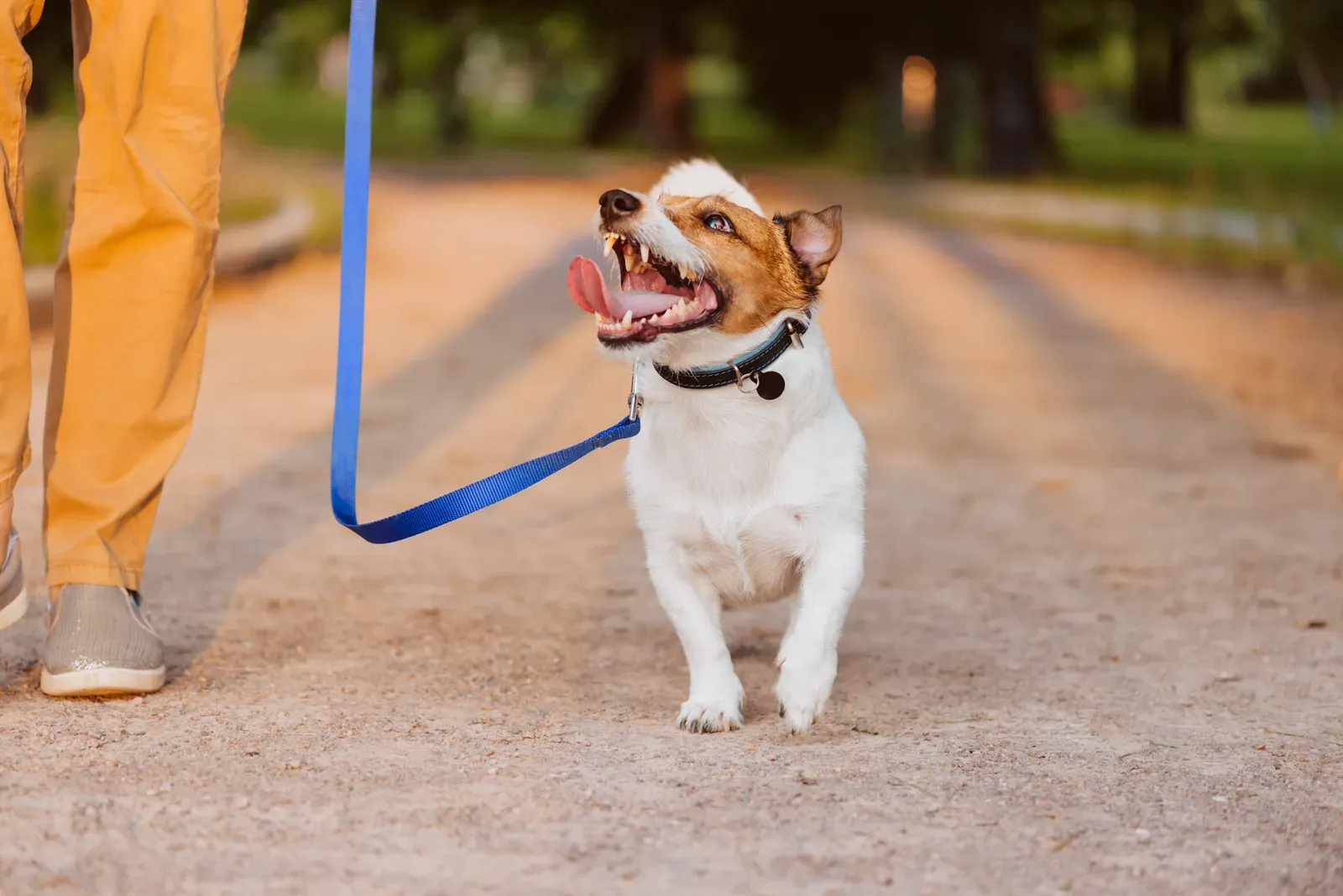
W · One-hour session
Private Training
One-on-one coaching with you on the other end of the leash.
Includes a written weekly plan to work from
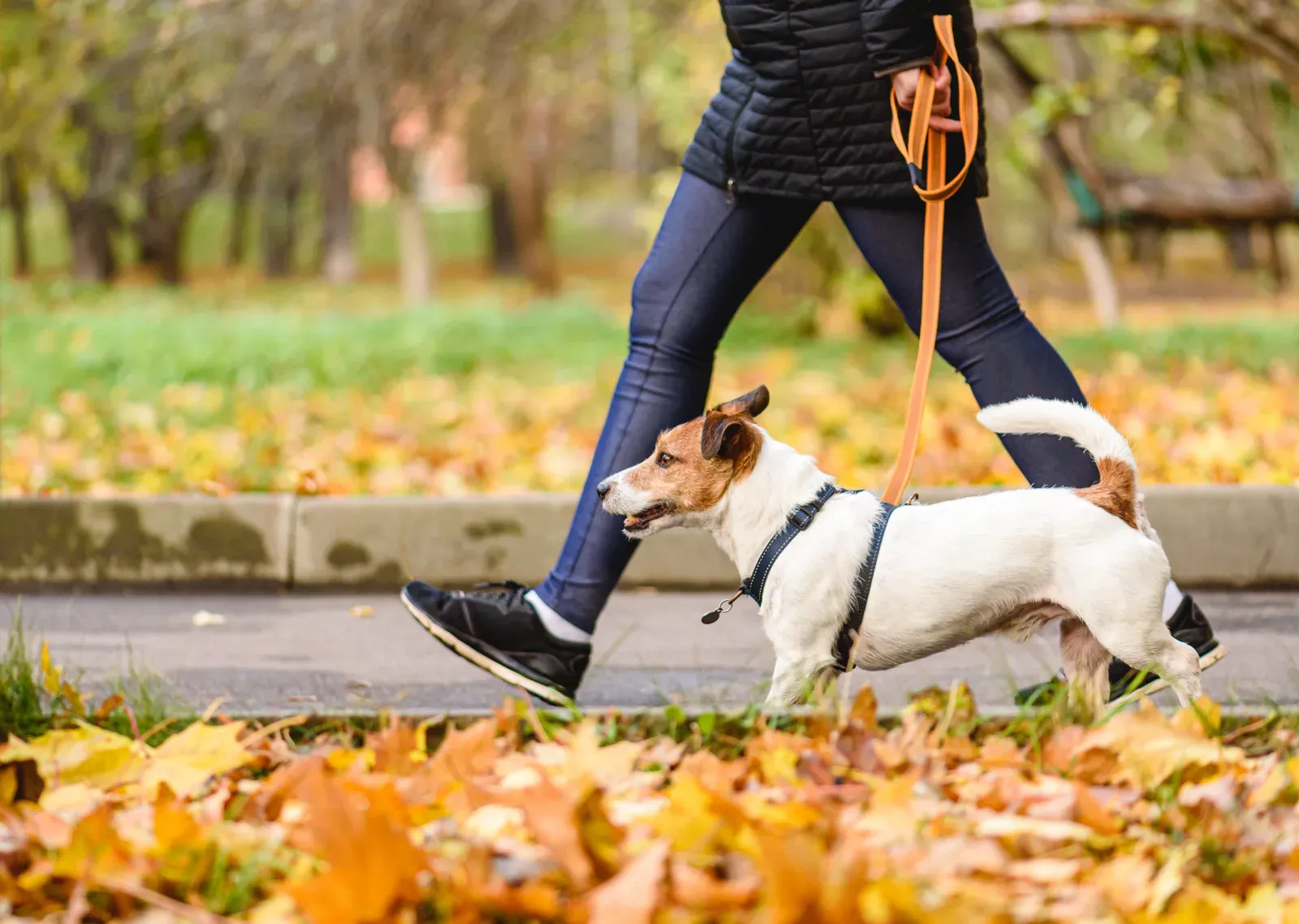
NE · 2-week board & train
On-Leash Foundations
If every walk is a wrestling match, pulling, barking, zig-zagging, this two-week program rebuilds the walk from the ground up with foundational on-leash obedience..
Includes handover lesson, follow-up session, lifetime support, slip lead + collar
Asked and answered
The questions people ask us.
How do you calm a dog down instantly?
There is no instant switch, but you can lower the temperature fast: put the dog on a leash, walk them calmly to their crate or mat, and stop all talking and touching. With nothing feeding the arousal, the dog can come down. The lasting fix is sleep and structure, not a trick.
How do I get my dog to chill out in the evening?
Evening chaos is usually an overtired dog, especially a puppy. Move the last big play session earlier, feed dinner from a puzzle feeder, and put the dog to bed before the zoomies start rather than after. Prevention beats intervention at nine o'clock.
How do you teach a dog an off switch?
Pick a word that means the game is over, say it once, then go still and put the toy away every single time. Pair it with a trip to the mat and a calm reward for lying down. With repetition, the word alone starts to bring the dog down.
How do I get my dog to calm down around visitors?
Leash the dog before the door opens and send them to a mat you have paid heavily in quiet moments. Ask visitors to ignore the dog until all four feet are on the floor and the body is loose. Calm greetings are rehearsed in advance, not negotiated at the door.
Keep reading
Give the days shape
Tell us what a normal evening looks like. Book a consultation and we will find where the rest is missing.
From real owners
Rated 5.0 on Google.
Real Northline dogs