
Problem behaviours
How to bond with a rescue dog
Bonding with a rescue dog rarely happens in one big moment on the couch. It builds in small, repeatable trades: you show up, something good happens, nothing scary follows. Food, walks and simple games are the easiest currency, because nearly every dog understands them. This page covers how to use each one without crowding a dog that is still deciding whether you are safe.
Last reviewed October 4, 2026
Before the bonding
Set up safety so trust has room to grow.
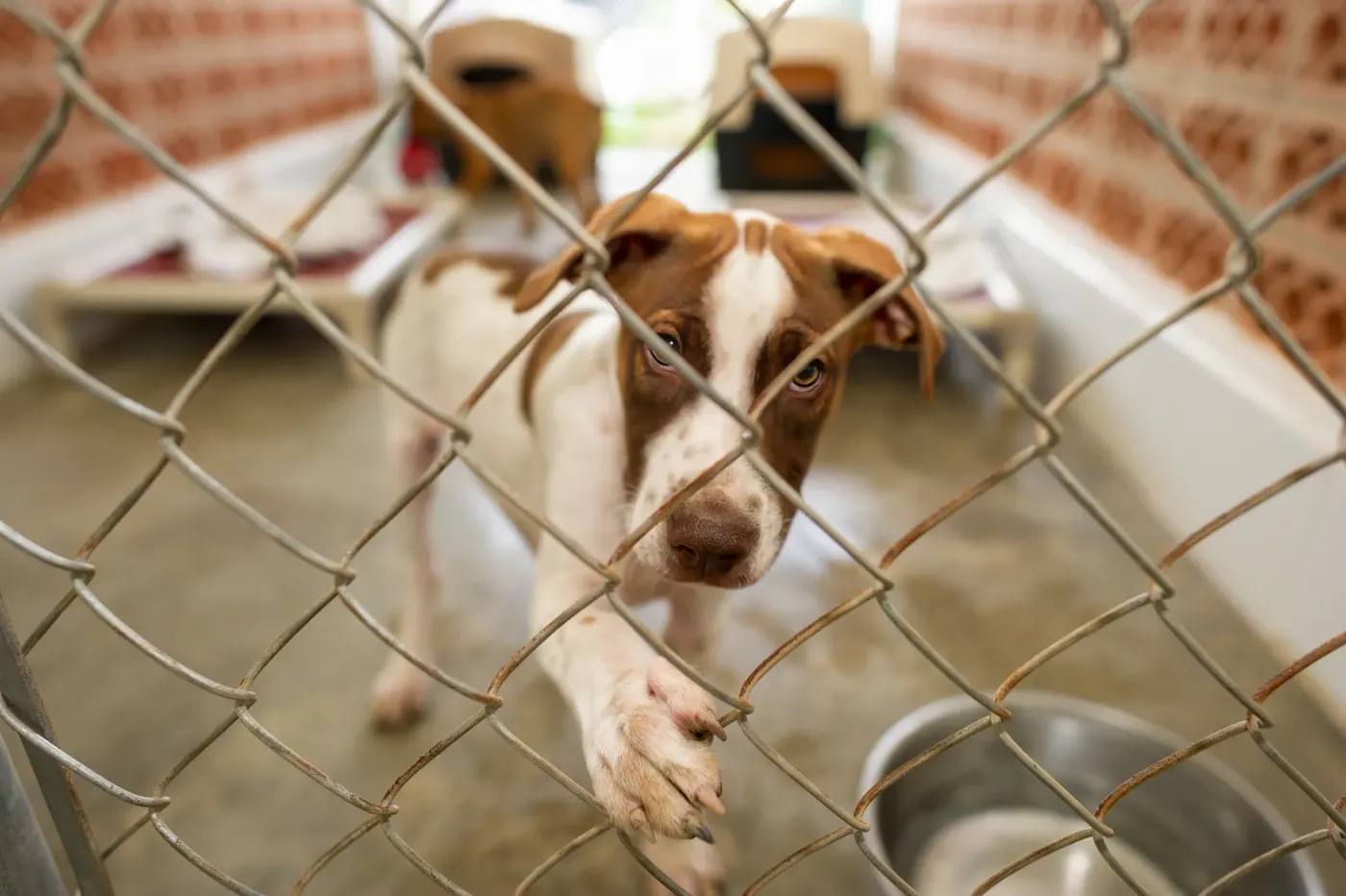
Trust grows faster when nothing goes wrong, so start with management. Feed the dog somewhere quiet where nobody walks past its bowl, and pick up high-value chews when other pets are around, since some newly adopted dogs guard food. Use a secure, well-fitted harness for every outing, with an adult holding the leash, and check the tag and microchip details are current before the first walk.
Hand-feeding needs its own safety rules. Offer food from a flat open palm or toss it to the floor if the dog grabs, and never ask anyone to hold still while a dog snatches at fingers. Children watch rather than hand-feed. Read the dog's body: a stiff freeze, a hard stare or a growl over food means give more space, and never punish the growl. Persistent guarding is a reason for a professional assessment.
- Feed in a quiet spot
- Adult holds the leash outdoors
- Open palm or toss food
- Children watch, never hand-feed
Three bonding habits
Hand-feeding, sniff walks and games the dog can win.
Measure out a portion of each meal and deliver it by hand: a piece when the dog glances at you, a piece when it lies on its bed, a piece tossed for it to chase. This turns you into the reliable source of good things without any pressure to be touched. Pair each piece with a marker word such as yes, so the word itself can start to mean something pleasant.
Walks tend to build trust best when they belong to the dog. Choose quiet routes, let it sniff, and keep your own attention on it rather than your phone. At home, play brief games it can win: find-it with treats scattered in grass or a towel, hand targets once it approaches you freely, or a calm tug that ends while it still wants more. Stop any game before the dog gets frantic or worried.
When bonding stalls
When a vet or a trainer should look at it.
A rescue dog that will not eat from your hand, flinches at ordinary movement, or avoids the family completely may be in pain, unwell or deeply frightened, and only a vet can rule out the physical side. Book a check-up first if appetite, energy or sleep has changed, or if the dog seems sore when it lies down or gets up.
If the vet finds nothing and the dog still guards, growls or panics, a professional assessment is the right next step. The program choice happens at the consultation, where a smaller option is recommended if it fits. Private Training is built for owners who want to do the relationship work themselves with a professional reading over their shoulder, with a written plan for your home. Behaviour Rehab is built for anxiety, reactivity and aggression, planned and priced after a full assessment. For the early weeks, see our first-30-days rescue guide.
Asked and answered
The questions people ask us.
How long does it take to bond with a rescue dog?
There is no fixed timeline, and every dog arrives with a different history. Watch for small signs instead: the dog choosing to lie in the same room, taking food softly, or checking in on walks.
Is hand-feeding good for bonding with a rescue dog?
Often, yes. Delivering part of each meal by hand links you with something every dog values, without asking for touch. Use an open palm or toss the food if the dog grabs, and keep children out of it.
Why does my rescue dog not like me?
Often it is not about you. Many rescue dogs are cautious with everyone at first, and some may be sore or unwell, so a vet check is a sensible starting point. Keep interactions predictable and let the dog approach on its own terms.
Should I let my rescue dog sleep in my bed to bond?
It is not needed for bonding, and a dog still learning the house is often better on its own bed nearby. Closeness without crowding does the same job. If the dog growls when disturbed on furniture, keep it off and get an assessment.
Keep reading
Build trust with a coach
Book a consultation and we will help you build a bonding plan that suits your rescue and your home.
From real owners
Rated 5.0 on Google.
Real Northline dogs