
Handling & care
Aggression at the vet or groomer
Plenty of dogs are sweet at home and a different animal the moment a clinic door closes behind them. The growl on the table is, in our experience, rarely a character flaw. More often it is a dog with no exit, a stranger's hands on the parts it guards most, and sometimes a memory of being held down. Here is how we approach the next appointment, and how we build cooperative care at home.
Last reviewed September 24, 2026
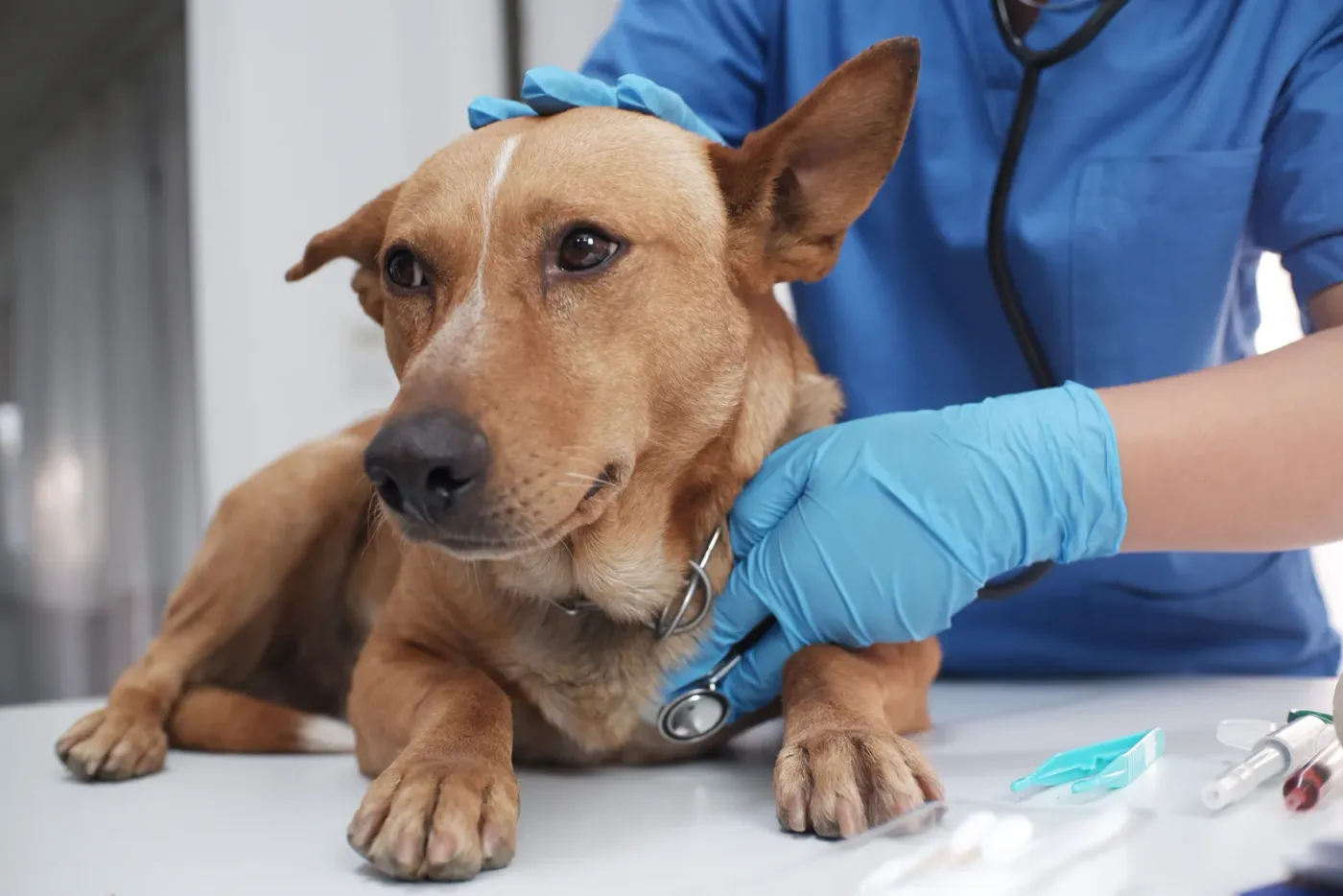
Why the table
Restraint, discomfort, history and strange hands can meet on the table.
Four things can meet on that table. Restraint: the dog may be lifted or held by a stranger, with no way to leave. Discomfort: a sore dog may react to a touch it would otherwise tolerate, so we ask owners to raise pain with the vet before anyone calls it a training problem. History: a dog that was overpowered at a clinic or grooming table may remember the room. And handling itself: strangers touching feet, ears and mouth, places many dogs guard at home.
The next appointment is about safety, not fixing anything. We condition a basket muzzle at home first, so the dog already knows it before it matters; a muzzle met for the first time in the parking lot can make the clinic worse. We recommend telling the clinic or salon what the dog does before the visit, and discussing timing with them, since a quieter slot may help some dogs. Questions about medication belong with the vet, and asking them is not a failure.
- Basket muzzle conditioned at home first
- Clinic or salon told in advance
- Timing discussed with the clinic
- Pain raised with the vet
Cooperative care
Daily handling at home, so the clinic's hands are not the first hands.
Cooperative care means the dog learns that being handled predicts good things. We start with what the dog already tolerates: a touch on one paw, mark, feed; an ear flap lifted, mark, feed; a lip lifted, mark, feed. We stop the second the dog stiffens or leans away, and go back a step next time. For a dog with any bite history, even those basics, and certainly lifts, holds and collar work, belong in a session with qualified guidance rather than at home unsupervised.
Once the basics are easy we add a chin rest: the dog parks its chin in a palm and holds it while the other hand works, and lifting the chin ends the exercise, the dog's opt-out. Private Training is a one-hour session at $150 plus GST with a written weekly plan, for owners doing the work themselves with a professional alongside. Dogs with a bite history are accepted into Behaviour Rehab after a full assessment. The consultation is where we recommend one.
Asked and answered
The questions people ask us.
Why is my dog aggressive at the vet but fine at home?
At home the dog is rarely lifted onto a table, held still by a stranger or examined in places it would rather keep to itself. At a clinic several of those can happen at once, with no way out. If there is a sore spot or a bad memory on top, some dogs with no history of biting can reach for their teeth, which is why we plan the visit around safety.
My dog bites at the vet. What should I do before the next appointment?
We recommend conditioning a basket muzzle at home over several days and telling the clinic exactly what the dog does so the team can plan. Appointment timing is worth discussing with them, since a quieter slot suits some dogs. Medication is a question for the vet, not a trainer, and it is a fair one to ask.
What is cooperative care for dogs?
Cooperative care is teaching a dog to take part in its own handling instead of enduring it. The dog learns that touches to paws, ears and mouth predict food, and it gets a clear way to say pause, usually by lifting its chin off a hand. We teach it with markers and rewards, a few minutes at a time, and with qualified guidance where there is any bite risk.
How do I get my dog to behave at the groomer?
We treat the groomer like the vet: a conditioned basket muzzle if there is any bite history, a heads-up to the salon about what the dog does, and short daily practice at home with the brush, the dryer sound and the feet. Shorter sessions at first, agreed with the groomer, suit many dogs better than a full groom in one go. If the dog has bitten a groomer, we recommend a professional assessment before another appointment is booked.
Keep reading
Handling, planned around your dog
Book a consultation and we will go through what your dog fights at the clinic, then plan the handling work with you.
From real owners
Rated 5.0 on Google.
Real Northline dogs