Breed guide
How to train a Shiba Inu
Shibas are honest about the deal. They learn fast, house train almost by themselves, then look at your cue and weigh whether it pays. Add the famous scream when handling goes wrong and a recall that evaporates near prey, and you have a breed that punishes sloppy training. This guide covers what living with one is really like, and the approach that works.
Last reviewed August 26, 2026
Living with one
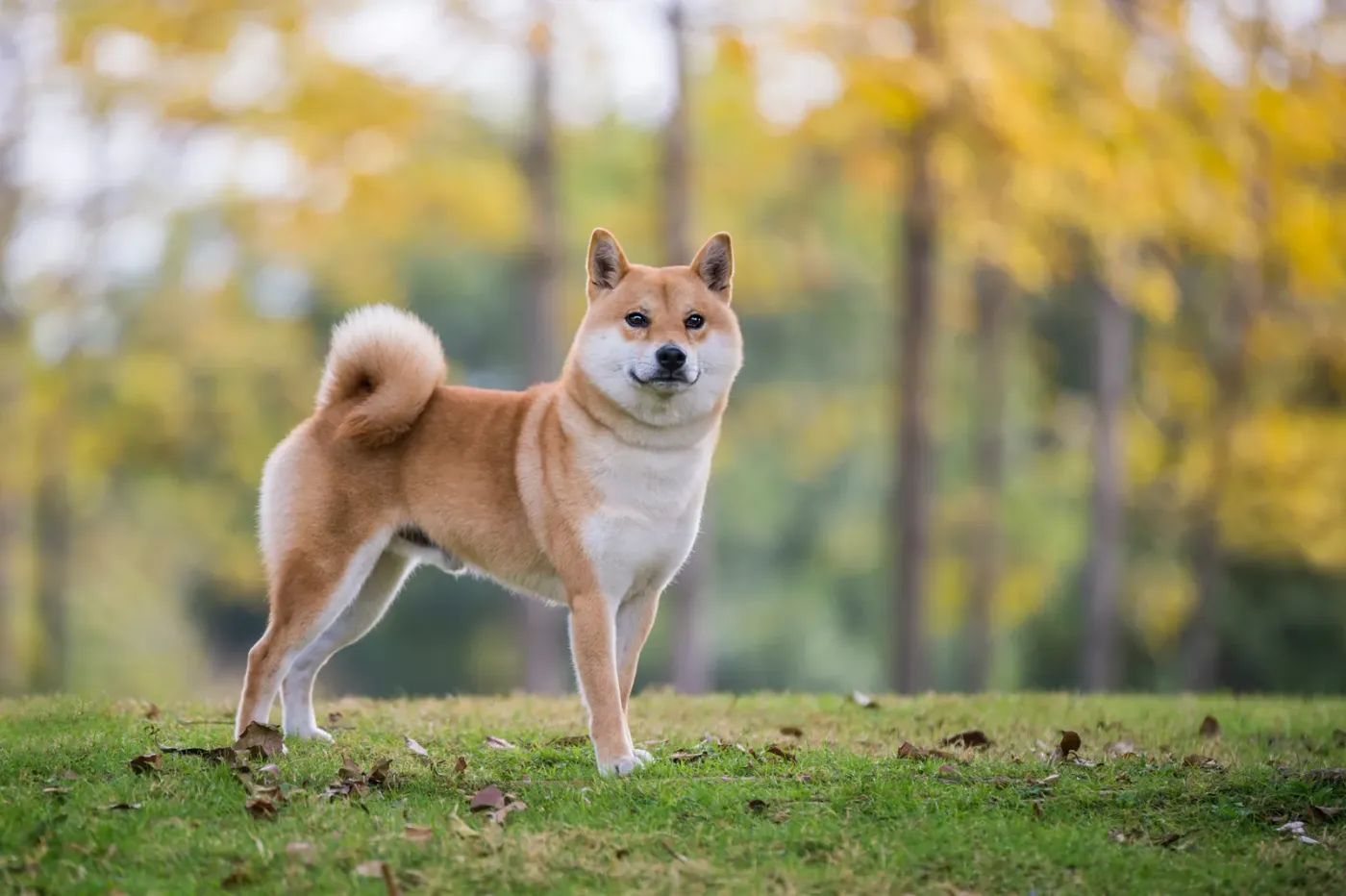
A cat in a dog suit, mostly.
The independence is real. A Shiba will happily share your home, follow you room to room, then decline a sit because nothing about the moment interests them. House training usually comes easily because the breed is naturally clean. Obedience is different: it is negotiated, every day, and the negotiation goes better when you hold something they want. Grabby handling, forced hugs or nail trims sprung without warm-up are how most owners first meet the scream.
Recall deserves its own paragraph. A Shiba recall is earned through months of paid repetitions, and even then the breed should never be trusted off leash in open areas. That is not a training failure, it is the dog. Adolescence makes it worse: the puppy who followed you everywhere starts testing which cues are optional. Owners who take that personally lose ground. Owners who quietly raise the pay and shorten the freedom get through it.
- Cat-like independence, daily negotiation
- House training comes easy
- Recall earned, never assumed
- The scream is normal
Training that fits
Make compliance the best deal in the room.
Start with markers and rewards, because this breed works for outcomes, not approval. Teach sit, down, place and loose-leash walking as paid skills, in short sessions that end before the dog checks out. Handle paws, ears and collar grabs early, paired with food, so the scream never becomes the default answer to touch. Long-line work builds the recall; the line only comes off in fenced space.
The common mistake is punishing the independence, which teaches a Shiba to avoid you, or repeating cues until they become background noise. Say it once, make it pay, or go back a step. In Calgary, where open natural areas sit at the edge of nearly every neighbourhood, keeping the leash on is not negotiable for this breed. For most Shibas the right fit is On-Leash Foundations at $1,865 plus GST; genuinely bold candidates can discuss Functional Off-Leash after an honest conversation.
The programs
Where this breed usually lands.
The programs below are the ones this breed most often needs; the consultation confirms it for your dog.
W · One-hour session
Private Training
One-on-one coaching with you on the other end of the leash.
Includes a written weekly plan to work from
NE · 2-week board & train
On-Leash Foundations
If every walk is a wrestling match, pulling, barking, zig-zagging, this two-week program rebuilds the walk from the ground up with foundational on-leash obedience..
Includes handover lesson, follow-up session, lifetime support, slip lead + collar
Asked and answered
The questions people ask us.
Are Shiba Inus easy to train?
Easy to house train, hard to impress. A Shiba learns cues quickly, then complies selectively, so progress depends on rewards, timing and consistency rather than repetition. Plan for a dog that always asks what compliance pays.
How should Shiba Inu puppy training start?
Start the day the puppy comes home: pay every voluntary check-in, pair handling with food, and make the crate a good place to be. Socialize deliberately to people, surfaces and sounds while the window is open. Our Puppy Fundamentals board and train ($2,775 plus GST, three weeks) covers exactly this stage.
What are the best Shiba Inu training tips?
Say cues once and make them pay. Keep sessions short, end early, and use a long line anywhere unfenced. Never chase a loose Shiba; run the other way, get low, and make yourself the most interesting thing in the field.
What are common Shiba Inu behaviour problems?
The classics are ignored recalls, drama around handling and nail trims, including the famous scream, and obedience that arrives only when it pays. Most of it traces back to independence rather than fear. Structured training and paid cooperation shrink all of it.
Keep reading
Negotiate from strength
Tell us what your Shiba ignores and where. Book a consultation and we will map the honest route to a reliable dog.
From real owners
Rated 5.0 on Google.
Real Northline dogs