
Breed guide
How to train a Samoyed
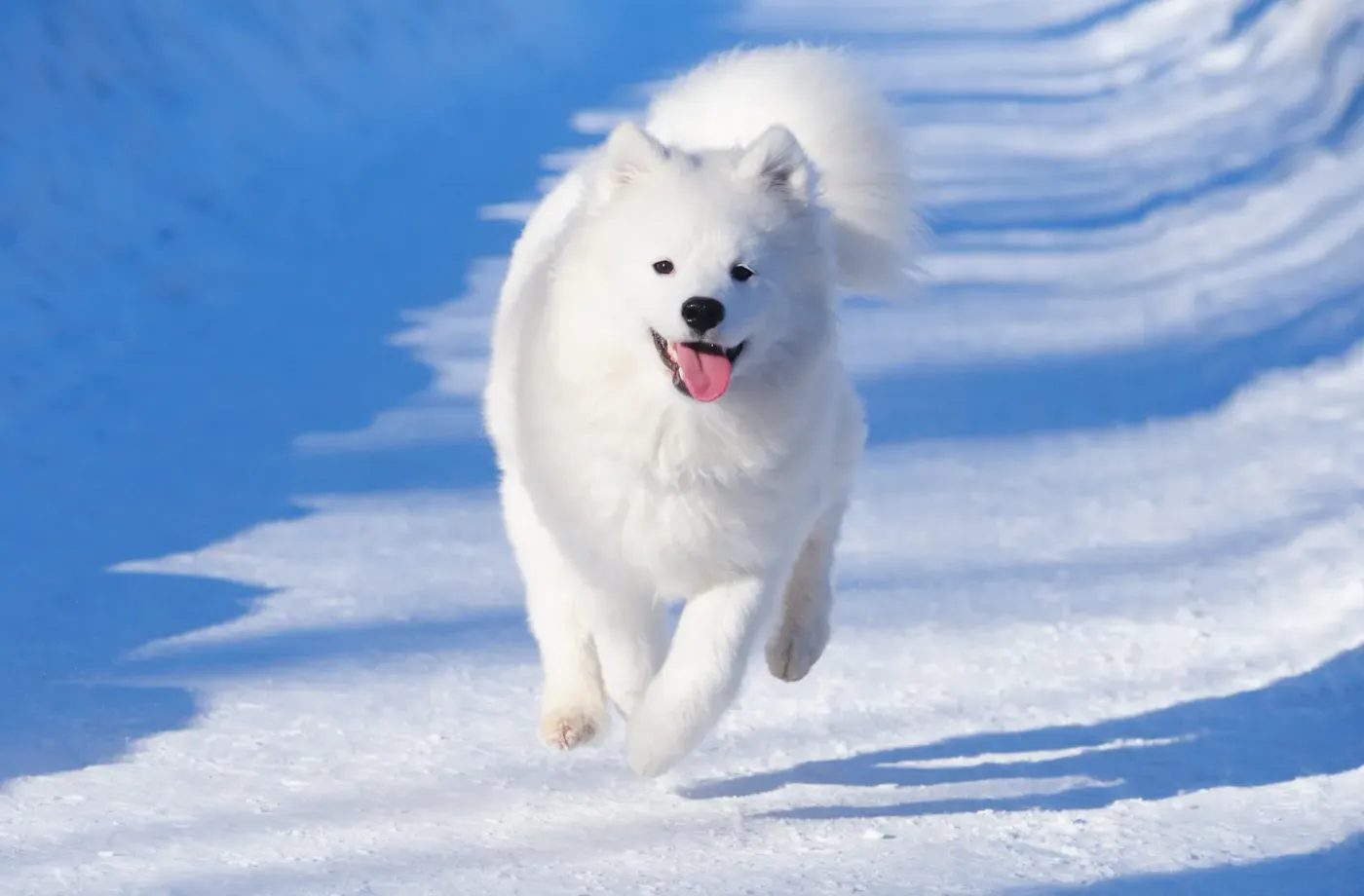
The Samoyed smile is real, and so is the independence behind it. This is a sled dog that was bred to run, pull and make decisions at a distance, which explains the selective hearing, the running commentary and the leash that never quite goes slack. Training one works. It just works differently than it does with a breed built to take orders.
Last reviewed August 26, 2026
Know the breed
A smiling dog with its own agenda.
Samoyeds talk. They woo at the doorbell, narrate your phone calls and bark at things you cannot see, and every reaction from you gets filed as applause. They pull because pulling was the job for centuries, and they leave because leaving is interesting: an open gate is an invitation, not a mistake. None of this is disobedience. It is a working breed doing exactly what it was designed to do, in a house instead of a harness.
Adolescence sharpens all of it. The fluffy puppy that followed you everywhere starts testing whether commands are suggestions, and recall is usually the first casualty. The coat adds a job most owners underestimate: a Samoyed that has not learned to stand calmly for brushing turns grooming into a wrestling match, and the coat does not give you the option of skipping it. Handling practice is training, and it starts long before the first mat.
- Vocal by design, not by accident
- Recall needs building, not hoping
- Brushing tolerance is a trained skill
- Pulling and roaming are factory settings
What actually works
Pay well, proof everything, brush daily.
Markers and generous rewards come first, because a Samoyed keeps a running tally of whether listening pays. Recall is the priority skill: build it on a long line, reward it like it saved a life, and never call the dog to end the fun. For genuine off-leash freedom, a modern Educator remote collar, introduced properly and taught to the owner, gives an independent breed clear communication at the distances it loves to work at.
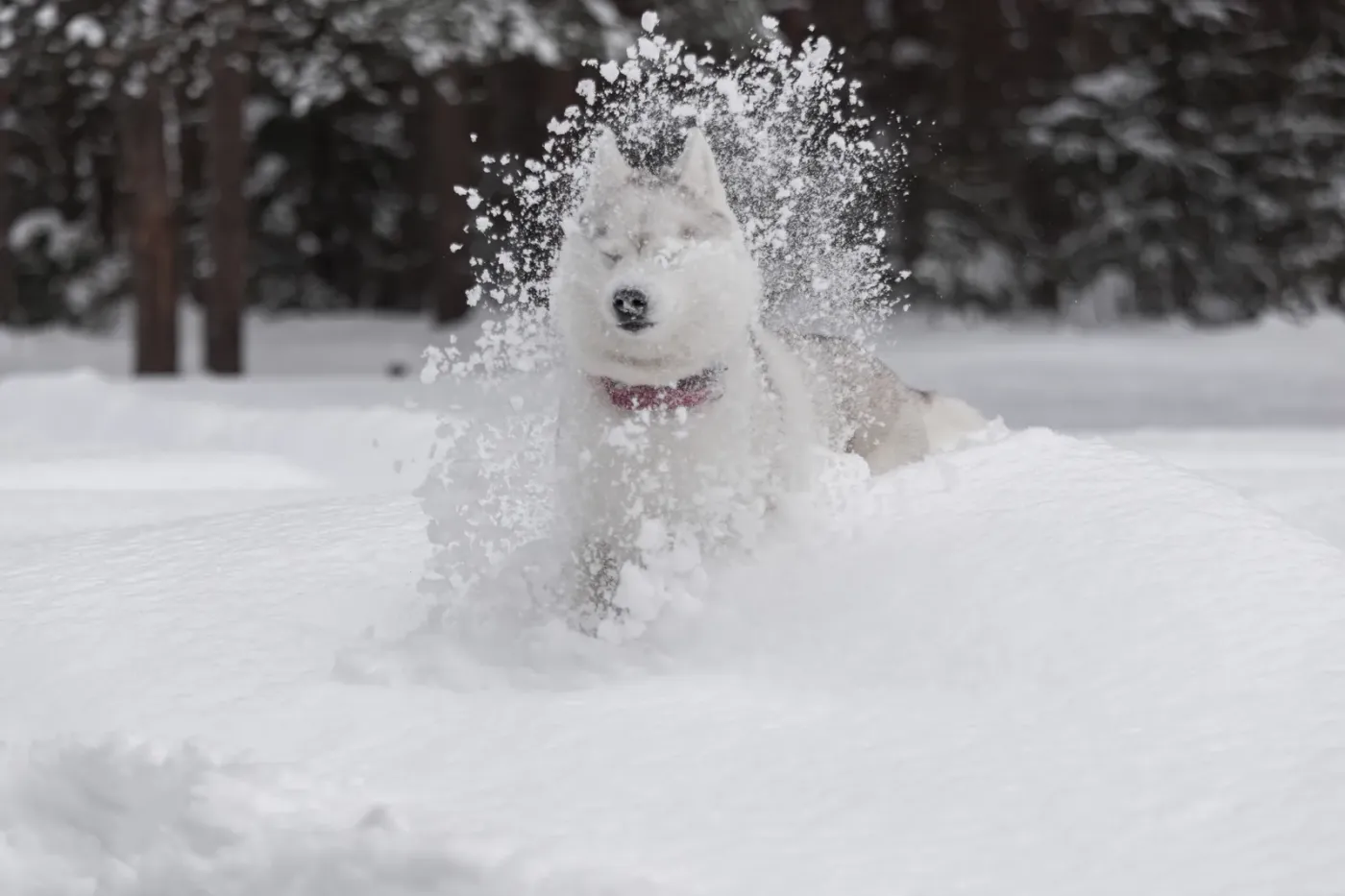
The classic mistake we see is treating the barking as a phase and the pulling as a quirk until both are habits with years of practice behind them. Calgary suits this breed: a Samoyed is built for winter and will happily train through the coldest week of January, so do not let the season stall your progress. For most Samoyeds the best fit is Functional Off-Leash, a 3-week board and train at $3,030 plus GST that builds reliable recall around real distractions.
The programs
Where this breed usually lands.
The programs below are the ones this breed most often needs; the consultation confirms it for your dog.
NE · 2-week board & train
On-Leash Foundations
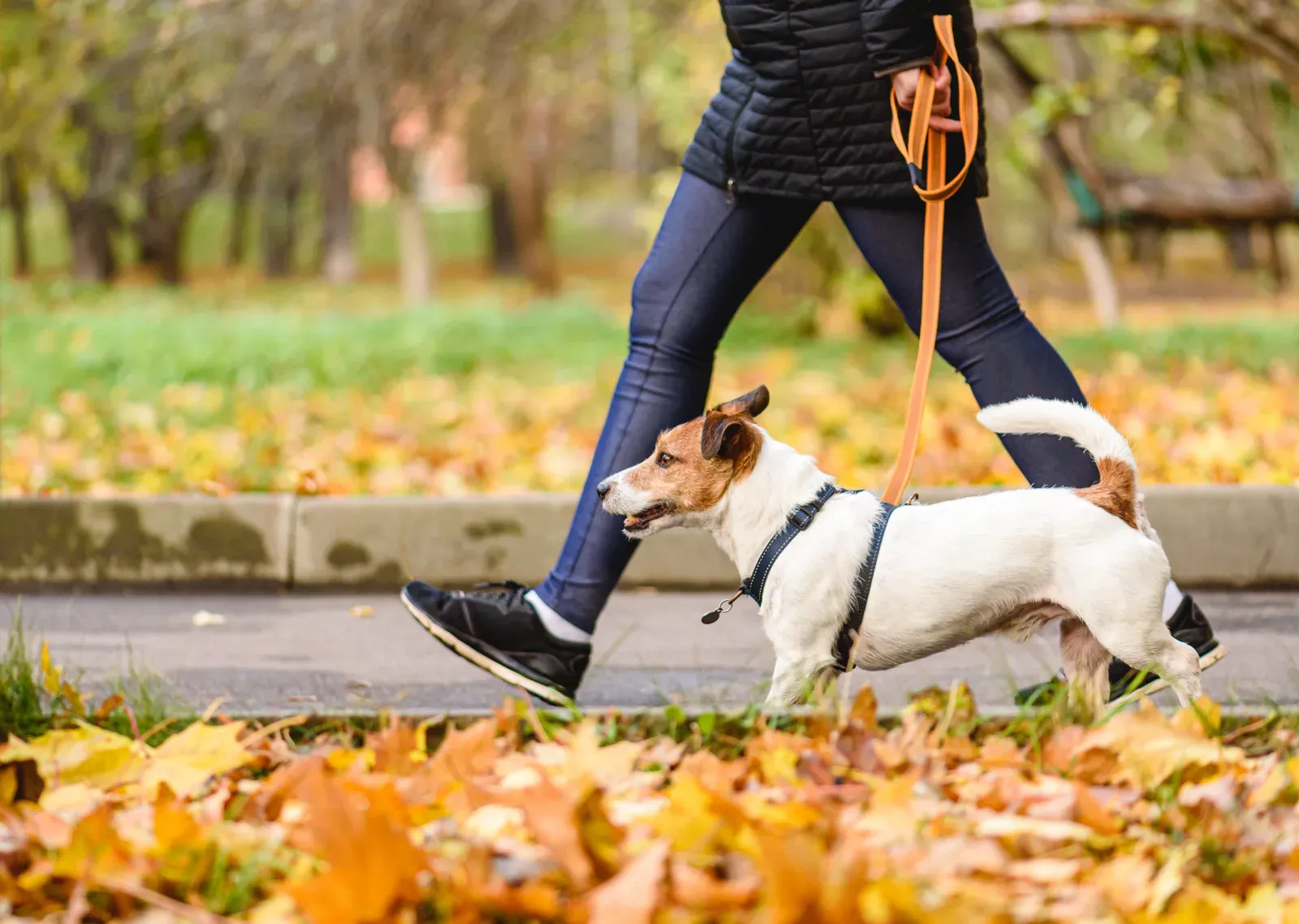
If every walk is a wrestling match, pulling, barking, zig-zagging, this two-week program rebuilds the walk from the ground up with foundational on-leash obedience..
Includes handover lesson, follow-up session, lifetime support, slip lead + collar
E · 3-week board & train
Functional Off-Leash
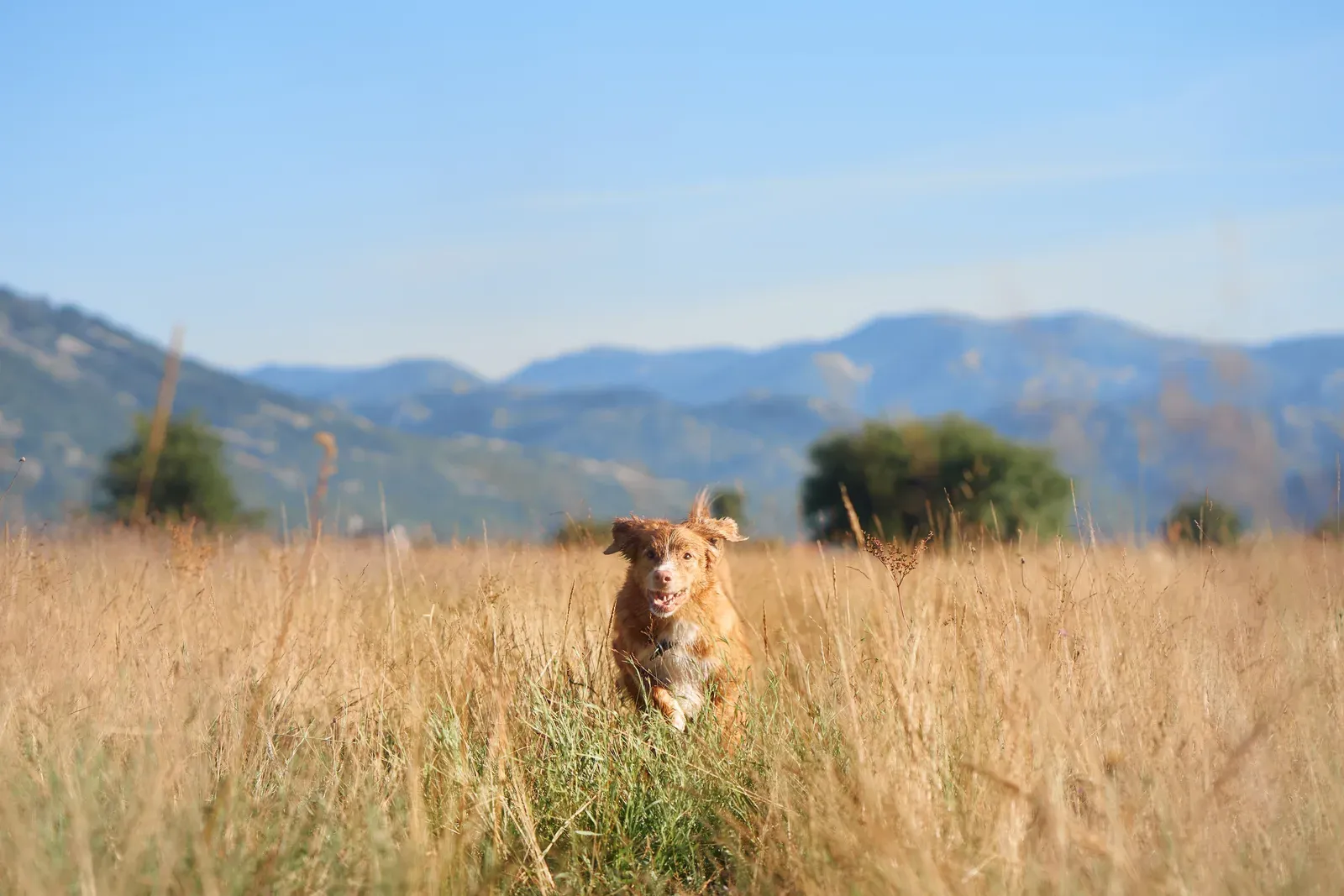
Everything in the on-leash program, then the next level: reliable off-leash recall even around distractions.
Includes handover lesson, follow-ups, Educator remote collar
Asked and answered
The questions people ask us.
Are Samoyeds easy to train?
They are quick to learn and slow to obey, which is different from being difficult. A Samoyed picks up a cue in minutes, then decides case by case whether it applies today. Clear rewards and consistent follow-through close that gap.
What are the most common Samoyed behaviour problems?
Barking, pulling and ignoring recall lead the list, with escape artistry close behind. All of it comes from the same place: an independent working breed with unspent energy. Meet the energy first and the behaviour work goes much faster.
When should Samoyed puppy training start?
The day the puppy arrives. Early wins are name response, crate comfort, daily handling of the coat, paws and ears, and rewarding every voluntary check-in. Recall habits formed in the first months are the ones that last.
Any Samoyed training tips that actually work?
Reward heavily, keep sessions short, and end before the dog opts out. Use a long line for months before trusting recall anywhere open. Treat brushing as training time with food, not a chore to be survived.
Keep reading
Recall you can trust
One-on-one training built around an independent breed, from first brush to off-leash freedom. Book a consultation.
From real owners
Rated 5.0 on Google.
Real Northline dogs