Calgary
Chinook season and board and train timing
Calgary can go from minus 25 to plus 10 inside a day. That swing changes how far a dog walks and how many other dogs are out. Owners ask whether to hold a board and train until the weather steadies. We think the opposite: a winter program that trains straight through chinook season sends home a dog who has worked on both kinds of day, and an owner with a plan for each.
Last reviewed October 4, 2026
Training through the swing
Why the program should not wait for the weather to settle.
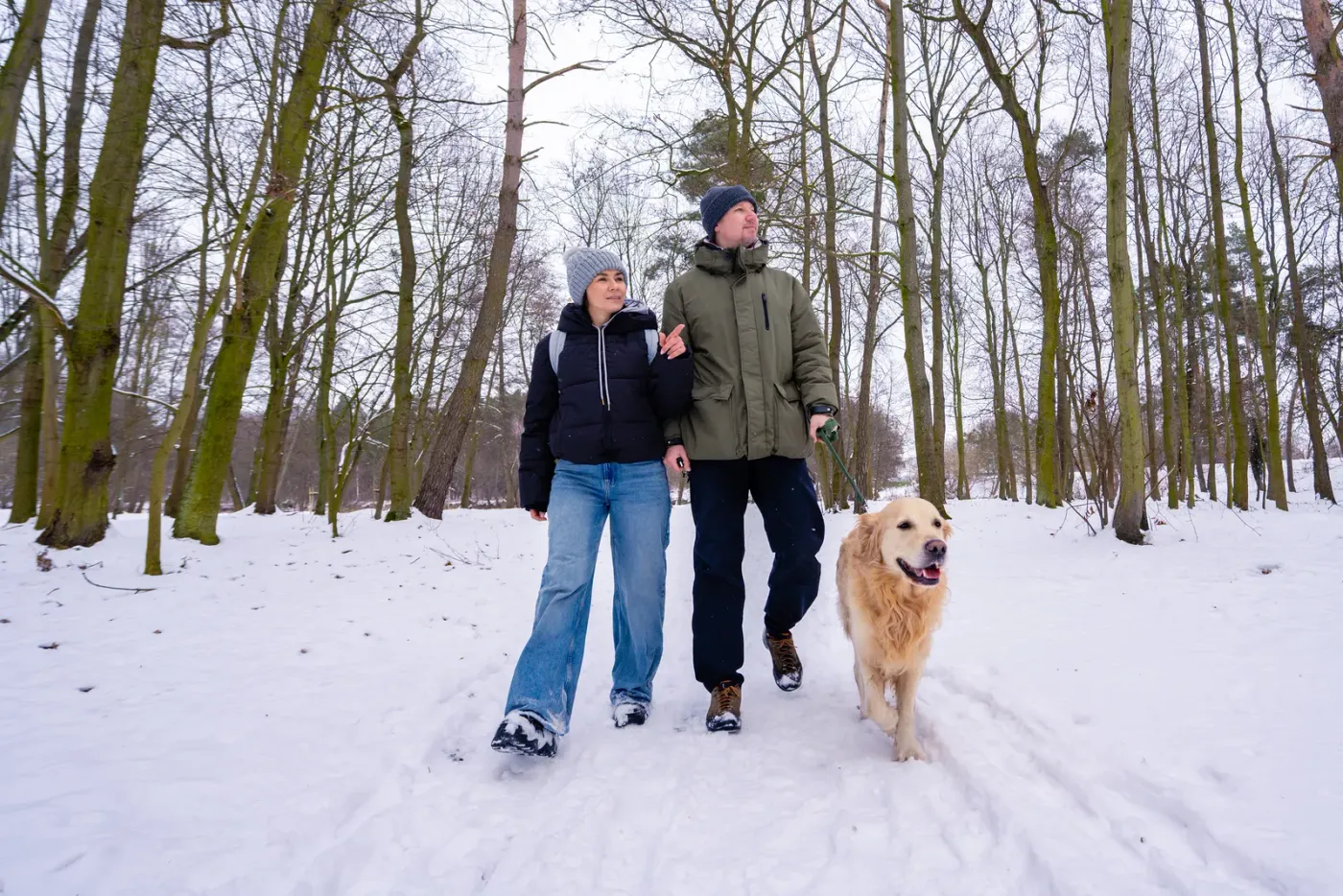
Daily one-on-one training happens on the day you get, not the day you wanted. In a Calgary winter that can mean some sessions on squeaking snow at minus 25 where everything is short and precise, and some on a plus 10 afternoon when the sidewalks run with meltwater and the paths fill up. Both count as real-world proofing. A sit that holds beside a slush puddle with loose dogs in view is a different skill from the one rehearsed in a quiet hallway.
Timing matters less than people fear. A two-week On-Leash Foundations stay, a three-week Functional Off-Leash stay or a five to six week Behaviour Rehab stay will each likely span at least one hard swing, and that is useful. Loose-leash walking taught only on calm days tends to wobble on the first gusty thaw. Taught across the swing, the dog has met the slush, the wind noise and the crowds before you take over, and the plan below is what you take over with.
- Sessions on cold days too
- Thaw crowds become distraction work
- Wind, slush and ice proofed
- A plan keyed to the weather
Your weather plan
What to practise on a cold snap, a thaw, a wind day and an ice day.
Minus 25 day: keep it short and indoors. Place command on the mat while the kettle boils, a few minutes of crate comfort with the door open, a ten-step heel down the hallway. Outside, one brisk block, then home. Plus 10 day: this is your distraction class. Paths are busy, snow is slush, and other dogs tend to be wound up. Walk the loose-leash pattern from your handover lesson, add a sit at every corner, and head home before your dog gets ragged.
Wind day: expect noise, flapping things and grit, and a dog fine yesterday may startle today. Practise heel and recall close to home, reward calm glances at the loud thing, and never steer a worried dog toward it. Ice day: a heel that holds on glare ice is a safety skill, so rehearse it on dry pavement first, then on the icy stretch for a few metres only. If behaviour escalates rather than settling, bring it to your follow-up session so we can reassess.
The programs
Programs and prices
NE · 2-week board & train
On-Leash Foundations
If every walk is a wrestling match, pulling, barking, zig-zagging, this two-week program rebuilds the walk from the ground up with foundational on-leash obedience..
Includes handover lesson, follow-up session, lifetime support, slip lead + collar
E · 3-week board & train
Functional Off-Leash
Everything in the on-leash program, then the next level: reliable off-leash recall even around distractions.
Includes handover lesson, follow-ups, Educator remote collar
Asked and answered
The questions people ask us.
Is winter a bad time for board and train in Calgary?
No. A winter program trains on every kind of day the season produces, including the minus 25 mornings and the plus 10 afternoons, and that variety is useful proofing. The adjustment is mostly yours: you practise a slightly different plan depending on the weather you wake up to.
Do dogs act differently during a chinook?
Many owners notice a change, and many dogs tend to be more restless or more excitable when the temperature jumps. The why belongs to our separate chinook behaviour guide. The practical response is the same either way: shorten the session, lower the distraction and keep the structure identical.
Should walks wait for the warm days after board and train?
Walk on both kinds of day, but change what you ask for. Cold snaps are for short, precise reps near home; thaw days are for working through crowds and slush with the walking pattern you were shown at handover. A dog walked only on mild days learns to work only on mild days.
What if a dog's behaviour gets worse when the weather swings?
A temporary rise in excitement or edginess can happen when routines shift with the weather. Keep the structure steady, shorten sessions and lower the difficulty. If it persists or escalates, use your free follow-up session or ask us to reassess, and see your vet if the change is sudden or out of character.
Keep reading
Ready for a winter program?
Book a consultation and we will recommend the program that fits, including a smaller one when that is enough.
From real owners
Rated 5.0 on Google.
Real Northline dogs