
Calgary dog life
Spring melt and the return of the pathway crowds
Winter shrinks a dog's world: shorter walks, icy sidewalks, empty paths. Then the melt arrives and everyone comes out at once, cyclists, runners, scooters, and puppies who have never met a crowd. Dogs who were fine in October can look rusty by April. This page covers a short refresher plan, the routes and gear that help in the slushy weeks, and when a program makes sense.
Last reviewed October 4, 2026
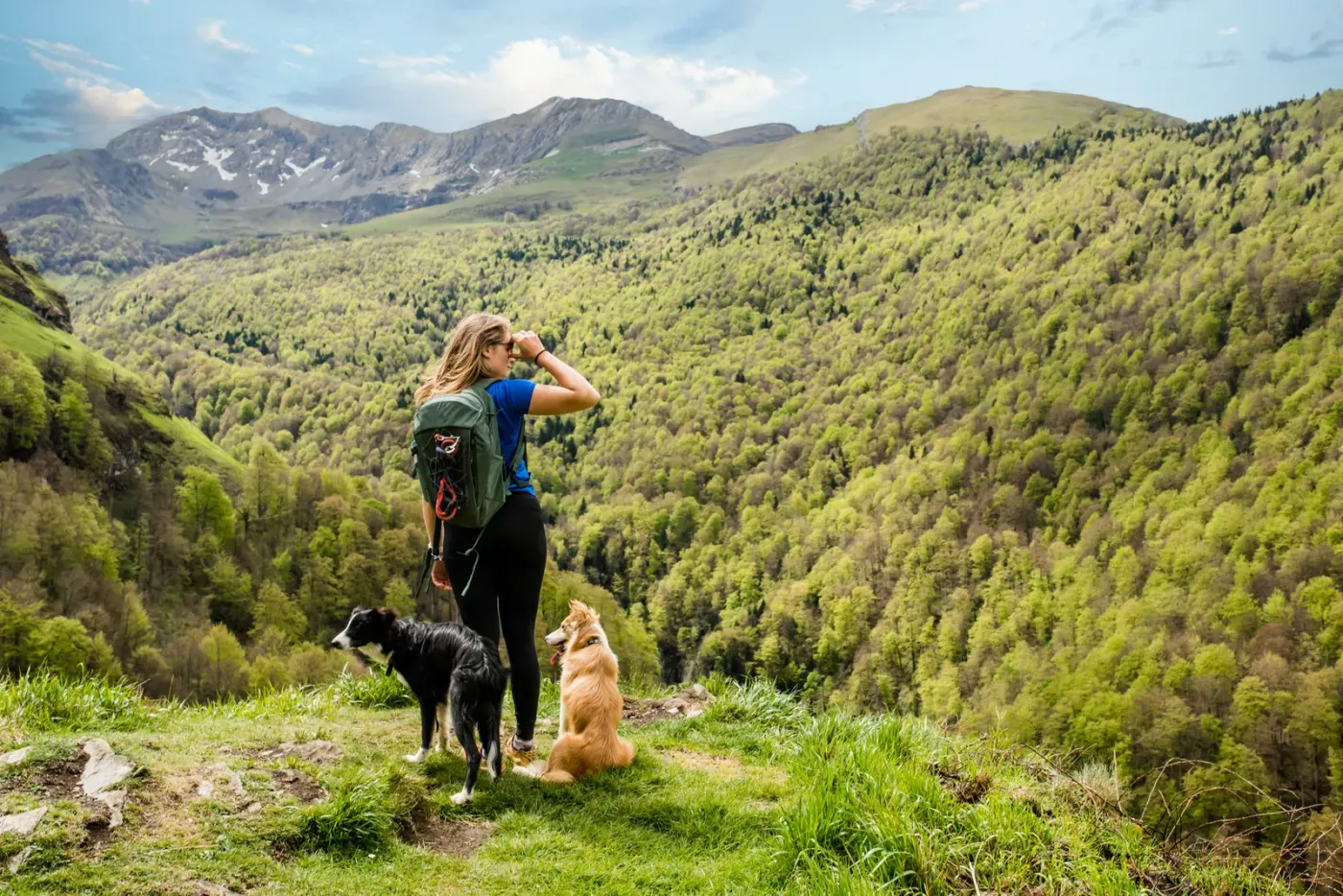
The refresher
Rebuild three skills on empty streets first.
Loose-leash walking comes first, because a dog who drags into a stroller's path is a hazard to everyone. Practise on a quiet residential street with frequent direction changes and rewards at your side. Next, teach a step-aside: on a cue, your dog moves to the grass edge and sits while a bike or runner passes. That one habit prevents a lot of tangled leashes and near misses on narrow pathways.
Third is recall, even on leash. Use a long line in an open, empty area and reward generously every time your dog turns back to you. Winter often lets recall slide simply because there were fewer chances to practise. Once all three hold up on quiet streets, try a busier route at an off-peak hour, and keep sessions short enough that your dog finishes on a success rather than a meltdown.
- Loose-leash walking with turns
- Step-aside cue for bikes
- Long-line recall in open space
- Off-peak routes before busy ones
Mud, gear and help
Manage the messy weeks and know when to get support.
Melt season uncovers slush, puddles and thawed litter along path edges, so a shorter leash near the shoulder keeps scavenging in check. Wipe paws after walks. If your dog limps, licks its pads raw, or seems unwell after eating something found in a snowbank, call your vet. Follow the posted signs for leash rules on each stretch, since on-leash and off-leash areas can change from one section to the next.
If a dog lunges or barks at every cyclist despite steady practice, that often points to reactivity rather than rust, and it deserves a professional look. On-Leash Foundations is a two-week board and train built around loose-leash walking and everyday distractions. Functional Off-Leash works on recall around distractions. Behaviour Rehab works on reactivity after a full assessment. A consultation recommends one of them, and points you to the lighter option when that is enough.
Asked and answered
The questions people ask us.
How do I get my dog used to bikes on the pathway?
Start at a distance where your dog notices bikes but stays calm, and reward that calm. Close the distance slowly over many walks, and pair passing bikes with the step-aside cue.
Why is my dog pulling more after winter?
Often it is a mix of pent-up energy and fewer practice reps on the leash. Short, consistent loose-leash sessions on quiet streets usually help rebuild the habit before you tackle crowds.
Should I let my dog greet other dogs on the pathway?
On a narrow pathway, it is usually kinder to pass by. Tight on-leash greetings can turn tense quickly, and not every dog coming the other way wants to say hello.
When is my dog ready for off-leash areas again?
When recall holds up on a long line around real distractions, not just in the backyard. If you are unsure, keep the leash on and get an assessment first.
Keep reading
Get ready before the crowds
Book a consultation and we will look at your dog's pathway manners and recommend a plan for the busy season ahead.
From real owners
Rated 5.0 on Google.
Real Northline dogs