
Calgary dog life
Snow, ice and leash safety in Calgary
Winter is the season when a pulling dog stops being annoying and starts being dangerous. Ice takes away the one thing that lets you absorb a lunge, which is your footing, and the same slip works in both directions. The injuries are predictable: wrists, tailbones and shoulders on the human end, and dogs that skate sideways into a curb. Most of it comes back to one skill that was never fully taught.
Last reviewed August 26, 2026
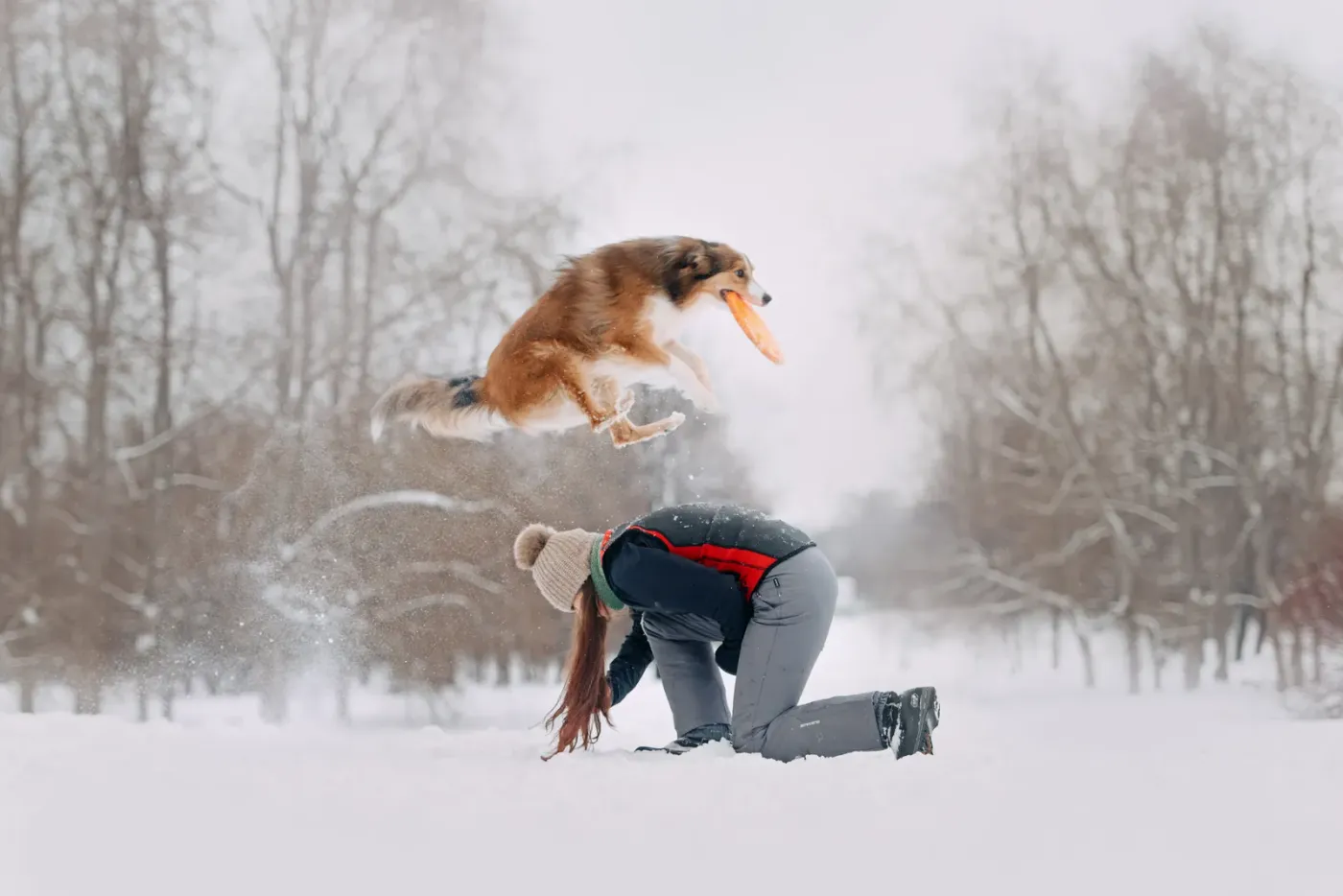
Winter injuries
What a lunge does when nobody has traction.
Picture the ordinary version. A dog spots another dog across the street and hits the end of the leash. In July you lean back and hold. In January your boots are on a polished sidewalk, the lean becomes a slide, and you land on a hip or a wrist with the leash still wrapped around your hand. Chinooks make it worse: an afternoon thaw refreezes into black ice by the evening walk, and a 15-degree swing can happen within hours.
The dog gets hurt too. A dog that lunges on ice loses its back end, and a big dog going down at speed can strain a shoulder or a hip. A retractable adds a sprint before the stop: full speed, then a hard end through a thin cord, usually at the neck. In a cold snap near minus 30 with wind chill, paws are stiff and grip is poor, so one bad step turns into a limp.
- Footing is gone on ice
- Chinook thaw refreezes by evening
- Retractables add a sprint
- Leash off the wrist
Skills and gear
The skill that keeps both of you upright.
Loose-leash walking is sold as good manners. In winter it is a safety system: a dog that keeps slack in the line cannot yank you off your feet, and a dog that checks in before it moves can be stopped with a word. We start with markers and rewards, then pick the tool that fits the dog, a slip lead or a prong collar, and proof it on real sidewalks. On-Leash Foundations covers this in two weeks for $1,865 plus GST.
Gear does the rest. Shorten the leash on ice so the dog cannot build speed, and hold it in a hand, never looped on a wrist. Put traction cleats on your boots before you worry about the dog's gear; you are the one who needs grip. Leave the retractable at home. The City's pathway rule already caps leashes at two metres, and on ice that is generous. Winter is when leash training pays for itself, one avoided fall at a time.
The programs
The training behind a good Calgary dog.
Recall, leash skills and calm in public are what make this city fun with a dog. These are the formats that build them.
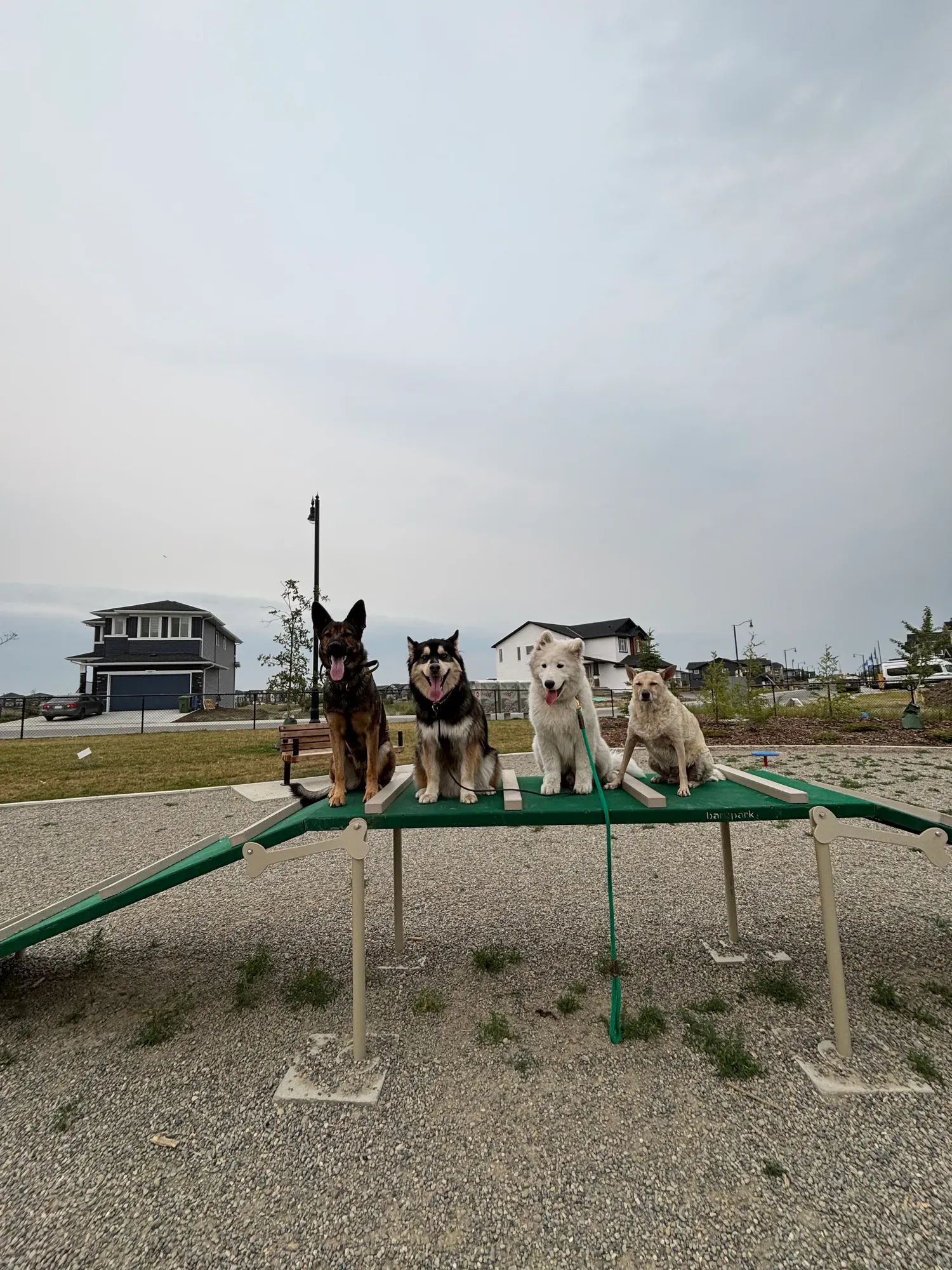
SW · Weekdays, drop-off 8–10 am · pick-up 5–7 pm
Day Training
Professional training all day, your couch at night.
Includes weekly one-hour go-home lesson, daily structure
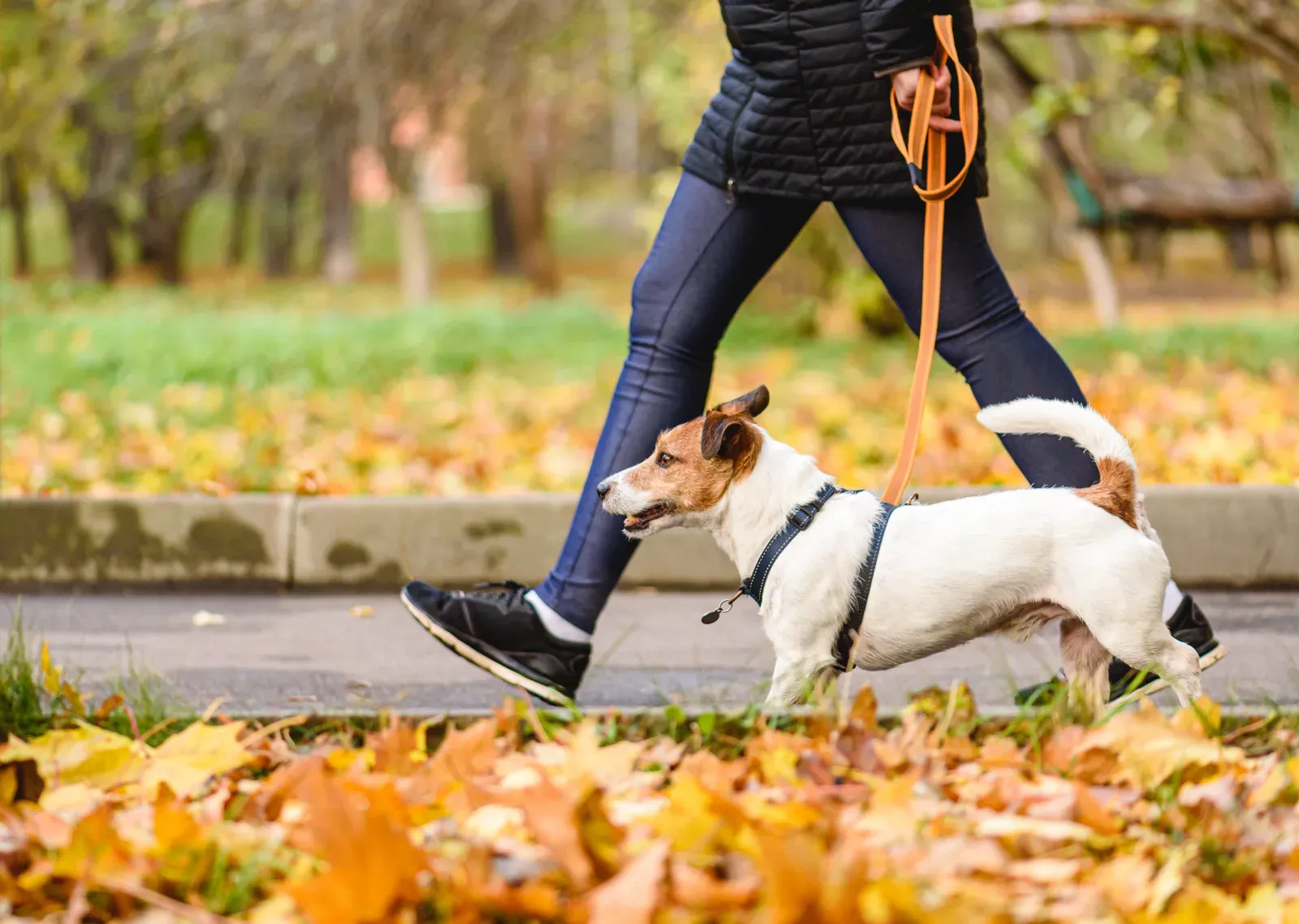
NE · 2-week board & train
On-Leash Foundations
If every walk is a wrestling match, pulling, barking, zig-zagging, this two-week program rebuilds the walk from the ground up with foundational on-leash obedience..
Includes handover lesson, follow-up session, lifetime support, slip lead + collar
E · 3-week board & train
Functional Off-Leash
Everything in the on-leash program, then the next level: reliable off-leash recall even around distractions.
Includes handover lesson, follow-ups, Educator remote collar
Asked and answered
The questions people ask us.
My dog keeps pulling on ice. What do I do right now?
Shorten the leash, slow down and stop walking every time the line goes tight, even if that means a very short walk. Then book real loose-leash training; managing a puller on ice is not a long-term plan. Cleats on your boots buy you time.
Is walking a dog on ice safe at all?
It can be, with a short fixed leash, traction on your boots and a dog that has learned to keep slack. It is not safe with a retractable or a dog that lunges at other dogs. Pick the sunniest route, since shaded sidewalks stay icy longest.
What is the most important winter leash safety rule?
Never let the dog build speed before it hits the end of the line. That means a short leash, no retractable and a dog that has been taught to walk beside you. Everything else, cleats, gloves, reflective gear, is secondary.
My dog slipped on ice and is limping. Is that from the leash?
Sometimes: a dog that lunged and lost its footing can strain a shoulder or hip, and a hard stop on a collar can hurt the neck. Rest it and see your vet if it lasts more than a day. Then treat the pulling as the underlying problem, because it will happen again.
Keep reading
Stay upright this winter
Book a consultation to see how a loose leash is taught and which tool fits your dog on ice.
From real owners
Rated 5.0 on Google.
Real Northline dogs