
Choosing a trainer
My dog has never been crated: is board and train still possible?
Plenty of dogs reach adulthood without ever seeing the inside of a crate. Some were raised loose, some came from a rescue with no history, some simply never needed one. If that is your dog, the question is fair: does a board and train assume a crate-trained dog? This page covers what we have published, what to raise at the consultation, and a prep plan you can run at home before drop-off.
Last reviewed October 4, 2026
Not a dealbreaker
An uncrated adult dog is a disclosure, not a disqualification.
Crate comfort appears on exactly one published curriculum: Puppy Fundamentals, the three-week board and train for puppies in their key learning window. None of the adult programs lists it as a skill. That does not mean an adult dog without crate history is turned away. It means the crate is a detail we want to hear about at the consultation, alongside the rest of your dog's story, so the program recommended fits the dog in front of us rather than an assumed one.
Two things to say plainly. First, beyond clean, comfortable accommodations, we do not publish how dogs are housed during a stay, so whether a crate features in your dog's day is a question for the consultation, not for this page. Second, a dog who has panicked in confinement before, chewed through a door, or broken a nail or tooth trying to get out is telling you something. Mention it, and ask your vet about any injury.
- Listed only in Puppy Fundamentals
- Housing details are not published
- Confinement panic is a disclosure
- Crate guide in the welcome package
Your prep plan
A door-open plan for the weeks before your start date.
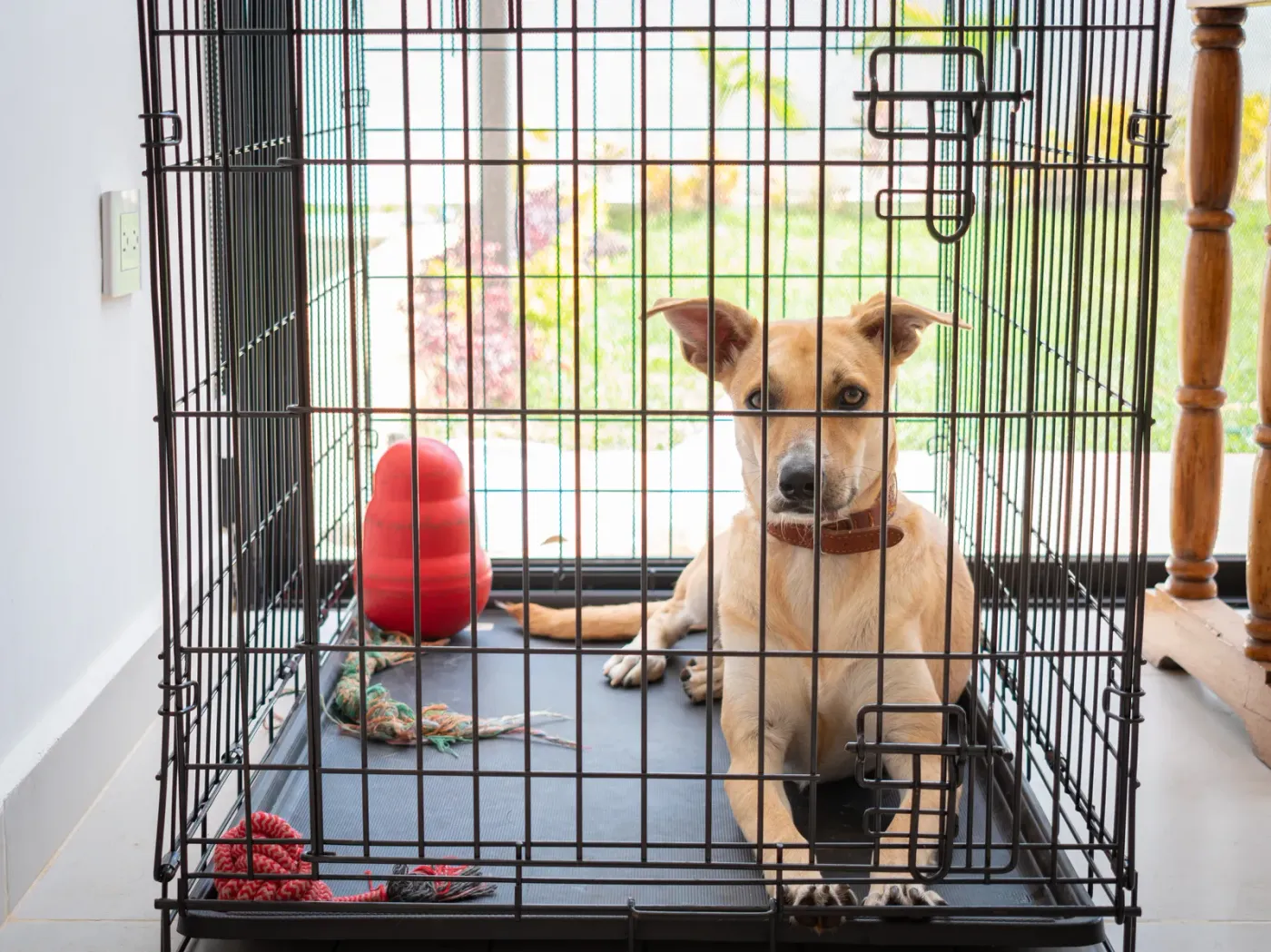
The welcome package includes a crate-training guide, and it is worth starting early. Choose a crate your dog can stand, turn and lie flat in. Put it in a room the family actually uses, tie the door open, and let the crate become furniture. Feed meals inside. Toss a chew in and walk away. Nothing closes yet. The goal of this stage is a dog who wanders in on its own because good things happen there.
When the door starts closing, it closes for seconds while you stay in the room, and it opens before the dog worries, not after. Toilet needs come first, always: a dog who whines after a long nap needs a trip outside, not a lesson in patience. If your dog freezes, drools, or throws itself at the door at any point, stop and tell us. That is information for the consultation, and possibly for your vet, not a project to push through alone.

Asked and answered
The questions people ask us.
Does my dog have to be crate trained before board and train?
No. A dog with no crate history is not turned away; it is a detail to raise at the consultation so the recommendation fits your dog. The welcome package includes a crate-training guide if you want to start at home first.
Will my adult dog be crated during the program?
We have not published housing details beyond clean, comfortable accommodations with daily exercise, enrichment and individual care. Ask at the consultation and you will get a direct answer for your dog rather than a general one.
My dog panics in a crate. Can he still do a board and train?
Tell us exactly what the panic looks like, and ask your vet about any injury from escape attempts. Confinement panic can sit alongside wider anxiety, which is what Behaviour Rehab is built to assess, and the consultation recommends the program that fits, including a smaller one when that is enough.
How do I start crate training an older dog before a program?
Door open first: put the crate in a lived-in room, feed meals inside, and let your dog choose to go in. Close the door only for seconds with you present, and open it before worry sets in. Toilet trips always come before any waiting.
Keep reading
Mention the crate early
Tell us your dog has never been crated and what you have tried. Book a consultation and we will plan from there.
From real owners
Rated 5.0 on Google.
Real Northline dogs