
Why dogs do it
My dog doesn't walk well with other people
Your dog trots beside you like a show dog. Hand the leash to your partner, your teenager or the dog walker and suddenly it is a sled race. That gap is frustrating, but it is useful information. It tells you the dog has learned a person, not a skill, and that the fix starts with the humans comparing notes.
Last reviewed October 4, 2026
Reading the gap
Why the leash habits change when the handler does.
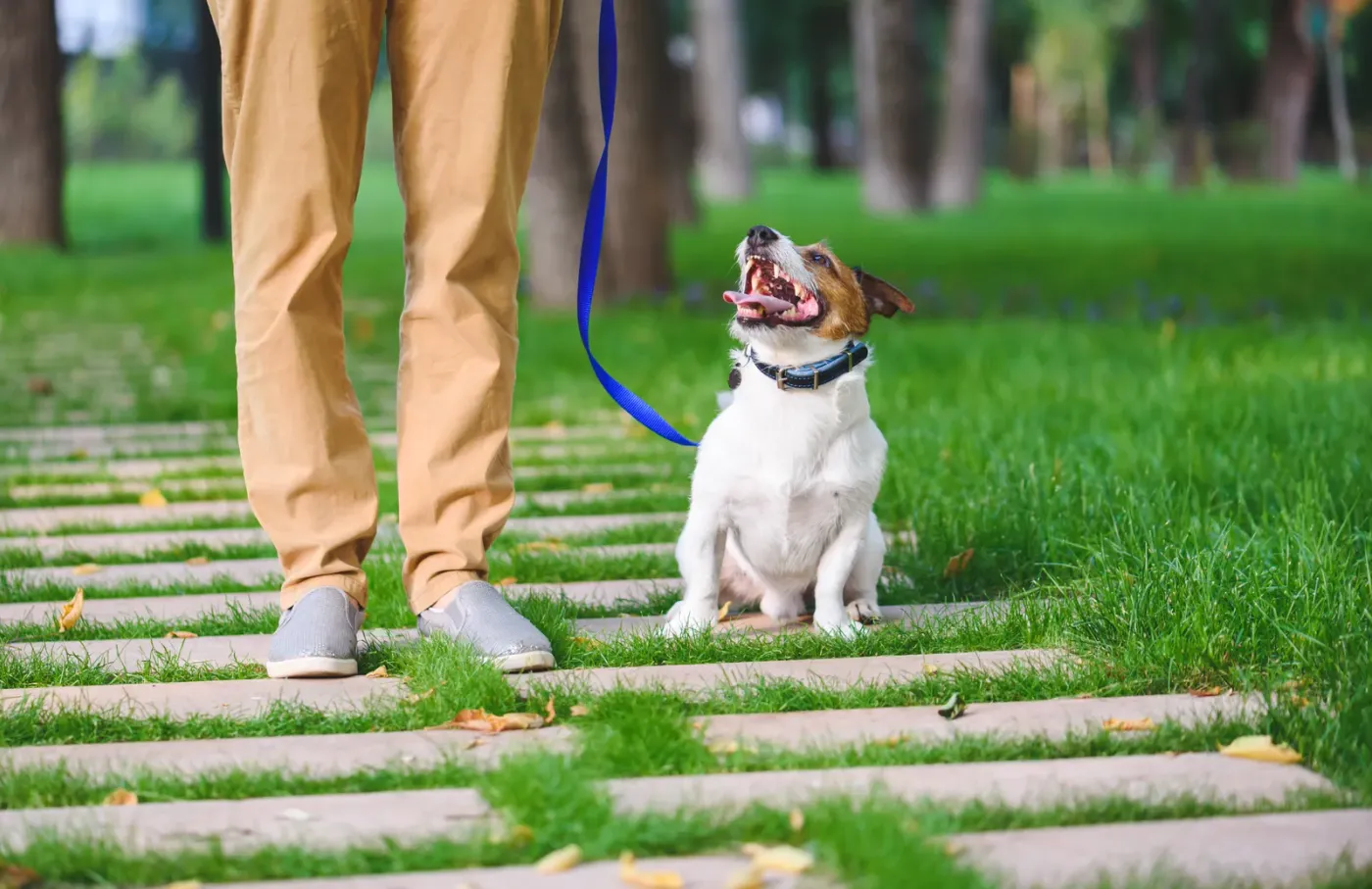
Dogs are sharp at noticing who holds the leash and what that person allows. If one walker stops dead every time the leash goes tight and another follows along to keep the peace, the dog learns two sets of rules. Pulling pays off with one person and not the other, so it shows up where it pays. Many dogs also read posture, pace and how often a handler talks to them.
To tell the reasons apart, watch a walk with each person. A dog who pulls with everyone but you is often responding to inconsistent leash pressure or rewards. A dog who freezes, hides behind legs or refuses to leave the driveway with a new person may be uneasy with that person instead, which is a confidence question rather than a manners one. A dog who suddenly struggles with everyone deserves a vet check.
- Same leash length for everyone
- One cue for walking nicely
- Agreed response to pulling
- Rewards on the same side
Starting tonight
Getting every walker on the same page.
Tonight, sit down as a household and write three things on the fridge: the cue you use, which side the dog walks on, and what happens the moment the leash tightens. Then let the person the dog walks best with hand over the leash in the driveway and coach for five minutes. Keep these first handovers short and quiet. Our how-to guide on loose-leash walking covers the method step by step.
If the dog seems sore, stiff, reluctant to move or suddenly worse for everyone, talk to your vet before blaming handling. When the household wants coaching together, a $150 Private Training session works on owner education and ends with a written plan everyone can follow. On-Leash Foundations ($1,865, two weeks) works on loose-leash walking and heel, then hands the skills back in a lesson. The consultation recommends a format, and suggests the smaller one when that covers it.
Asked and answered
The questions people ask us.
Why does my dog only pull when my husband walks him?
Usually because the rules differ between walkers. If pulling gets the dog forward with one person and stops progress with the other, the dog learns to pull where it works. Agree on one response to a tight leash and use it every time.
Why won't my dog walk for the dog walker?
Some dogs are simply unsure of a new person and stall or hang back. Let the walker start with short, easy loops near home and treats the dog likes. If the dog seems frightened rather than stubborn, a professional assessment is worth booking.
Should everyone in the family walk the dog the same way?
Yes, as far as possible. Same leash length, same side, same cue and the same reaction to pulling gives the dog one clear picture. Children should not handle a dog that pulls hard.
Is it normal for a dog to behave better with one owner?
It is very common. Dogs tend to behave best with the person whose rules are clearest and most predictable. That is good news, because those rules can be taught to everyone else.
Keep reading
One dog, one set of rules
Book a consultation and we will help the whole household handle the leash the same way.
From real owners
Rated 5.0 on Google.
Real Northline dogs