Why dogs do it
My dog doesn't pay attention on walks
From your end of the leash it can feel like being invisible. Your dog sniffs, scans and pulls toward everything except you, and your voice seems to disappear the moment you leave the driveway. That is not stubbornness. It is economics. Outside, the payoffs are constant and free, and you are competing with all of them. The good news is that attention is a skill you can build.
Last reviewed October 4, 2026
Competing with outside
Distraction, overload or a skill never taught.
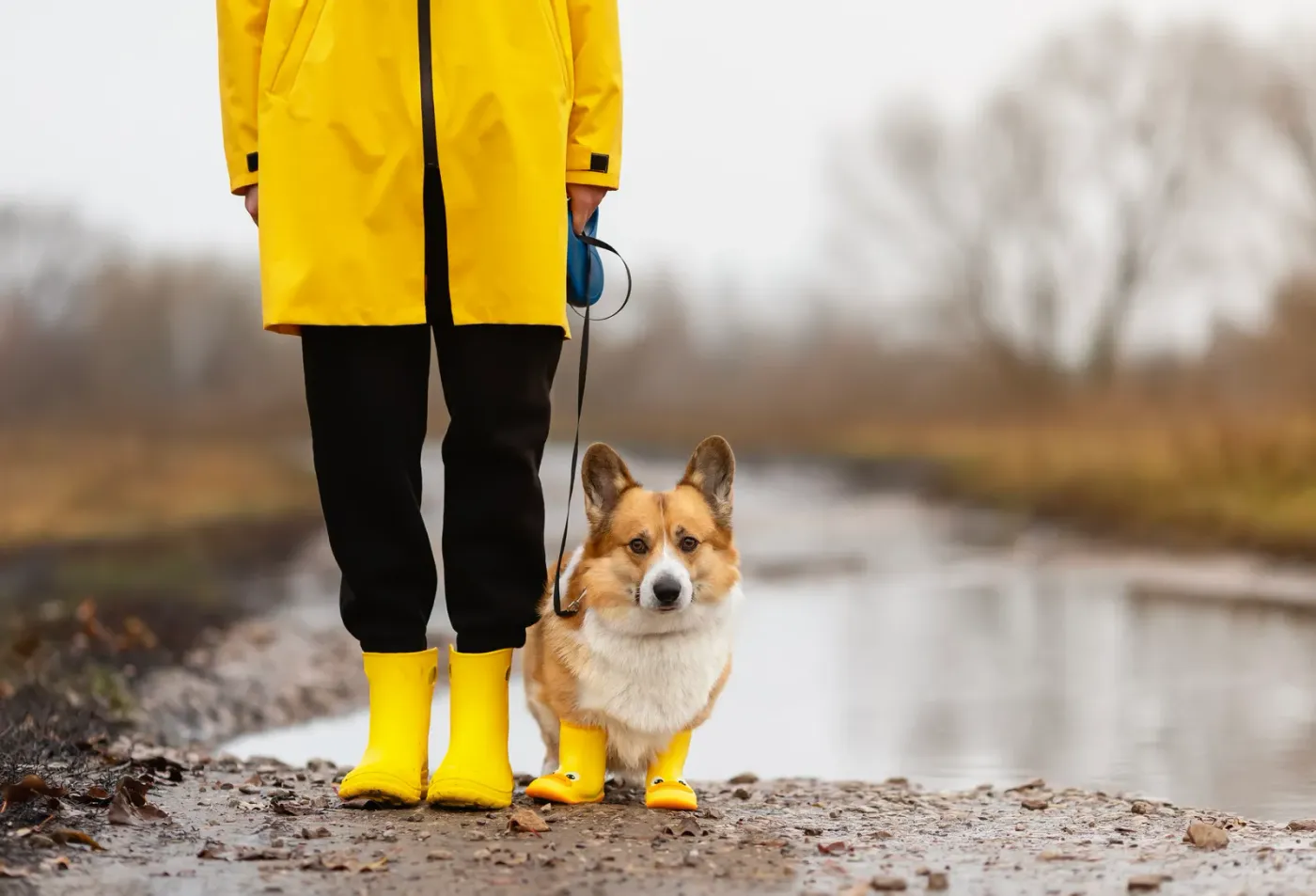
Plain distraction is the usual suspect. A dog who sniffs happily, ignores you, but still responds once the excitement passes is simply choosing the better offer. Overload looks different: panting, scanning, jumping at sounds, unable to take a treat they would grab indoors. A dog that will not eat outside is often too stressed to learn, not ignoring you, and needs more distance from the busy stuff before any training.
The third possibility is that attention was never taught as a skill. Many dogs learn sit and down in the kitchen but have never been paid for looking at their person in a new place. Test it: ask for eye contact in the living room, then the yard, then the front step. Where the response falls apart tells you exactly where the training needs to start.
- Responds once excitement passes
- Refuses treats outdoors only
- Panting, scanning, startling at sounds
- Looks at you indoors only
Becoming worth watching
Pay the check-in, then raise the difficulty.
Tonight, start inside. Every time your dog looks at you on their own, mark it with a word and drop a treat by your feet. Add a quick game of find-it or a short tug before the walk, so you start the outing as the interesting one. On the walk, carry better food than usual and pay every glance back. Our step-by-step engagement guide covers the full progression.
If your dog seems unable to hear you, bumps into things, or the distraction appeared suddenly in an older dog, mention it to your vet; hearing and vision changes can look like inattention. Otherwise, Private Training suits owners who want to build engagement themselves, and On-Leash Foundations ($1,865 + GST) works on loose-leash walking and everyday distractions. The consultation recommends the fit, and that can be the smaller choice.
Asked and answered
The questions people ask us.
Why does my dog ignore me on walks but listen at home?
Home is quiet and familiar, so you are the most interesting thing in the room. Outside, smells and movement compete for every second. Attention learned indoors has to be practised in gradually busier places before it holds up outside.
How do I get my dog to look at me on walks?
Reward the glances your dog offers on their own, right when they happen. Start where distractions are low and use food your dog values. Asking for eye contact before you have paid for it outside tends to go nowhere.
Is my dog ignoring me on purpose?
Usually not in the way it feels. Your dog is responding to what has paid off before, and the environment has paid a lot. Change the payoffs and the choices tend to change too.
Should I use a harder correction to get attention?
A correction can interrupt a moment, but it does not teach a dog to want to check in. We teach attention with markers and rewards first, and any tool is matched to the dog and taught to the owner properly. A consultation is the place to talk through what suits your dog.
Keep reading
Be the best thing outside
Book a consultation and we will look at your walks, your dog's distractions and the simplest way to rebuild attention.
From real owners
Rated 5.0 on Google.
Real Northline dogs