
Why dogs do it
My dog doesn't make eye contact
If your dog glances away whenever you look at them, it can feel like being ignored. In dog terms it is often the opposite. A soft look away is how many dogs keep an interaction friendly. The useful question is whether the avoidance is calm manners, worry, or a habit nobody has built yet, because each one calls for a different response from you.
Last reviewed October 4, 2026
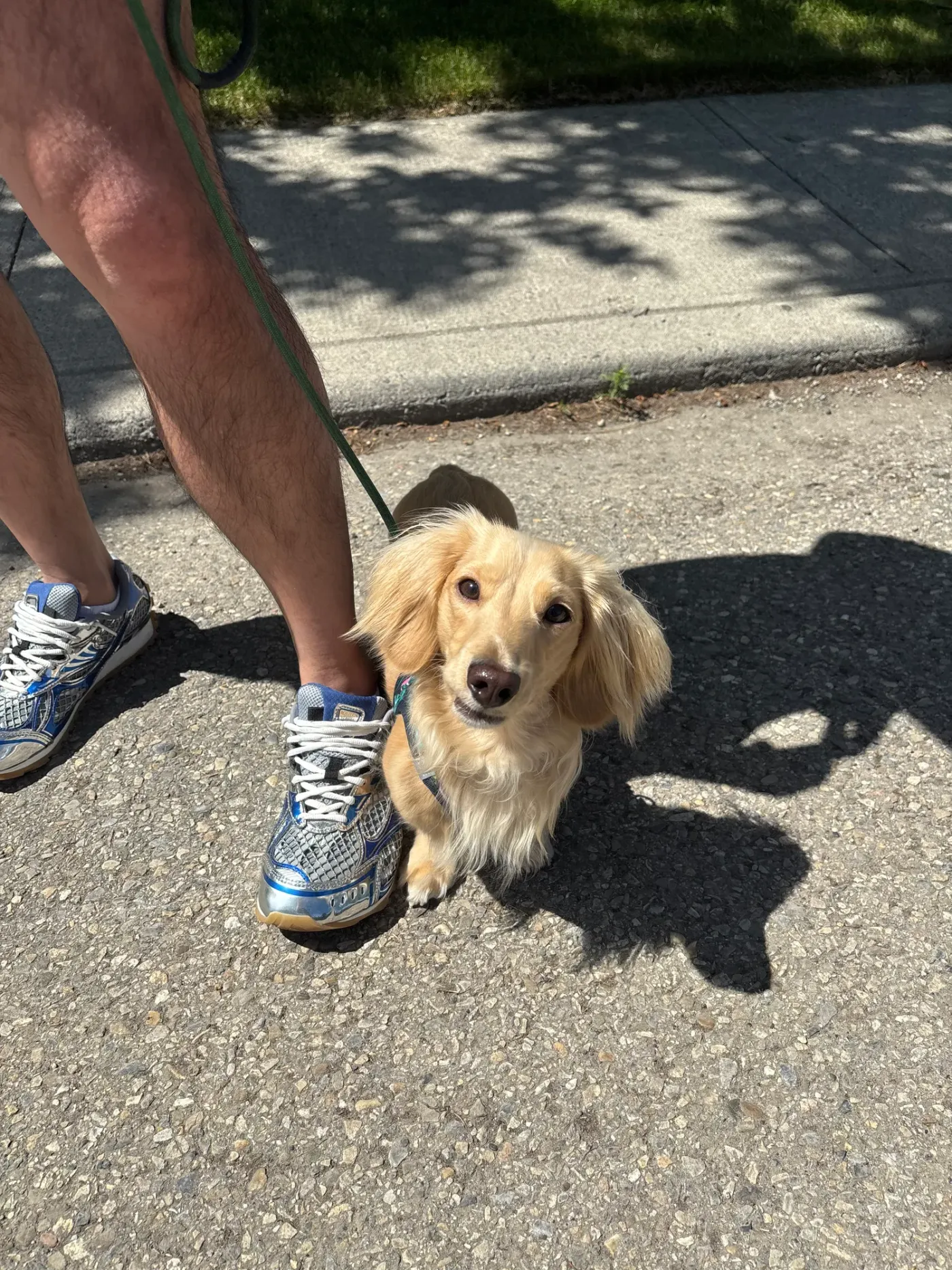
Three different reasons
Read the rest of the body before reading the eyes.
Polite avoidance tends to look relaxed: a soft face, a loose body, a slow blink or a casual turn of the head, and a dog who is happy to stay near you. Stress avoidance looks tighter. Watch for a tucked tail, ears pinned back, lip licking, yawning, the whites of the eyes showing, or a dog who turns its whole body away or leaves the room. Same missing eye contact, very different feelings underneath.
A third group is neither polite nor worried; nobody has ever paid them for looking up. These dogs watch your hands, the treat pouch or the door instead, because that is where good things have come from. Rescue dogs and dogs who were scolded face to face may need longer before a direct look feels safe. A sudden change in a dog who used to look at you comfortably is worth raising with your vet, since discomfort can change behaviour.
- Soft face, loose body
- Lip licking or whale eye
- Leaves the room when watched
- Watches hands, not face
What to do first
Stop holding the stare and start paying for glances.
Tonight, stop asking for eye contact by leaning over, holding the face, or staring until the dog gives in. Those moves tend to add pressure. Instead, sit or stand side-on, keep your gaze soft, and simply mark and reward any moment your dog glances at your face on their own. Keep sessions brief and light. If the dog seems worried, look at their shoulder rather than their eyes and let them choose the distance.
If avoidance comes with growling, freezing or snapping when handled, skip the eye-contact work, book a vet check for pain and a professional assessment, and never punish the growl. Our how-to guide on building a voluntary look covers the method. Private Training at $150 + GST works on owner education and a written plan for home, and Puppy Fundamentals includes name recognition for younger dogs. In a consultation we point you to the lightest option that covers it.
Asked and answered
The questions people ask us.
Is it bad if my dog won't look me in the eye?
Not usually. Many dogs look away to keep an interaction friendly, which counts as good manners among dogs. It is only a concern when it comes with signs of stress like lip licking, a tucked tail or leaving.
Why does my dog look away when I look at him?
A direct, sustained stare can feel like pressure to a dog, so turning the head is a common way to soften the moment. Try a softer gaze and a side-on stance. Reward the glances your dog offers instead of holding the stare.
How do I get my dog to make eye contact?
Mark and reward the moments your dog looks at your face on their own, in short, easy sessions. Avoid holding the head or leaning in. Our how-to guide lays out the steps in order.
Should a rescue dog make eye contact?
Not on a deadline. Many rescue dogs need time before a direct look feels comfortable, and pushing it can set things back. Focus on a relaxed body and voluntary check-ins first.
Keep reading
Make the look feel easy
Book a consultation to talk through what your dog's eyes and body are telling you, and which format fits.
From real owners
Rated 5.0 on Google.
Real Northline dogs