
Why dogs do it
My dog doesn't eat when I'm away
Coming home to a full bowl is one of the quieter clues a dog gives. It can mean very little, or it can be the first visible sign that the hours alone are harder than they look. The useful question is not whether the dog ate, but what else happened while you were gone, and whether the food disappears the minute you walk back in.
Last reviewed October 4, 2026
Where it sits
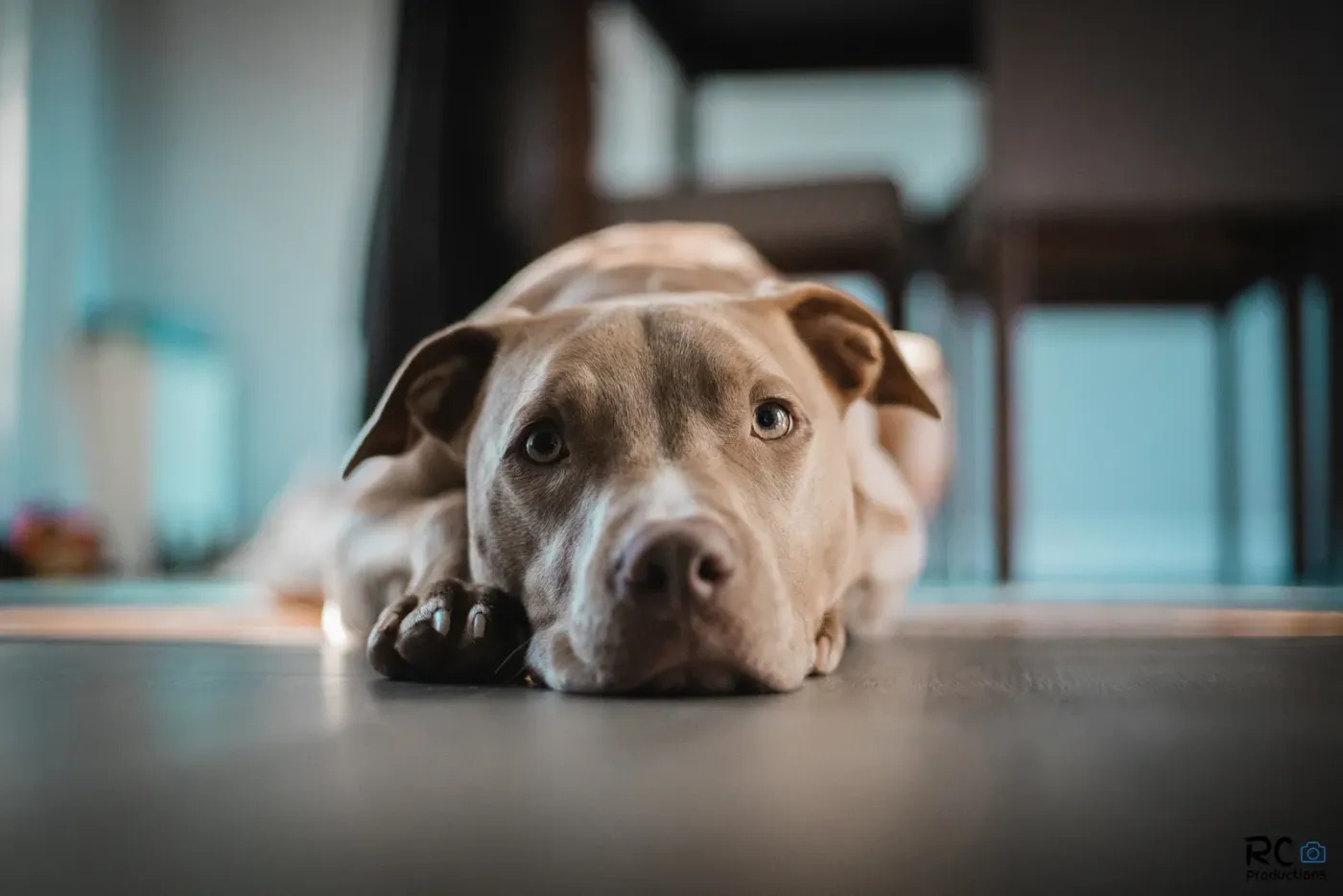
Waiting for company or worried sick.
At the mild end, some dogs simply prefer to eat with someone nearby, the same way they may skip a chew when the house is empty. They sleep through the absence and eat happily on your return. In the middle are dogs who are unsettled: pacing, watching the door, a little whining, then settling. Skipped food here tells you the absence costs them something, even if nothing gets damaged.
At the far end is separation distress: sustained barking or howling, drool on the floor, chewing at door frames, damaged crates, toileting in a dog who is normally clean. A camera is the easiest way to see which end you are at. Watch the early part of the recording closely, because that is often when the behaviour is most visible, and note whether a pet sitter visit changes anything.
- Eats as soon as you return
- Pacing or watching the door
- Drooling, howling, chewed exits
- Appetite low when home too
What to do next
A camera, a vet call and a small plan.
If the dog also eats poorly while you are home, is losing weight, vomiting, or drinking less, call your vet first; appetite changes can have medical causes that training cannot reach. Otherwise, set up a camera before your next absence. Do not leave food down all day as a test, and do not pile on dramatic goodbyes. Offer a stuffed food toy before departures on days you are home, so it stops predicting being left.
Our how-to on building alone time step by step covers the short-absence method. A $150 private session gives you a professional read of your camera footage and a written plan. True distress is what Behaviour Rehab is built to work on, with anxiety rehabilitation and in-depth owner education. Day Training keeps a dog busy on weekdays while home every night, though it does not on its own teach alone time. The consultation names the smallest format that fits.
Asked and answered
The questions people ask us.
Is it normal for a dog not to eat when the owner is gone?
It is common, and on its own it is often mild. If the dog eats readily when you get home and seems relaxed on camera, it may just prefer company at mealtimes. Pair it with other signs before worrying.
How long can a dog go without eating when I'm away?
We cannot give a medical number, and a skipped meal during an absence is different from refusing food at home. If your dog is not eating when you are present, or seems unwell, call your vet promptly.
Does not eating mean my dog has separation anxiety?
Not by itself. Separation distress usually comes with other signs, such as howling, drooling, destroying exits or toileting indoors. A camera recording is the clearest way to tell.
Will a pet sitter help my dog eat?
For dogs who eat socially, a midday visit often gets the bowl finished. If the dog refuses food even with a sitter there, the absence itself is likely the issue. That is worth a professional look.
Keep reading
Find out what the bowl means
Book a consultation and we will look at the whole picture of your dog's time alone, then recommend the lightest format that fits.
From real owners
Rated 5.0 on Google.
Real Northline dogs