Why dogs do it
My dog doesn't bring the ball back
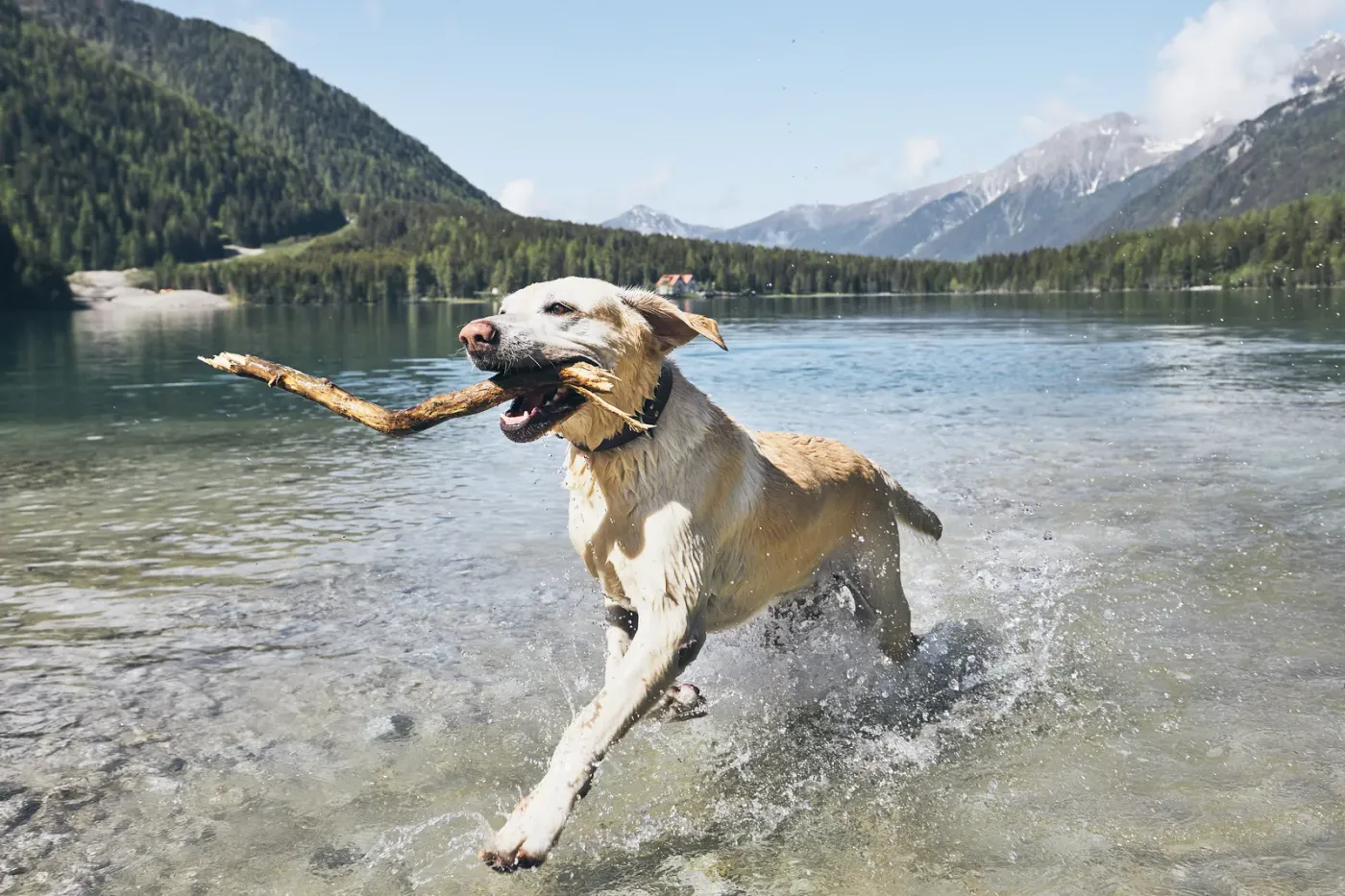
You throw, your dog sprints, grabs the ball, and then trots in a wide circle just out of reach. Or the ball gets carried to the far corner of the yard and dropped there. Neither dog is misbehaving on purpose. Fetch is really three skills, the chase, the return and the release, and many dogs arrive knowing only the first one.
Last reviewed October 4, 2026
Chase, carry, release
Keep-away, a missing return, or a ball worth guarding.
Keep-away is the classic version. Your dog grabs the ball, looks at you, and bolts when you step closer. That play bow and backward hop are an invitation: your dog has likely learned that being chased is the best part. Often the lesson came from us, because every time the ball was handed over, the game ended or the ball went into a pocket.
A different dog runs out, picks up the ball, and lies down with it, never thinking to come back. That is often a missing return rather than a game. Watch for the third pattern too: a dog who stiffens, freezes or growls over the ball may be guarding it, which is worth a professional assessment. A dog who chases but will no longer pick the ball up, or limps afterwards, should see a vet.
- Play bow then bolting away
- Lies down with the ball
- Stiffens or growls over it
- No longer picks it up
Fixing the game
Two balls, a paid drop, and shorter throws.
Start with two identical balls. Throw one, and when your dog turns toward you, show and throw the second in the opposite direction. The first ball often gets dropped on its own, and you never had to chase. Keep throws short, play in a hallway or fenced yard, and stop while your dog still wants more. Never grab for the ball in your dog's mouth or chase a dog who is guarding it.
The trained drop is laid out in our how-to guide: letting go earns food or the next throw, so release stops meaning the end. Private Training, at $150 plus GST per hour, can shape fetch and drop around your dog's habits, with a plan to practise all week. Guarding with growling or snapping is the kind of behaviour Behaviour Rehab works on, after assessment. At a consultation we suggest a format, and say plainly when a smaller one is enough.
Asked and answered
The questions people ask us.
Why does my dog run away with the ball instead of bringing it back?
Often your dog has learned that being chased is the fun part, or that handing the ball over ends the game. Stop chasing, use a second ball, and reward the return. A trained drop makes letting go worth it.
How do I teach my dog to drop the ball?
Trade the ball for a treat or an immediate second throw, and name the moment it falls. Practise at close range where your dog is relaxed. Never pry the ball loose from a dog who is stiff or growling.
Why does my dog bring the ball back but not drop it?
Many dogs enjoy a tug at the end, or worry the game is over once they let go. Stand still, wait, and make the next throw the reward for release. A second ball held in view can help too.
Why did my dog stop playing fetch?
A dog who loved fetch and suddenly stops may be sore, so a vet check comes first. Heat, a slippery floor, or a scare during play can also be factors. Return to gentle, short throws once your vet is satisfied.
Keep reading
Want fetch to work both ways?
Book a consultation. Tell us how fetch falls apart, and we will recommend a format that matches it.
From real owners
Rated 5.0 on Google.
Real Northline dogs