
Manners & obedience
Meeting a dog you do not know: the right way
Many awkward dog greetings come from kind people. They reach over the head, crouch face to face, or keep petting after the dog has had enough. The better way is quicker and more polite: ask, wait, and let the dog decide. It works for adults, it can be taught to kids, and it spares a lot of nervous dogs a moment they did not choose.
Last reviewed October 4, 2026
The three-step greeting
Ask, angle away, and let the dog do the approaching.
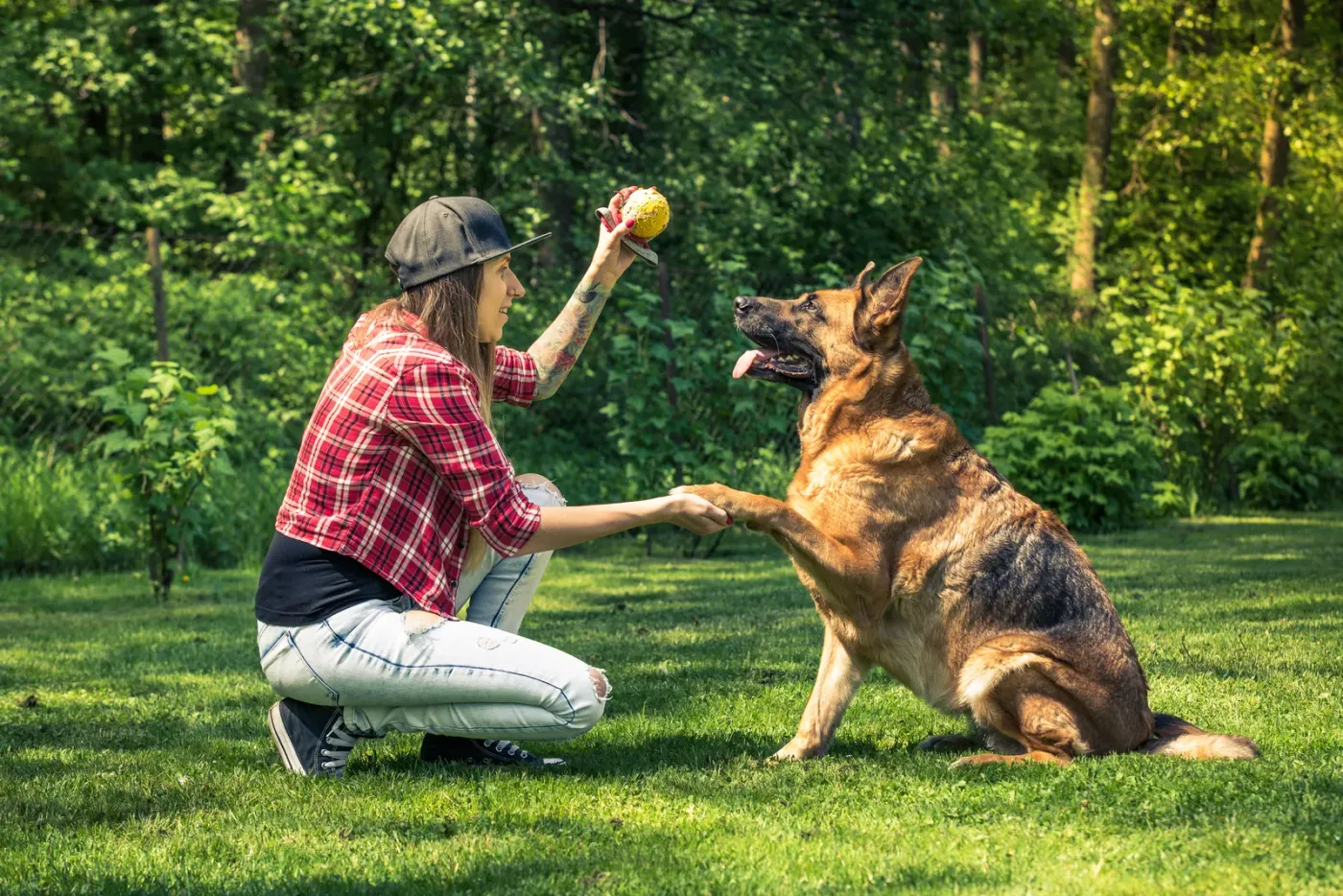
Ask the owner, not the dog. Some dogs are in training, recovering, worried about strangers, or simply not interested, and the owner knows which. If the answer is yes, stand sideways with your hands low and relaxed, and let the dog close the distance. Looming over a dog, reaching over its head, or crouching straight at its face can feel like pressure, especially to a small or shy dog.
When the dog arrives, offer a short scratch on the chest or side for a few seconds, then stop and see what happens. A dog that leans back in wants more. A dog that turns away, licks its lips, yawns, freezes or shows the whites of its eyes is saying it has had enough. Respect that answer the first time. A growl is information, never something to scold.
- Ask the owner first
- Stand sideways, hands low
- Let the dog approach
- Pause and check in
Kids and your own dog
Teaching children the polite way, and preparing the dog on the other end.
Children can learn the rules as a short script: ask the grown-up, stand still like a tree if a dog comes close, and pet the side, not the head. Practise the script with stuffed animals or by talking through pictures, never by testing it on a real dog. An adult should be right beside a child meeting any dog, and kids should never hug, chase or corner a dog, including a familiar one.
If you own the dog being greeted, your job is to protect its choices. Teach a solid sit or down beside you so greetings stay calm and optional, and say no to strangers whenever your dog is not keen. A dog that lunges, barks or hides when people approach deserves a professional assessment, not more forced hellos. Behaviour Rehab works on fear and reactivity at the dog's pace.
Asked and answered
The questions people ask us.
Should you let a dog sniff your hand first?
Pushing a hand at a dog's nose is common, but it is not required and can feel pushy to a shy dog. Keep your hands low and relaxed by your side and let the dog choose to sniff you.
How do I teach my child to meet a dog safely?
Teach them to ask the adult in charge, wait for the dog to come over, and pet the side briefly. An adult stays right beside them, and they never hug, chase or corner a dog.
Is it rude to ask people not to pet my dog?
Not at all. A friendly no protects your dog and the person asking, and a dog with a say in greetings is often calmer in public.
What should I do if a strange dog runs up to me?
Stand still, keep your hands close, and avoid staring or reaching. Call to the owner calmly and let them collect their dog.
Keep reading
Calmer greetings start at home
Book a consultation and we will look at how your dog handles strangers, and which training fits.
From real owners
Rated 5.0 on Google.
Real Northline dogs