
Straight answer
Is board and train good for puppies?
Sending a twelve-week-old puppy away for training sounds extreme until you consider what those weeks are otherwise for. Puppies do not pause development while owners get organized. They practise something every day: either jumping, biting, and crying in the crate, or settling, walking, and sleeping through the night. This page covers why residence works for puppies, and how to spot a program that deserves one.

The window
Habits are forming either way.
The case for early residential training is not speed for its own sake. It is that a young puppy's first months set patterns that stick. Left to chance, the rehearsed behaviours are pulling, mouthing, and panicking alone. In a structured program, the same weeks teach crate comfort through the night, walking on a loose lead, and responding to a name. The clock runs regardless; the only question is what gets recorded.
Then there is the guilt, which deserves a straight answer. Three weeks apart does not dent the bond. Your puppy will greet you at handover like no time passed, usually with better manners attached. What actually strains a relationship is months of chewed furniture, broken sleep, and frustration at both ends of the leash. Chaos is optional. Attachment is sturdier than the worry suggests.
- Crate comfort, including overnight
- Structured socialization, not exposure roulette
- Loose-leash walking before habits harden
- Name response and calm settling
Choosing well
What a real puppy program includes.
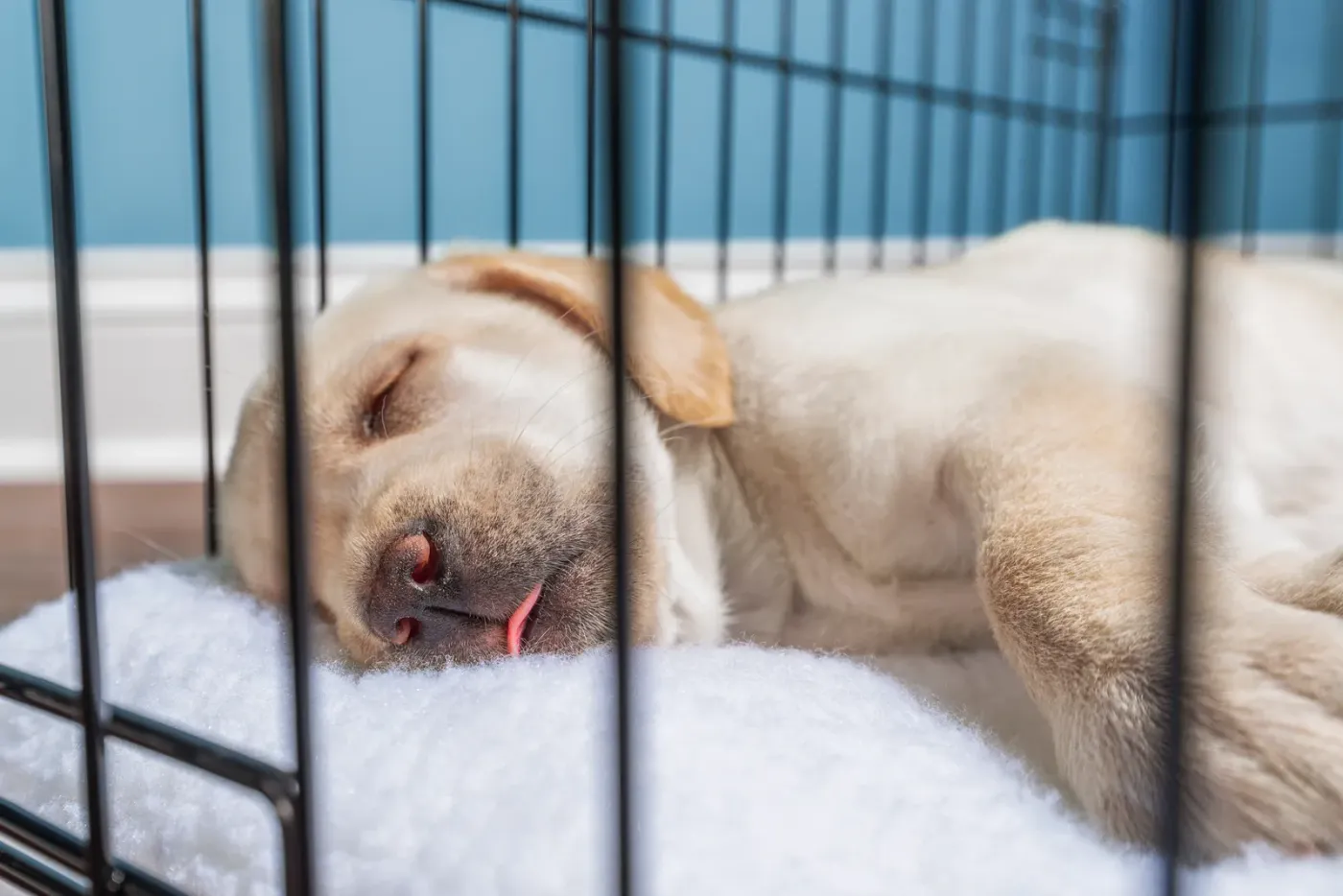
A puppy program is not adult training with smaller equipment. Look for socialization by design: planned, calm introductions to surfaces, sounds, people, and steady dogs, matched to the puppy's confidence that day. Look for nights in a crate, because a puppy who only naps in one has not learned to sleep in one. And look for a proper handover lesson, so the habits transfer to your hands and your hallway.
Red flags run the opposite direction: rotating handlers, group drills, or a curriculum that never mentions the owner. Our Puppy Fundamentals program is the version we would want for our own dogs: three weeks of one-on-one training for $2,775 plus GST, covering crate comfort, leash manners, name, sit, down, and place, with a slip lead and training collar included and a follow-up session within 60 days.
The programs
The puppy programs.
Both routes cover the window that matters; the consultation picks the right one.

Asked and answered
The questions people ask us.
Is puppy board and train worth it?
For most families, yes, because the alternative is not neutral. A puppy practises something every day, and untrained weeks tend to install the habits you spend the next year undoing. Three weeks of professional structure early usually costs less, in every sense, than months of correction later.
Is 8 weeks too young for board and train?
Eight weeks is usually too soon. A puppy that age mostly needs its new family, sleep, and gentle first experiences at home. A few weeks later, once your puppy has settled in, a residential program has far more to work with.
Will my puppy still bond with me after board and train?
Yes. Attachment in puppies is built on daily care over months and years, not broken by a short stay. Most owners find the relationship improves, because the puppy that comes home is easier to enjoy.
What should a puppy board and train actually teach?
Living skills first: crate comfort including overnight, loose-leash walking, name response, sit, down, and place, plus structured socialization. Formal obedience polish can come later. If a program cannot describe its socialization plan in detail, keep looking.
Keep reading
Start the right habits
Three weeks now beats a year of undoing later. Book a consultation and we will tell you honestly if the timing fits.
From real owners
Rated 5.0 on Google.
Real Northline dogs