
Breed trainability
Are Shih Tzus hard to train?
It depends which lesson is meant. A settle on a lap, a name, a sit at the door: many Shih Tzus take to those happily. House-training, standing still for a brush, and walking calmly through a Calgary winter with a long coat and short legs tend to be slower. None of that is a character flaw. We treat it as a routine to build, one small dog at a time.
Last reviewed September 25, 2026
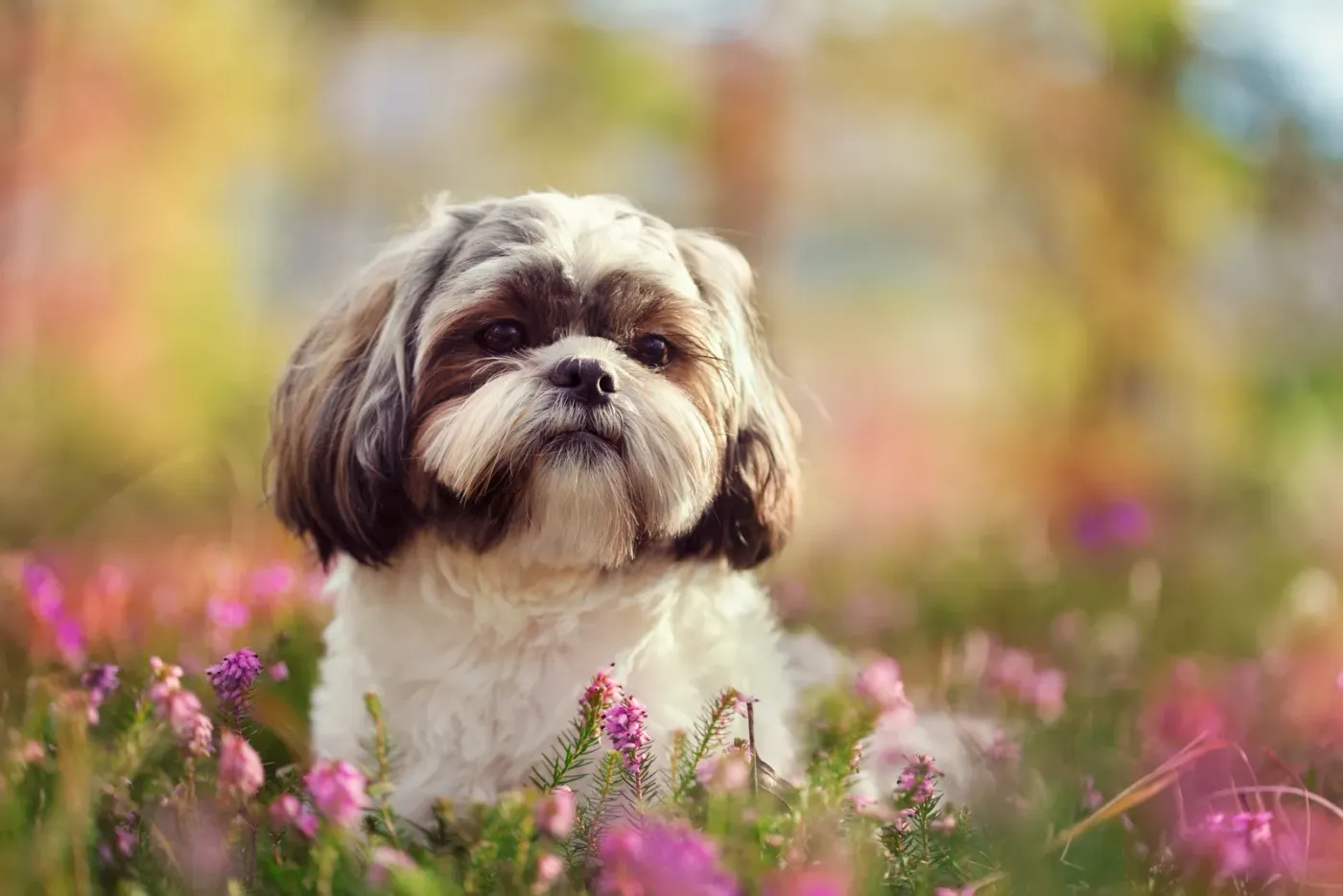
Companion by design
The effort goes into handling and house-training, not the cues.
The breed was developed to sit with people, and it shows. Many Shih Tzus are food-motivated and happy to repeat a small behaviour for a small reward, so a marker word and a small piece of food go a long way. They were not developed for a February sidewalk in Calgary or a grooming table, and that is where we see the effort go: a long coat that needs brushing, feet and a face that need handling, and a fringe over the eyes.
We treat handling as a training goal in its own right. Standing on a table, holding still for a comb, letting a hand near the eyes: a Shih Tzu that has practised those with a marker and food, in short sessions that end before the wriggling starts, tends to find grooming day less of an ordeal. A tied-up or trimmed fringe helps as well. A dog that can see a hand signal, or a bigger dog approaching, has less reason to startle.
- Companion breed, often people-focused
- Handling is a training goal
- Fringe out of the eyes
- Short sessions, small rewards
House-training in winter
A clock and a crate beat a stern voice in January.
House-training a Shih Tzu is, in our experience, mostly a matter of routine: a crate the dog is comfortable in, trips outside at set times, and a reward the moment the job is done out there. Winter adds a cleared patch close to the door, a coat if the dog seems to want one, and short trips: a couple of minutes, back inside to warm up, out again later. Nobody has to stand in the cold until something happens, least of all the dog.
Puppy Fundamentals is built for puppies in their key learning window: three weeks at $2,775 plus GST, covering crate comfort, leash manners and new sights and sounds, with a handover lesson and a free follow-up within 60 days. Private Training is built for hands-on owners who want to do the work themselves: $150 plus GST per one-hour session, with a written plan to practise all week. The consultation is where we recommend a program, and we recommend the smaller one when it is enough.
Asked and answered
The questions people ask us.
Are Shih Tzus easy to train?
For everyday cues, we find the answer is often yes. Many are food-motivated and enjoy attention, so sit, down, place and a settle tend to come along without much fuss. House-training and being handled for grooming are the areas where we plan for more patience.
Are Shih Tzus hard to potty train?
The breed has that reputation, and we take it seriously without treating it as fate. We approach it as routine: a comfortable crate, trips outside at set times, and a reward outdoors straight away. Our welcome package includes a crate-training guide, and in winter short trips close to the door make the routine easier to keep.
Are Shih Tzus stubborn?
Less than the label suggests, in our experience. When a Shih Tzu plants its feet, we look at what it can see through its fringe, how cold the pavement is, and whether the cue has ever been rewarded in that spot. Those are usually more useful questions than temperament.
Can Shih Tzus be trained?
Yes, and to a higher standard than a lap dog is often given credit for. We train them one-on-one, as we do every breed, with markers and rewards first and then practice in real settings: the front door, the sidewalk, other dogs at a sensible distance.
Keep reading
Small dog, proper training.
Tell us where the accidents happen and how the dog handles a brush. Book a consultation and we will talk through the options.
From real owners
Rated 5.0 on Google.
Real Northline dogs