
Breed trainability
Are Poodles easy to train?
Under the show clip, the Poodle was bred as a water retriever, and many carry a working dog's appetite for a task, so most we meet take to training readily. The rest of the picture is more particular: a coat that needs clipping every few weeks, a dog that often reads tone closely, and an attachment to its people that can make an empty apartment hard. Each of those is its own training project.
Last reviewed September 25, 2026
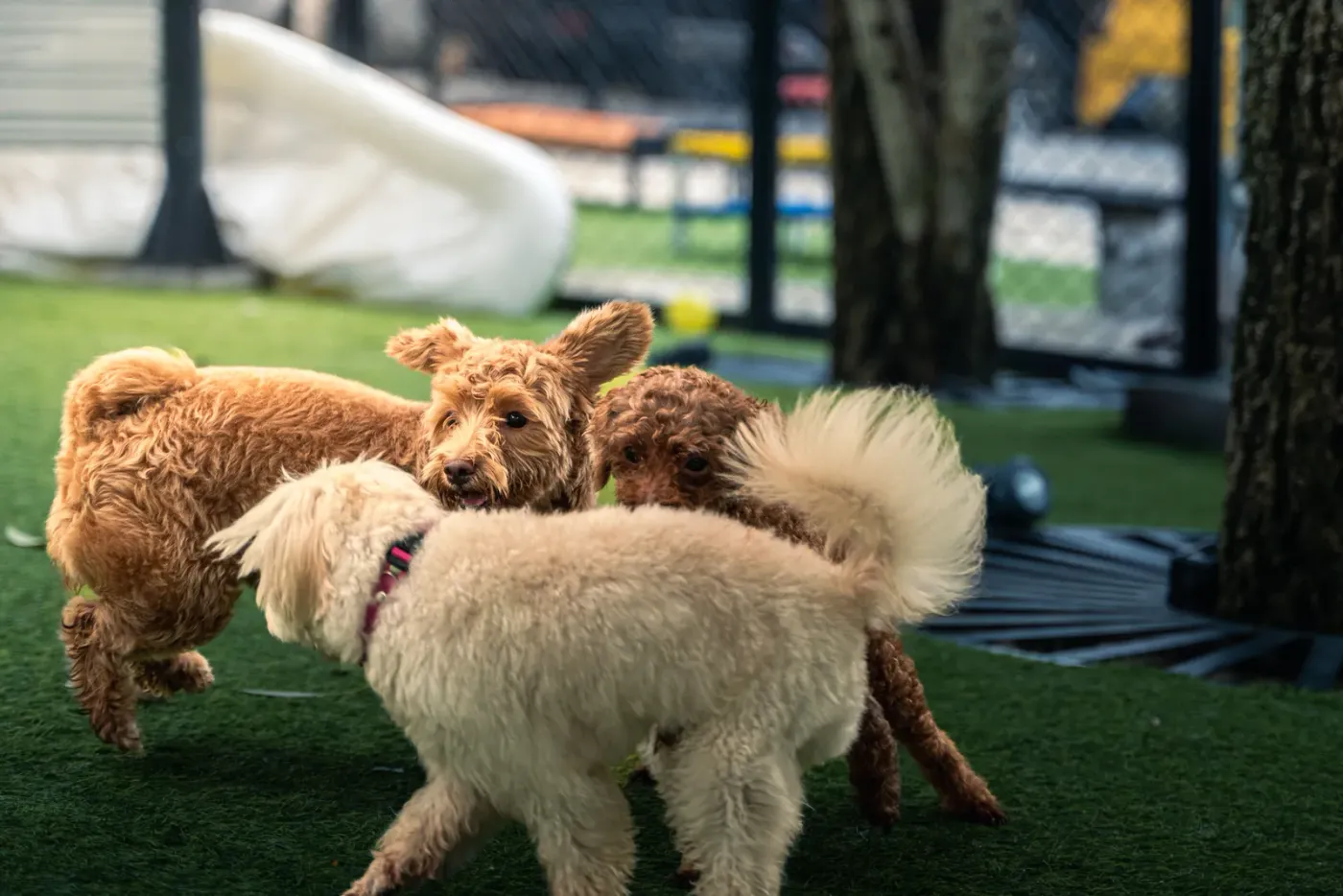
Three different jobs
Cues, clippers and closed doors each need their own plan.
On cues, many Poodles we work with take to marker training readily: we show the behaviour, mark it and pay it, and they are soon offering it again. We do not promise a timeline, because individuals differ and we do not assume the toy, miniature and standard sizes share one temperament. Many also read their people closely. Handled harshly, a sensitive dog in our experience tends to avoid the handler rather than try harder, so we keep corrections light and the tone quiet.
Grooming is the specific Poodle job. The coat sheds little, but it mats without regular brushing and needs clipping every few weeks, so a Poodle spends its life having feet, face and ears handled. We treat that cooperation as a skill: standing on a table, a chin rest, a clipper switched on nearby, each paid for. Then there is alone time. Many Poodles bond hard to their people, and when the routine slips, being left can become the problem nobody planned for.
- Sizes are not one temperament
- Light corrections, quiet tone
- Clippers and table are skills
- Alone time practised on purpose
Work that suits them
A retrieve as the paycheque, and short lessons that end early.
Markers still do the teaching, but with a Poodle the paycheque is often a retrieve rather than food, because in our experience many would rather carry something than eat it. We would suggest short sessions that end before the dog is bored, and a place command that holds while the window gets interesting, so a dog that likes to comment has somewhere else to be. Alone time gets practised on ordinary days in small doses, not left until a job change forces it.
Puppy Fundamentals, a three-week residential board and train at $2,775 plus GST, is aimed at puppies in the early learning window and covers crate comfort, leash manners and calm exposure to new sights and sounds. Private Training, $150 plus GST for a one-hour session plus a written plan for the week, is built for hands-on owners who want to run the sessions themselves. Neither is automatic. The consultation decides which, if any, and a smaller program is the recommendation whenever it is enough.

Asked and answered
The questions people ask us.
Are standard poodles easy to train?
Many of the standards we meet take to marker training readily, though we would not promise that for every dog. A standard is a big, athletic dog, so we also plan for enough physical and mental work through a Calgary winter. Without it, some find their own outlets, and those are rarely the ones the owner would pick.
Are miniature poodles hard to train?
Not in our experience as a rule, but individuals vary, and we do not assume a miniature is simply a smaller standard. We give a mini the same structure and the same clear rules we would give any dog, because size does not change the need for them. Barking is a common complaint we hear, and we treat it as its own project.
Are poodles smart?
They are widely regarded as one of the quicker-learning breeds, and many we work with fit that reputation. We would add that a quick learner stores the unwanted lesson as readily as the wanted one. That is a reason for more direction, not less.
Are poodles stubborn?
We would rarely reach for that word. A Poodle that refuses is often one that has been pushed too hard, is unclear on the ask, or has learned that waiting the handler out works. We ease off, clarify and follow through, and we expect the pace to vary by dog.
Do poodles need a lot of grooming?
Yes. The coat sheds little but mats readily, so regular brushing and a clip every few weeks are part of owning one. We treat standing calmly for feet, face and ears as a trained skill, practised at home between groomer visits.
Keep reading
Three goals, one plan.
Book a consultation and bring the barking, the grooming struggle and the alone-time worry. We will suggest the lightest program that covers them.
From real owners
Rated 5.0 on Google.
Real Northline dogs