
Breed trainability
Are Beagles hard to train?
Beagles are often delightful to teach and harder to keep taught, which is why both answers belong on one page. Many will offer a sit for a crumb, then pull hard toward a hedge because something interesting passed through last Tuesday. In our experience that is neither stupidity nor spite. It is a scent hound doing what scent hounds were developed for, in a city full of trails.
Last reviewed September 25, 2026
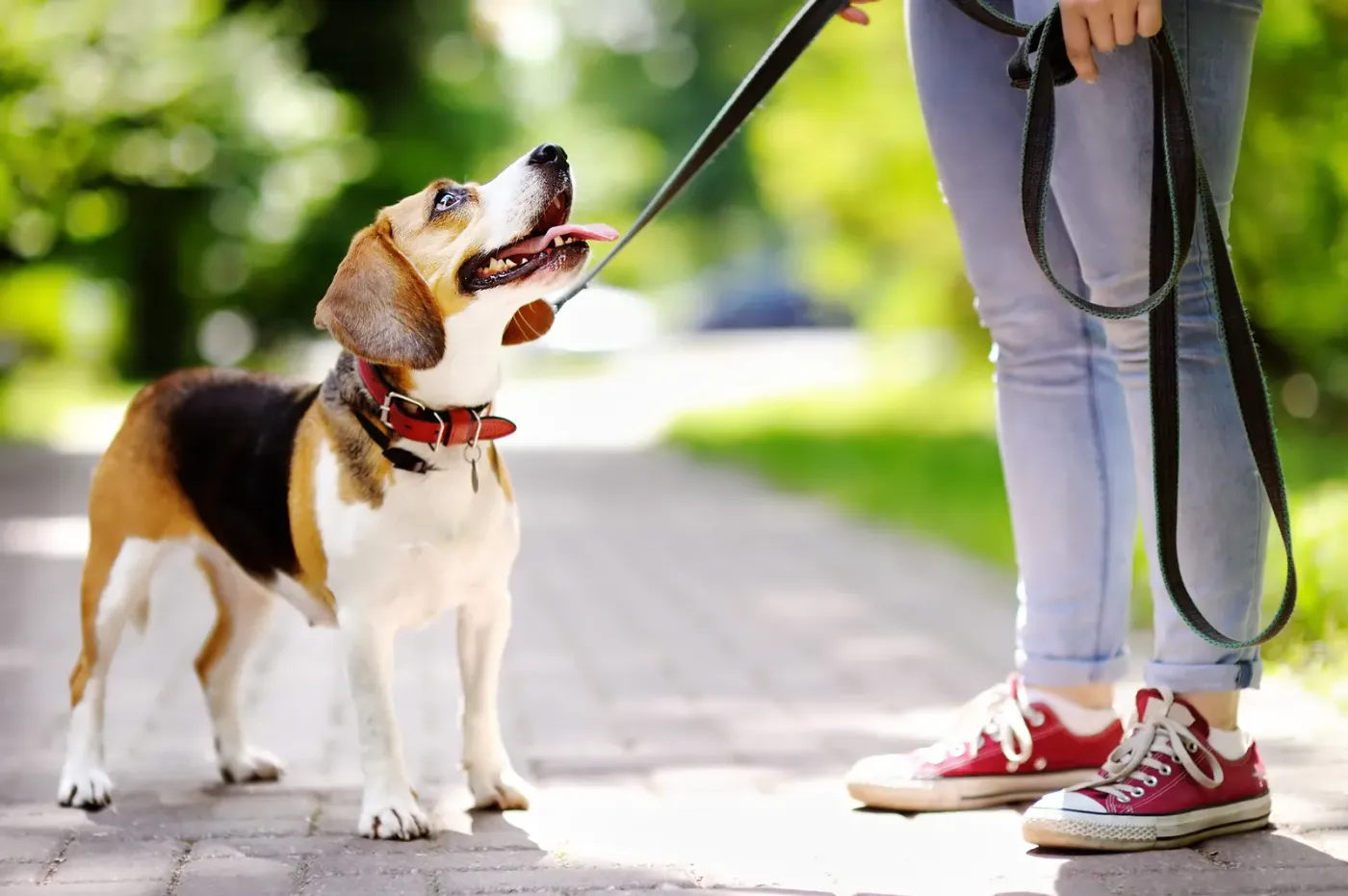
Nose over ears
The nose is the main obstacle, and it is not alone.
Beagles were developed to follow a trail in a pack, often well ahead of the hunter. Much of that job description shows up as a training challenge. Following a trail means the nose can take over from the ears. Working in a pack means other dogs are often more interesting than people. Ranging ahead means check-ins and recall tend to need more deliberate building and more generous rewarding. None of it makes the dog dim, in our experience. It makes the dog busy.
Now the flattering half. Many Beagles are soft-tempered, food-focused and genuinely fond of people, so marker training with treats tends to work well, sometimes almost too well. Sit, down, place and a handful of tricks often come readily and stick. The catch is that the appetite that makes them easy to teach also sends them onto the counter after lunch, and the nose that finds the sandwich finds the neighbour's garbage. Easy and hard turn out to be one trait wearing two hats.
- Nose can take over
- Pack bred, other dogs compete
- Recall needs deliberate building
- Food works almost too well
Beagle training plan
Long lines, paid check-ins and a locked lunch.
We start by taking the decision away from the nose. Calgary's bylaw requires a leash off your own property unless signs say otherwise, and on a pathway it can be no longer than two metres, so pathway walks stay on a regular leash. Long-line work belongs in a controlled setting, such as a yard or an enclosed space you have permission to use, where check-ins are rewarded before they are asked for and recall is paid with the best food in the house.
Counter-surfing is management first: nothing edible within reach, then a place command practised while dinner is made. For programs, On-Leash Foundations, two weeks at $1,865 + GST, is built for dogs that drag or treat the leash as a suggestion. Functional Off-Leash, three weeks at $3,030 + GST, is one option for owners who want to work toward recall around distractions; its included Educator remote collar is a training tool we teach the owner to use, not a substitute for proofing against scent.

Asked and answered
The questions people ask us.
Are Beagles easy to train?
Indoors, with food, often yes. Many Beagles are soft, cheerful and motivated by anything edible, so basic manners and tricks tend to come readily. Outdoors, on a scent, the same dog can look untrained, which is why we budget far more time for recall and leash work than for the rest.
Are Beagles stubborn?
Not in our experience. A Beagle that ignores a cue is usually not defying anyone; it is absorbed in a scent that is more compelling than a voice at that moment. Training that respects the nose and pays recall generously tends to get further than training that fights it.
Are Beagles hard to potty train?
Some are slower than other breeds, often because a Beagle outside is busy sniffing rather than getting on with it. A tight schedule, a crate the dog is comfortable in, and a marker the moment it finishes all tend to help, and Puppy Fundamentals works on crate comfort, including overnight. Patience usually matters more than technique.
Can Beagles be trained off leash?
Some can work toward it, with serious proofing and honest limits. We recommend building recall on a long line in a controlled setting and proofing it against real scent, and Functional Off-Leash teaches the owner to use its included Educator remote collar. Off leash means designated off-leash areas only under Calgary's bylaw, where a dog must stay in sight and respond to commands, and a fence does not make a failed recall safe: other dogs are inside it.
Why do Beagles run away?
Usually because a scent is more interesting than anything behind them, not because they dislike home. Many Beagles were bred to range ahead on a trail, so check-ins do not always come naturally and need deliberate rewarding. We would treat any Beagle as a flight risk until its recall has been proofed against a fresh trail, and the consultation is where we recommend a program, including a smaller one when it is enough.
Keep reading
Work with the nose.
Bring the story of your Beagle's last great escape, and what it has been stealing. Book a consultation and we will recommend a program.
From real owners
Rated 5.0 on Google.
Real Northline dogs