
Life stages
Your dog and a new partner moving in
A new partner moving in changes the dog's whole map: new smells, new schedule, and a stranger with opinions about the couch. Most dogs adjust quickly when the rules stay steady. Some dig in, guard the bed, or treat the newcomer as furniture at best. Here is how to merge two households without asking the dog to referee.
Last reviewed August 26, 2026
One shared rulebook
Merge the rules before you merge the furniture.
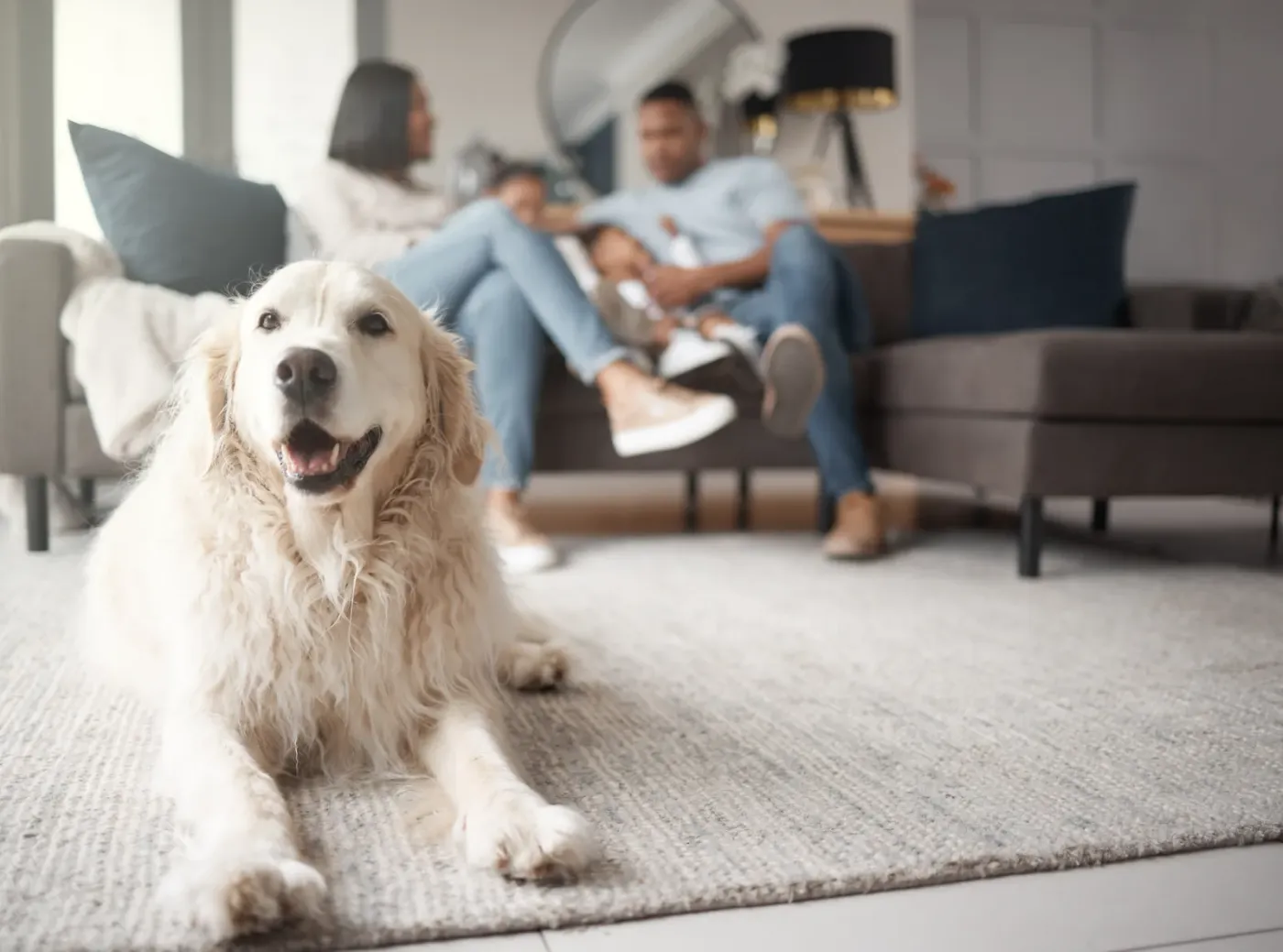
Sit down together and write the actual rules: where the dog sleeps, who feeds, whether the couch is allowed, what happens when the dog jumps on guests. Two adults enforcing two different standards teaches a dog to lobby the softer one. Pick one command vocabulary, one answer for the couch, and hold it for a month before renegotiating anything.
The bed and the couch are the usual flashpoints, because they sit next to the resource the dog actually guards: you. A dog that stiffens or grumbles when the new partner approaches the bed is not being romantic, it is controlling access. Move the dog to a floor bed or crate at night for now, reward calm around the partner, and treat any hard guarding as a job for a professional.
- One command vocabulary for both adults
- Furniture privileges decided in advance
- New partner handles meals and walks
- Bed access paused for now
A rocky start
When the dog has clearly voted no.
Slow introductions still apply even after the boxes are unpacked. Ask the partner to ignore the dog at first: no looming, no forced petting, no cornering for cuddles. Let the dog approach on its own schedule while the partner becomes the person who scatters treats, clips the leash, and opens the yard door. Attention the dog requests is worth ten greetings it endures.
If weeks of patience still end in growling, blocking doorways, or standing guard between the two of you, the dog needs more than time. Private training at $150 per session gives both adults the same written weekly plan, so nobody freelances. For guarding with teeth behind it, a Behaviour Rehab assessment is the honest starting point. Everything we run is one-on-one, so the plan fits your household, not a classroom.

The programs
Help for this chapter.
Life changes are when dogs need structure most. These formats provide it without upending the household.
Asked and answered
The questions people ask us.
Is my dog jealous of my new boyfriend?
It usually reads as jealousy but works like resource guarding: you are the resource, and the newcomer is competition near the bed and couch. Keep greetings calm, have your partner deliver the good things, and pause furniture access. If the dog escalates to growling or snapping, bring in professional help.
What if my dog doesn't like my new partner?
Dislike is usually discomfort with a stranger who moved in overnight. Stop forcing interactions, let the partner become the source of meals, walks and treats, and give it a few weeks of consistency. Persistent stiffness or growling is worth a one-on-one session before it hardens into a pattern.
How do I introduce my dog to a new partner properly?
Start on neutral ground with a walk together before the move, then keep early home visits low-key. The partner should ignore the dog and let it approach first. Save the wrestling and couch cuddles for after the dog has relaxed around them.
Will my dog and my partner ever get along?
Most households get there once the rules stop changing and the pressure comes off. Progress looks like the dog choosing to lie near the partner rather than merely tolerating them. If you are months in with no movement, one private session usually finds the sticking point.
Keep reading
Two adults, one plan
If the dog is struggling with the new arrangement, book a consultation and we will build one rulebook you can both hold.
From real owners
Rated 5.0 on Google.
Real Northline dogs