
Life stages
How to train a deaf dog or a dog losing its senses
Deafness changes the input, not the dog. A dog that cannot hear you can still learn sit, down, recall, and loose-leash walking; it just needs the information delivered through eyes and body instead of ears. This guide covers building a hand-signal vocabulary, solving the startle problem, replacing the recall whistle, and adjusting as an older dog loses hearing and sight a little at a time.
Last reviewed August 26, 2026
Silent cues
Building a vocabulary the eyes can read.
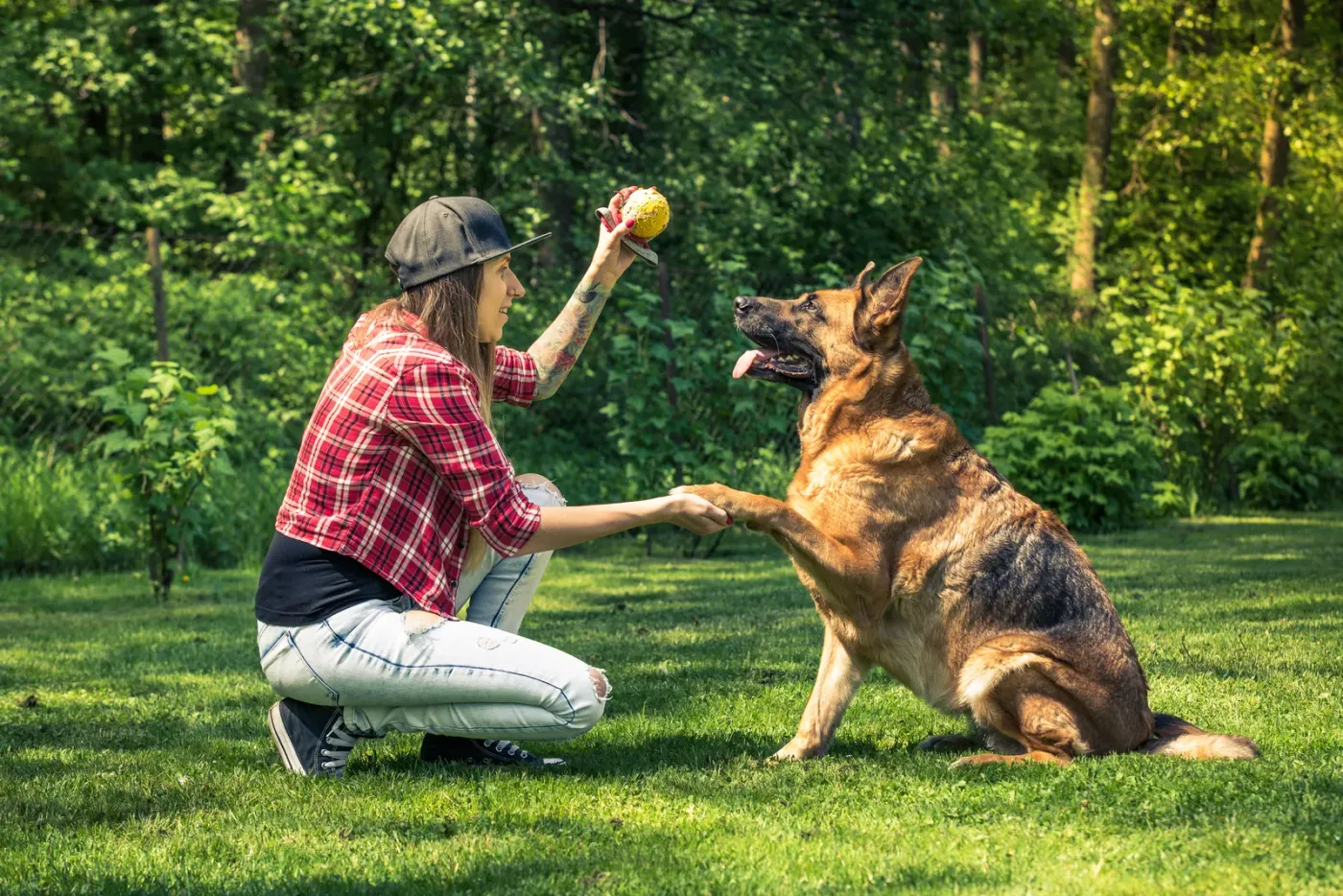
Pick one clear hand signal per behaviour and keep it consistent: a flat hand rising for sit, a finger sweep to the floor for down, an open palm for stay. Replace the marker word with a visual one, a quick thumbs-up or a small flashlight blink, then pay it with food every time at first. Exaggerate signals early, then shrink them as the dog gets fluent.
The startle problem needs its own project. A deaf dog woken by a sudden touch can snap before its brain catches up, so teach a soft wake-up: stamp lightly on the floor so vibration arrives first, or wave a hand at the edge of vision, then reward calm eyes. Practise gentle shoulder touches during the day, each one followed by a treat, so surprise contact predicts good things.
- One consistent signal per behaviour
- Visual marker, thumbs-up or light
- Vibration before touch for wake-ups
- Check-ins rewarded every single time
Fading senses
When hearing and sight fade slowly.
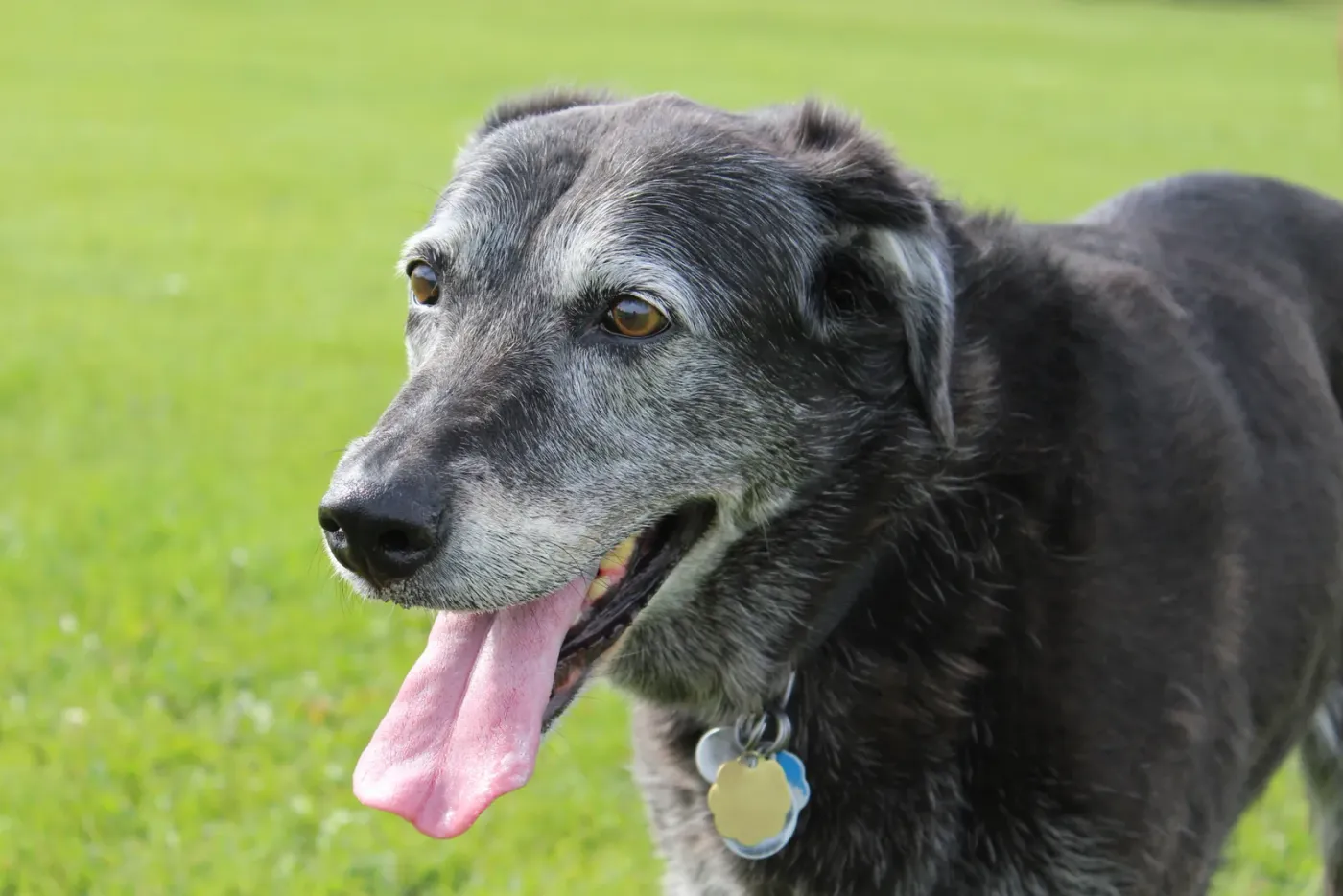
Senior dogs rarely go deaf overnight; they stop responding at a distance first, then sleep through the doorbell, then miss you entering the room. Start layering hand signals onto your spoken cues now, while hearing remains, so the visual version is already fluent when the sound fades. For dogs losing sight too, add touch cues, keep furniture where it is, and use scent and lighting to mark stairs and doors.
Off leash, honesty matters more than optimism. A dog that cannot hear you cannot be called off a hazard by voice, so recall becomes a check-in habit plus a long line or fenced space. Some deaf dogs do well with a vibration cue taught carefully as attention, never as correction. Tool introduction is exactly the kind of detail we handle in one-on-one training, matched to the individual dog.
The programs
Help for this chapter.
Life changes are when dogs need structure most. These formats provide it without upending the household.
Asked and answered
The questions people ask us.
How do you train a deaf dog?
Exactly like a hearing dog, with the sound swapped out: hand signals for cues, a visual marker like a thumbs-up, and food to pay for it. Get attention with floor vibration or a light touch, never a grab. Consistency matters more than the specific signals you choose.
Is deaf dog training harder than normal training?
It is different rather than harder. The mechanics are the same: mark, reward, repeat, then add distractions. The extra work sits in attention, since a deaf dog must look at you to receive any cue, so check-ins get rewarded heavily from day one.
How do I train a dog that is losing its hearing?
Start now, while some hearing remains. Pair a hand signal with every spoken cue you already use, so the dog transfers to the visual version gradually. Old dogs learn signals well; the earlier the pairing starts, the smoother the transition.
Can a deaf dog have a reliable recall?
Yes, within honest limits. Teach a check-in habit, use a long line during training, and consider a carefully introduced vibration cue that means look at me. Full off-leash freedom belongs in fenced spaces unless the visual recall is genuinely proofed.
Keep reading
Training without sound
Deaf and aging dogs learn well one-on-one. Book a consultation and we will build a signal system that fits your dog.
From real owners
Rated 5.0 on Google.
Real Northline dogs