The method
How to introduce dogs to each other
Two dogs marched nose-to-nose on tight leashes is the most common introduction and the worst one. Face-to-face is confrontational in dog language, and tight leashes remove every polite exit. The parallel walk flips the script: shared movement, shared direction, and a meeting that happens only after both dogs have already decided the other one is boring. Here is the full sequence.
Parallel walk
Movement first, meeting last.
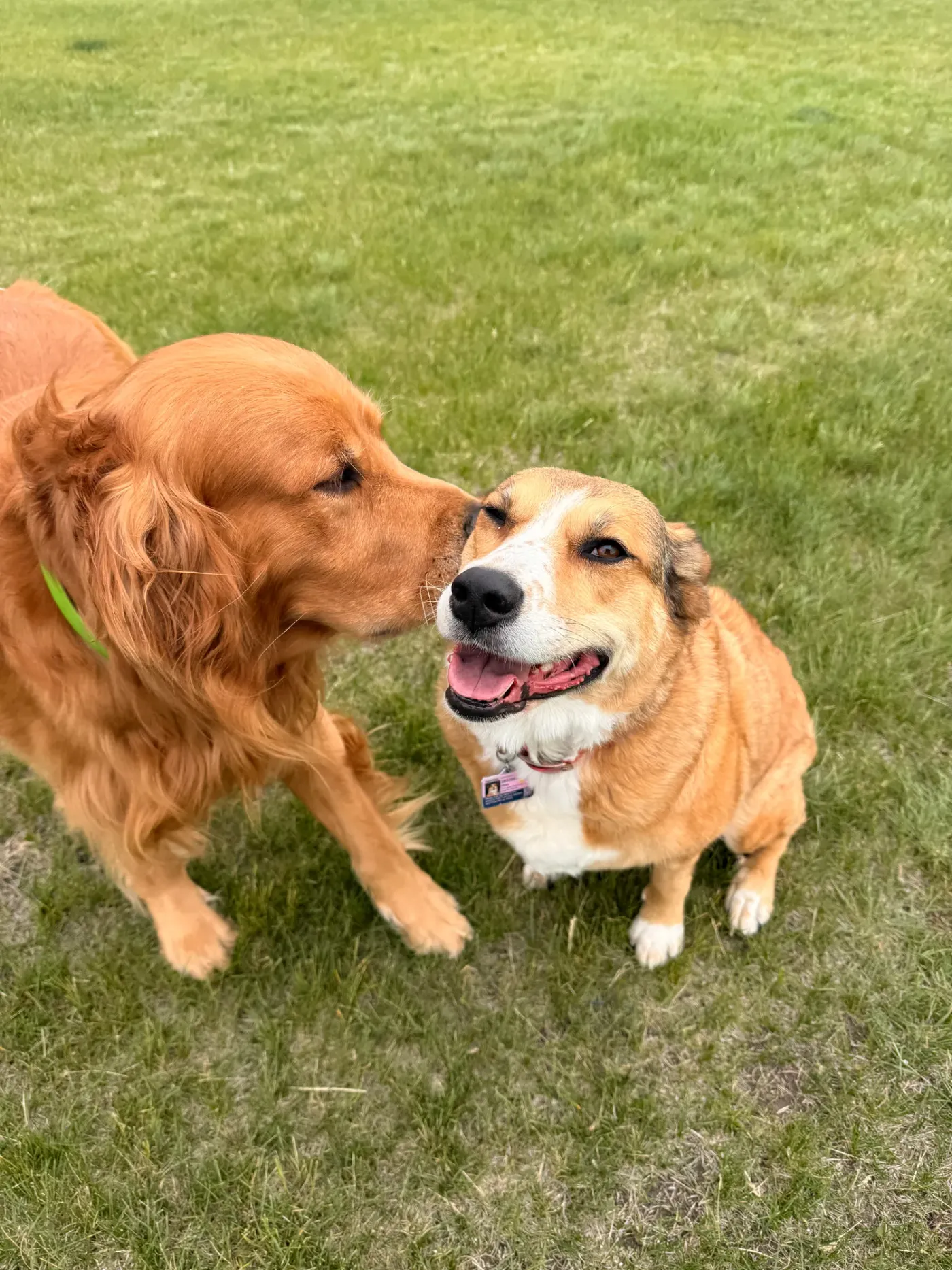
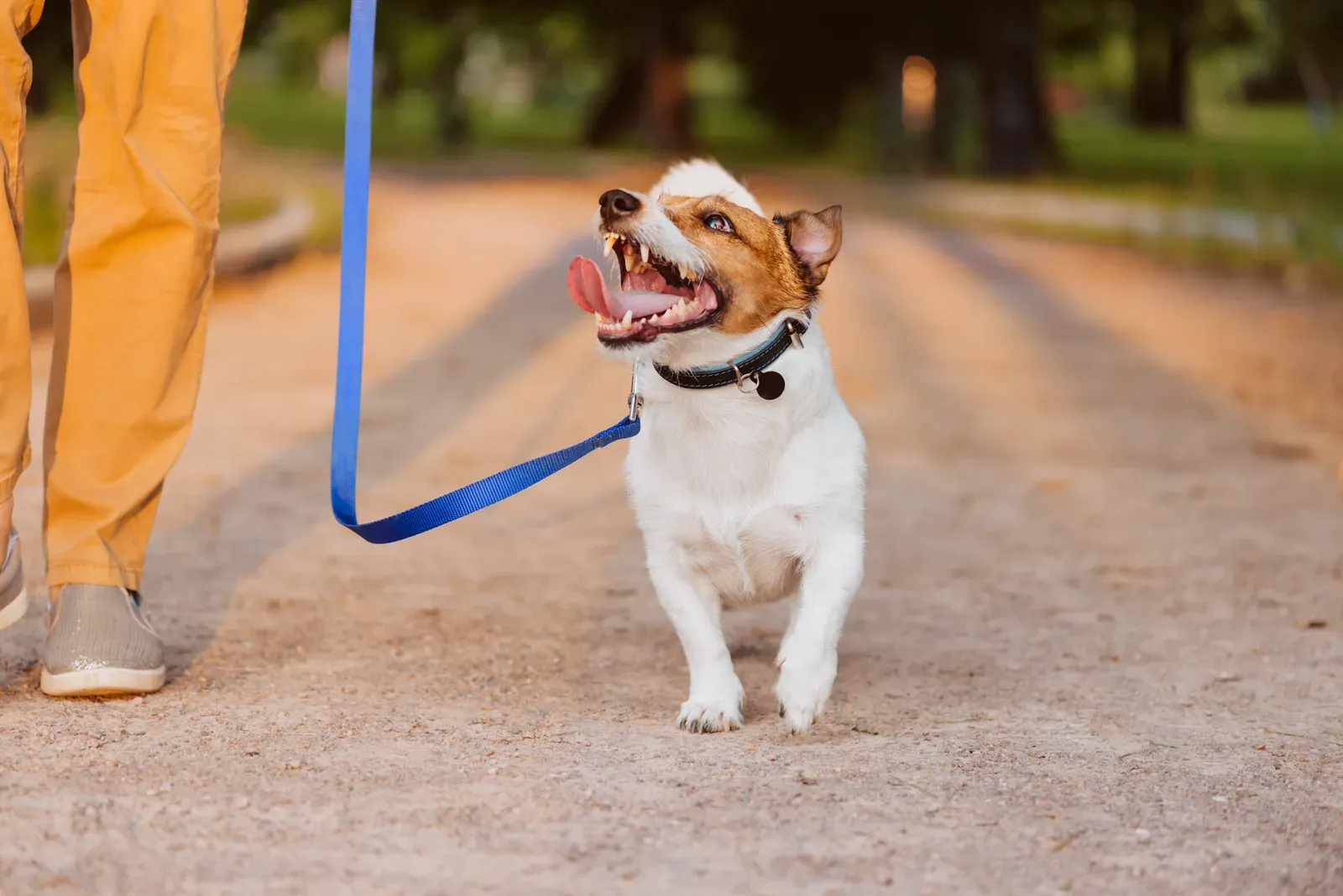
Pick neutral ground neither dog patrols: a quiet street or an empty schoolyard, one handler per dog. Begin walking the same direction with a road's width between you. Watch both dogs, not just yours: loose wagging bodies and curved approaches are green lights, while hard stares, raised hackles that stay up, and frozen stillness are not. Close the distance in stages, only when both dogs look bored with the arrangement.
Let one dog sniff where the other just walked before any face time. When both have passed that test, allow a three-second sniff, then cheerfully call the dogs apart and keep walking. Short contacts that end well beat one long meeting that sours. If either dog stiffens, add distance and go back to walking. You can always try again tomorrow, and with tense pairs you should.
- Neutral ground, one handler each
- Same direction, wide gap
- Three-second sniffs, then apart
- End every session on success
Bringing one home
Gates, weeks, and clear red flags.
Moving a new dog into a resident dog's house is its own project. Walk them together before either crosses the threshold, then bring the new dog in on leash while the resident is out of the room. For the first weeks, run a gated household: separate feeding, separate high-value chews, separate sleeping spots, and no unsupervised time together. Rotate freedom rather than forcing togetherness. Most solid dog friendships start slowly.
Stop and get help if you see fights that leave punctures, a dog who targets the other through the gate for days, guarding of doorways or people, or a size mismatch where play keeps tipping into pinning. Those patterns rarely resolve on their own. We work with multi-dog households through private training at $150 a session, with a written weekly plan, and through board and train when one dog needs skills built away from the tension.
The programs
Extra hands for the introductions.
When the mix needs a professional read, these are the options.
W · One-hour session
Private Training
One-on-one coaching with you on the other end of the leash.
Includes a written weekly plan to work from
SW · Weekdays, drop-off 8–10 am · pick-up 5–7 pm
Day Training
Professional training all day, your couch at night.
Includes weekly one-hour go-home lesson, daily structure
Asked and answered
The questions people ask us.
Why should dogs meet on neutral ground?
Because home turf comes with things worth defending: territory, people, toys, routines. Neutral ground removes the ownership question so the dogs can just read each other. A quiet street or empty field works better than either backyard.
How do I introduce a second dog at home?
Walk the dogs together outside first, then bring the newcomer inside on leash while the resident waits elsewhere. Keep food, chews, and beds separate and use gates for the first few weeks. Supervised, short, boring time together builds the relationship fastest.
How long should the first meeting last?
Contact itself should last seconds, not minutes. A three-second sniff followed by a cheerful call-away, repeated a few times, tells you far more than one long session. End while both dogs still look relaxed.
What if the dogs growl at each other?
A brief grumble during a sniff is communication, not a verdict. Add distance, go back to parallel walking, and shorten the next contact. Repeated hard staring, lunging, or any contact with teeth means stop and bring in a professional before the pattern sets.
Keep reading
Two dogs, one house?
Book a consultation if your introduction has stalled or turned tense. We will map the next steps for both dogs.
From real owners
Rated 5.0 on Google.
Real Northline dogs