
Breed guide
How to train a Bernedoodle
A Bernedoodle is a gentle giant only if somebody raises it to be one. Big, soft and people-oriented, the breed's problems rarely look like aggression. They look like an adolescent who never learned that size matters: jumping up, leaning into guests, dragging the leash-holder toward every friend it has not met yet. The fix is early structure, taught kindly and held consistently.
Last reviewed August 26, 2026
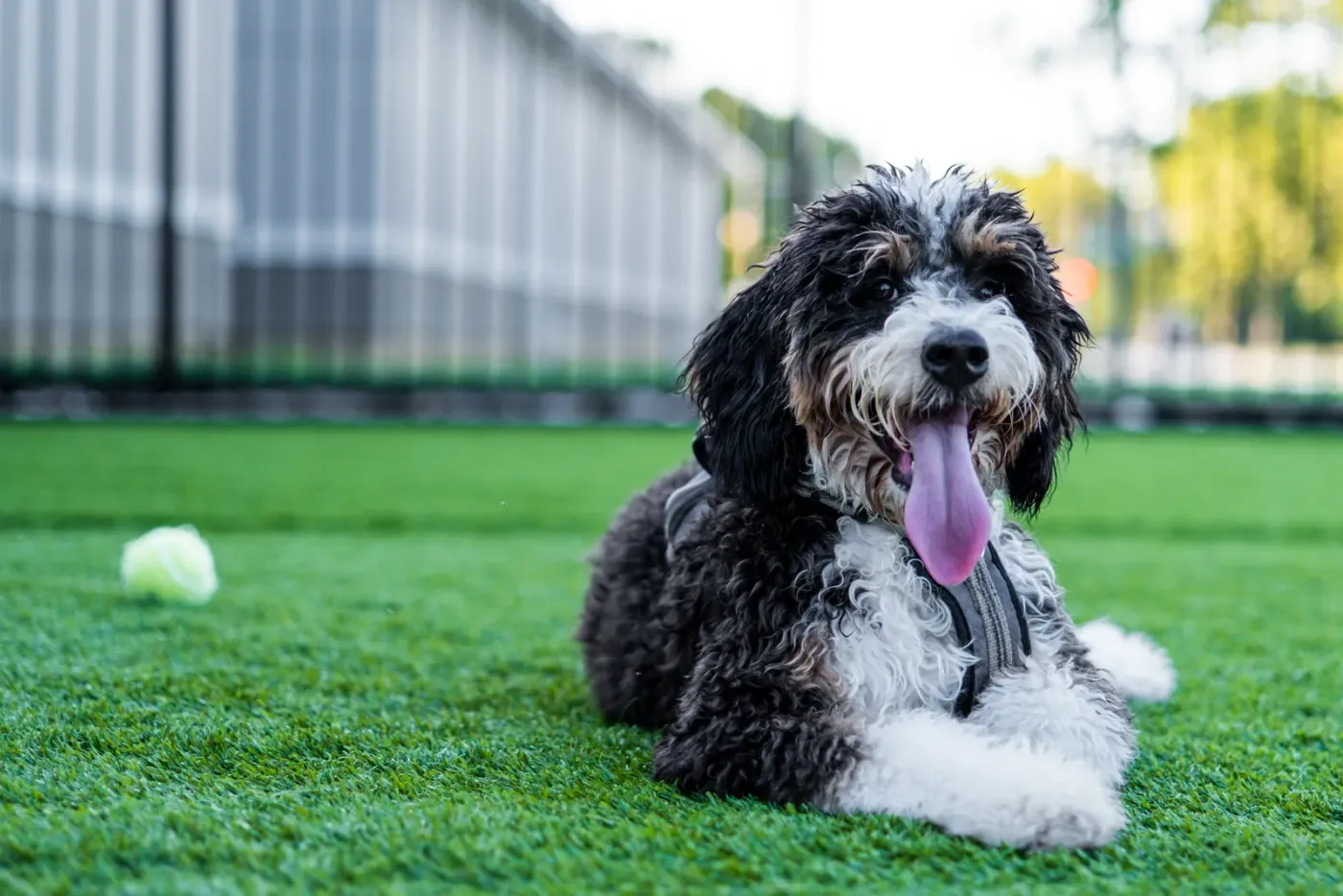
The honest picture
A soft heart attached to serious mass.
Bernedoodles are affectionate to the point of comedy. They lean their full weight into legs, flop onto feet, and treat every visitor as a long-lost relative. The affection is not the issue. The physics are. A dog this size that jumps in greeting can knock a child or a grandparent flat without any bad intent, and the leaning that charmed everyone at four months is a real force by the first birthday.
Adolescence is where it goes sideways. The soft puppy becomes a strong teenager, and pulling stops being an annoyance and starts moving the person holding the leash. Owners respond by walking less, the dog gets less practice, and the problem compounds. Meanwhile the jumping and the leaning continue, because nobody ever taught the dog that its body has consequences. None of it is bad temperament. All of it is missed education.
- Jumping and leaning at full size
- Pulling that moves adults
- Coat overheats in summer
- Softness that needs gentle handling
Raising it right
Teach the body before it gets big.
Start loose-leash walking the week the puppy comes home, not the month the pulling starts. Markers and food work beautifully on this people-oriented breed; harsh corrections just make a soft dog worried. Prioritise three skills: walking politely on a loose leash, holding a place command while guests arrive, and greeting people from a sit. A slip lead used properly gives clear information without a fight, and we teach owners exactly how.
The classic mistake is treating the Bernedoodle like the small dog it briefly was: allowing the jump, laughing at the lean, forgiving the pull. Every repetition rehearses the habit at a larger size. In Calgary, remember the coat: it is built for January, not July, so keep summer training to cool mornings and bring water. For most Bernedoodles the right fit is On-Leash Foundations, a 2-week board and train at $1,865 plus GST; puppies start better in Puppy Fundamentals at $2,775.
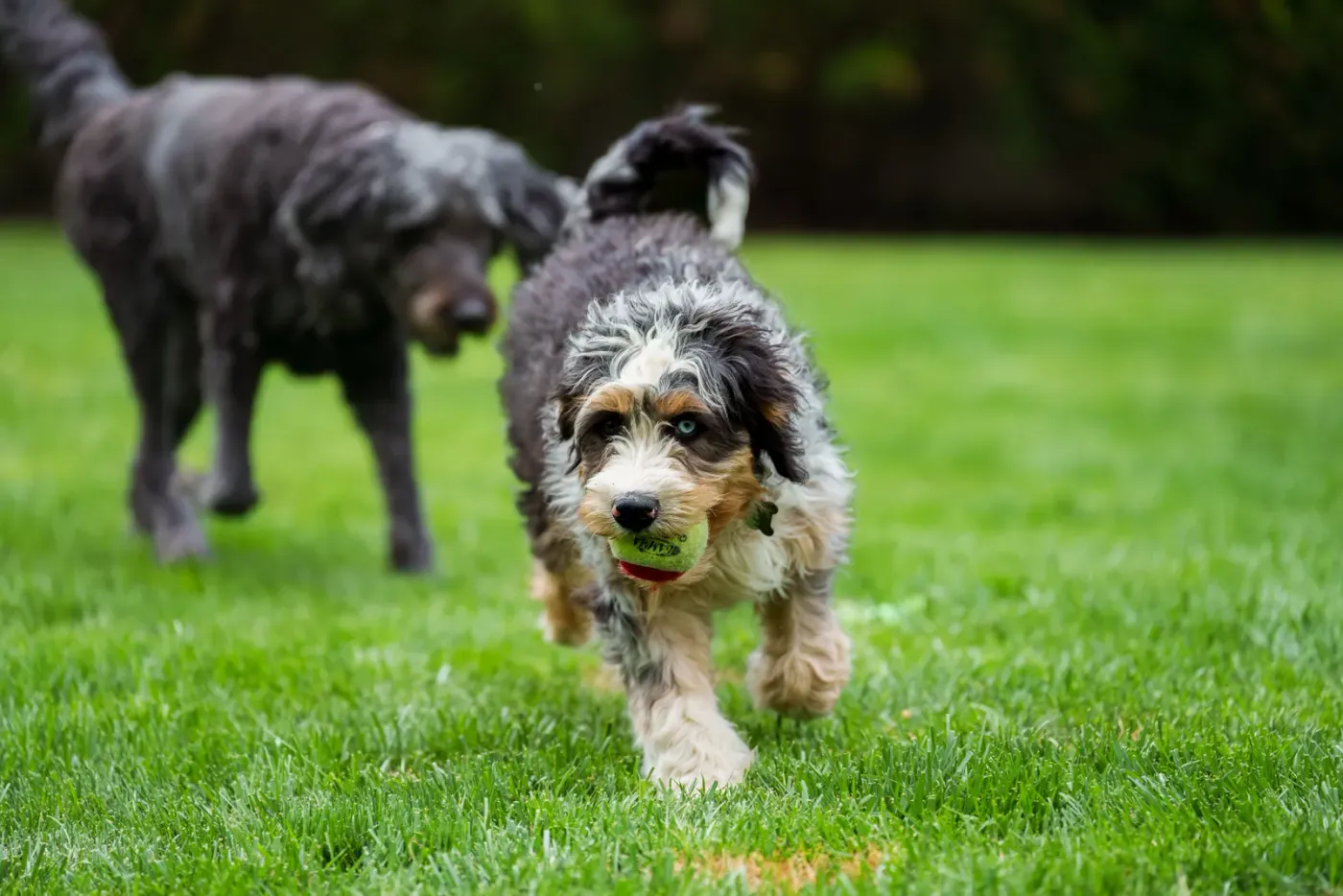
The programs
Where this breed usually lands.
The programs below are the ones this breed most often needs; the consultation confirms it for your dog.
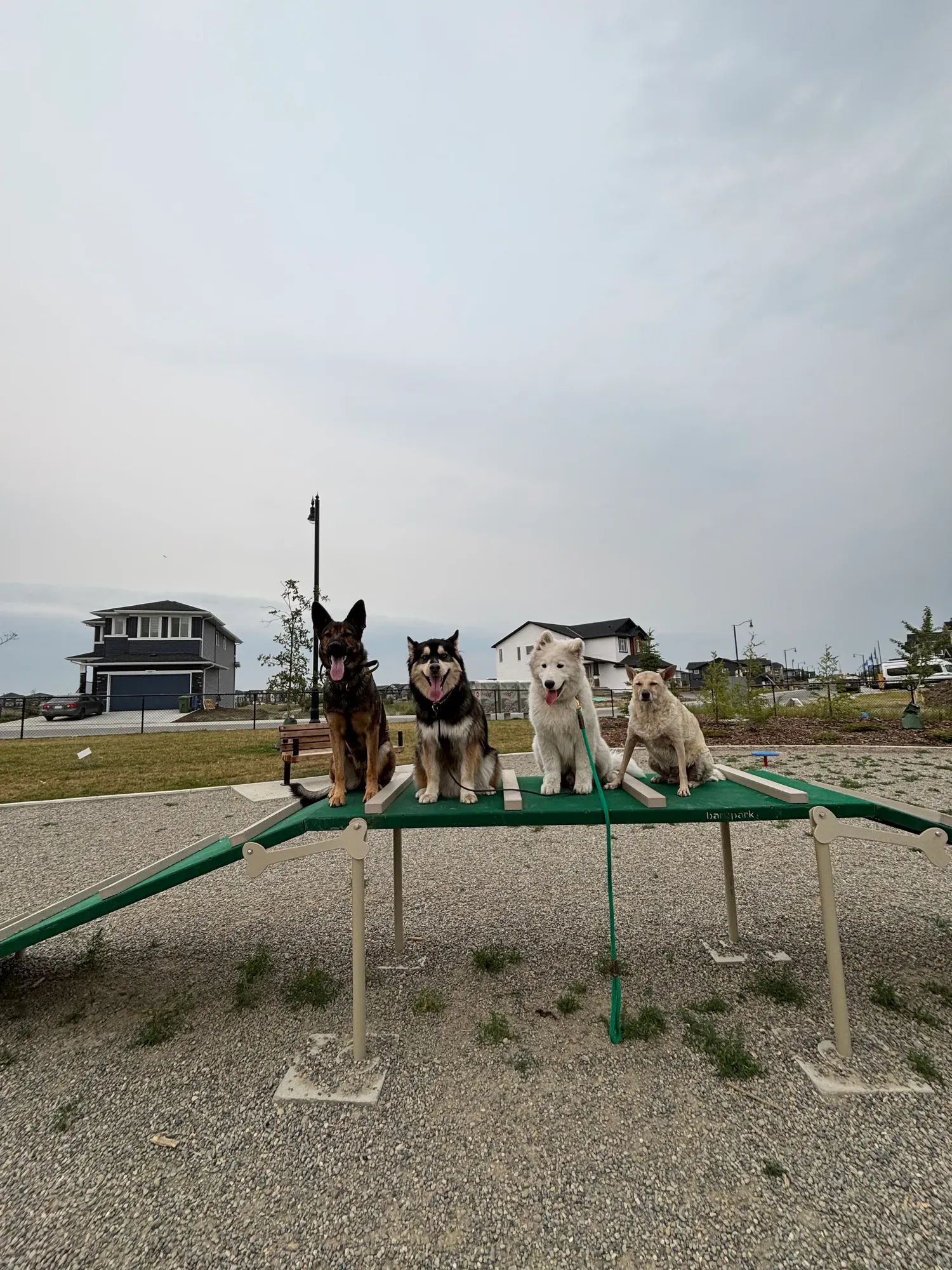
SW · Weekdays, drop-off 8–10 am · pick-up 5–7 pm
Day Training
Professional training all day, your couch at night.
Includes weekly one-hour go-home lesson, daily structure

NE · 2-week board & train
On-Leash Foundations
If every walk is a wrestling match, pulling, barking, zig-zagging, this two-week program rebuilds the walk from the ground up with foundational on-leash obedience..
Includes handover lesson, follow-up session, lifetime support, slip lead + collar
Asked and answered
The questions people ask us.
Are Bernedoodles easy to train?
They are willing and food-motivated, which makes teaching skills straightforward. The challenge is consistency at scale: habits that seem harmless in a fluffy puppy become real problems in a very large adolescent. Train early and the breed is a pleasure.
What are common Bernedoodle behaviour problems?
Jumping on people, leaning into guests, and pulling hard on leash are the big three. They are size problems more than temperament problems. A dog that learns polite greetings and loose-leash walking young rarely develops any of them.
When should Bernedoodle puppy training start?
Right away. Loose-leash skills, crate comfort and calm greetings are far easier to install before the growth spurt than after it. Waiting until the dog is strong enough to pull you is waiting too long.
What are your top Bernedoodle training tips?
Never reward a greeting that starts with paws, walk daily so leash skills get real practice, and keep summer sessions short and shaded because the coat holds heat. Gentle, consistent structure suits this soft breed better than confrontation.
Keep reading
Big dog, better manners
A Bernedoodle with manners is a joy at any size. Book a consultation and we will build the plan.
From real owners
Rated 5.0 on Google.
Real Northline dogs