Calgary dog life
Spring melt: mud, gravel and paw hazards
The snow goes and Calgary looks, for a few weeks, like the bottom of a birdcage. A winter's worth of gravel surfaces at once, the sidewalks alternate between slush and glass, and whatever was dropped in January thaws in the grass. Dogs love it. Owners mostly do not. Here is what to watch for between March and May, and the two skills that do most of the safety work.
Last reviewed August 26, 2026
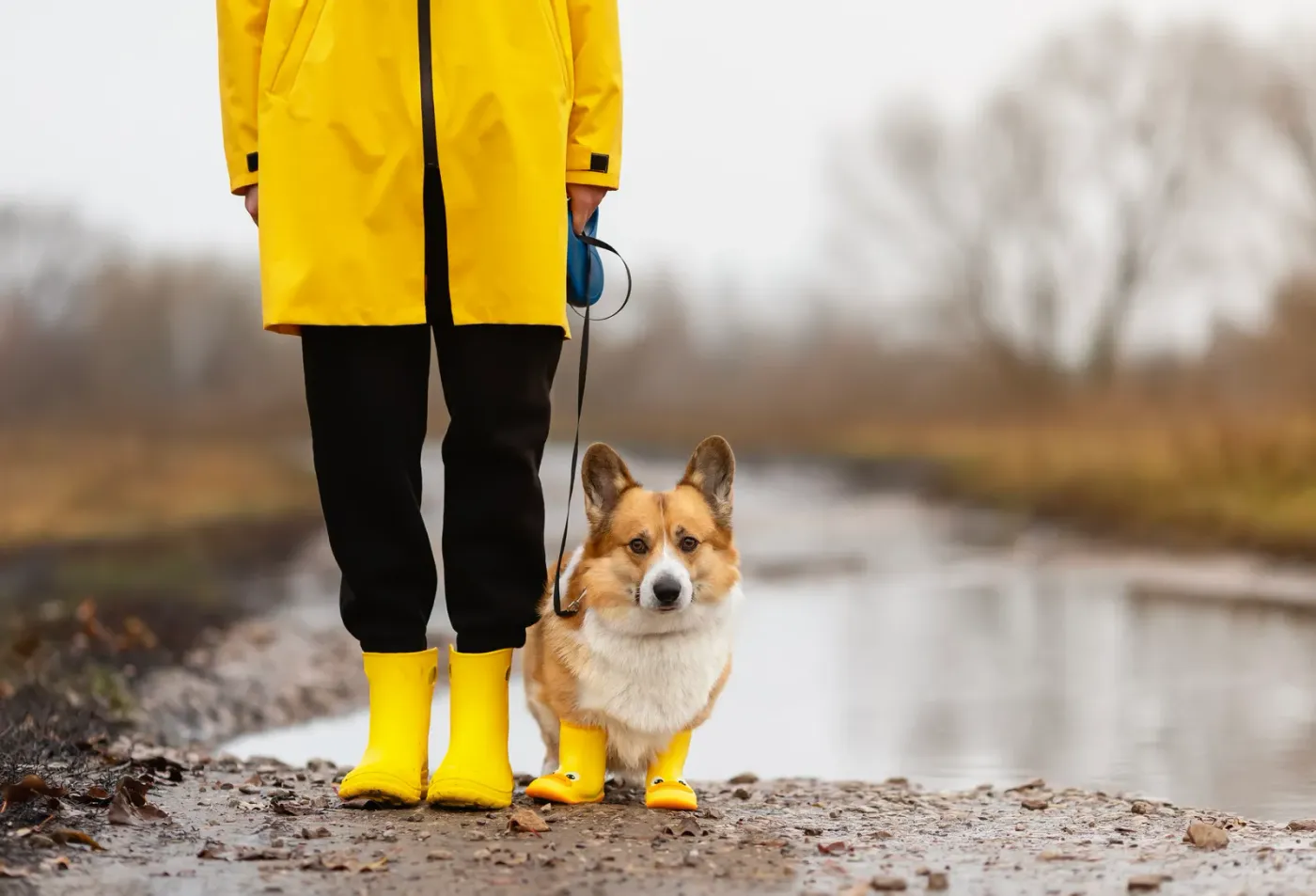
The melt season
What the thaw uncovers between March and May.
The first hazard is the one you cannot see. Daytime melt runs across sidewalks and refreezes overnight, so a grey patch of slush in the morning can be a sheet of ice with a soft lid. A dog that hits it at a trot splays out, and a young dog with loose joints does that a dozen times a walk. Treat every wet-looking patch as ice until a paw proves otherwise.
Then there is the gravel. A winter's worth surfaces at once and works into the webbing between the pads, where it rubs raw by the end of the block. Mud hides the same grit. Under the mud sits everything the snow buried: thawed garbage, months of feces, the odd chicken bone. And the ponds still carry ice that looks solid from shore and is not. Leash up near the water until it is truly open.
- Slush may be refrozen ice
- Check pad webbing for gravel
- Leave it for thawed garbage
- No dogs on pond ice
Skills and routine
Leave it, recall and a towel by the door.
Two cues do most of the work in melt season. Leave it stops a dog from swallowing whatever the snowbank gave back, and it has to be proofed on real finds, not just a treat under a shoe. Recall gets a dog off the pond edge before the ice makes the decision. Both are taught with markers and rewards first, then proofed around the distractions of a wet Calgary park, which is where most owners find out the cue was only ever a suggestion.
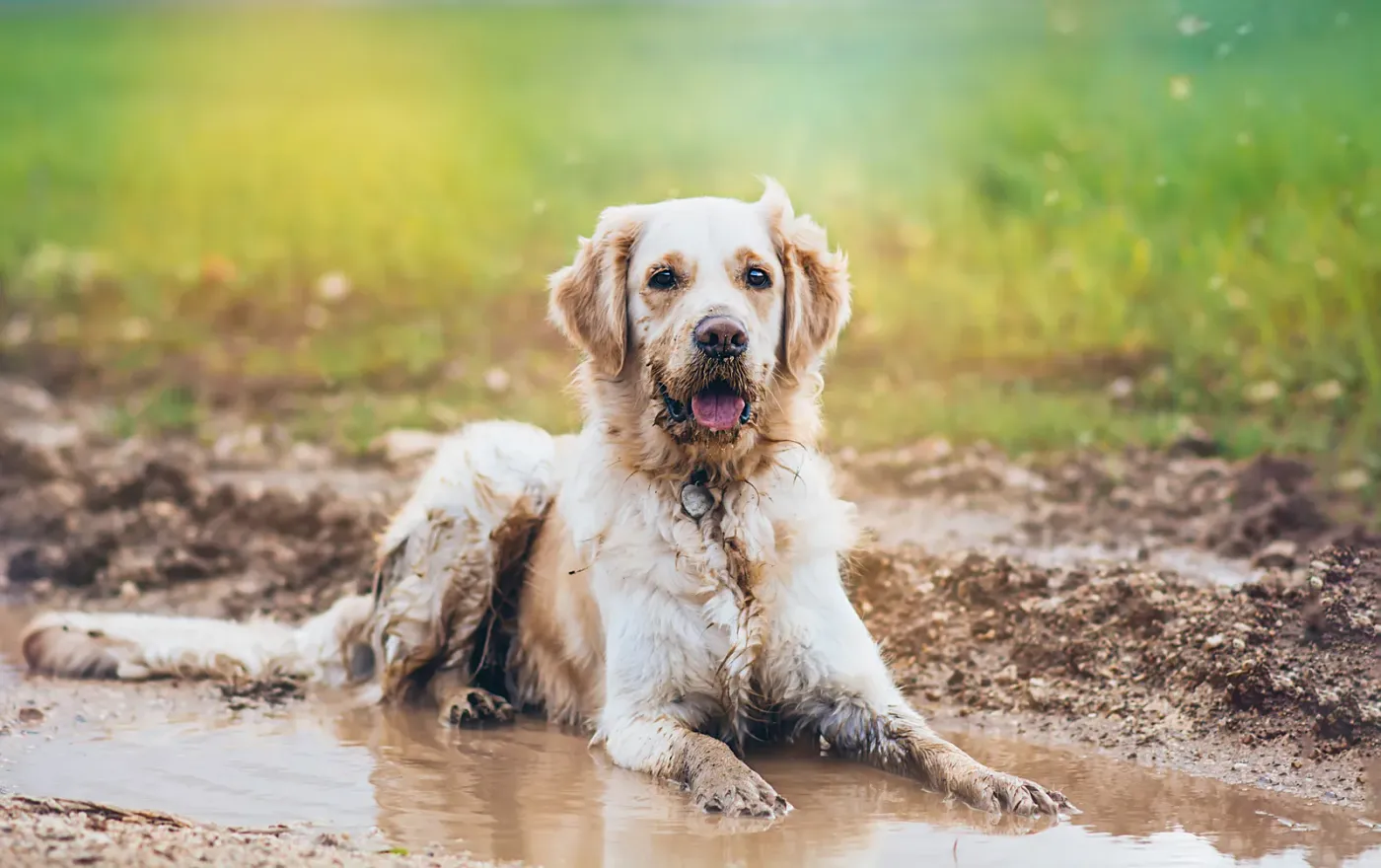
The mud routine is boring on purpose: towel at the door, a paw check that spreads each toe to look for packed gravel, and a place command so the dog waits while you do it. Spring is peak season for adolescent chaos: last summer's puppies have grown up, and bare ground goes straight to their heads. If your dog picked this month to forget everything, that is the season talking. A two-week On-Leash Foundations stay at $1,865 plus GST rebuilds the basics before summer.
The programs
The training behind a good Calgary dog.
Recall, leash skills and calm in public are what make this city fun with a dog. These are the formats that build them.
SW · Weekdays, drop-off 8–10 am · pick-up 5–7 pm
Day Training
Professional training all day, your couch at night.
Includes weekly one-hour go-home lesson, daily structure
NE · 2-week board & train
On-Leash Foundations
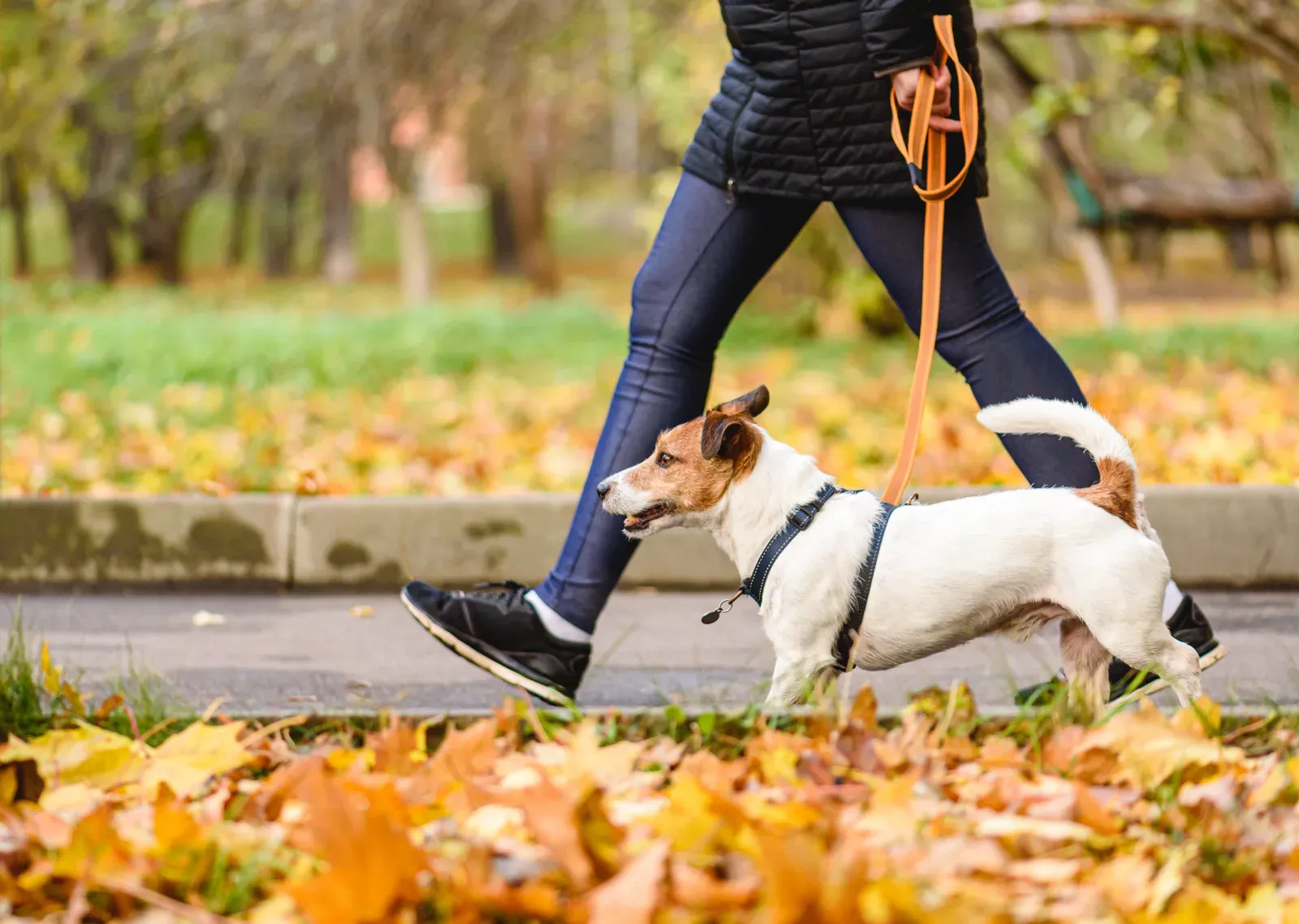
If every walk is a wrestling match, pulling, barking, zig-zagging, this two-week program rebuilds the walk from the ground up with foundational on-leash obedience..
Includes handover lesson, follow-up session, lifetime support, slip lead + collar
E · 3-week board & train
Functional Off-Leash
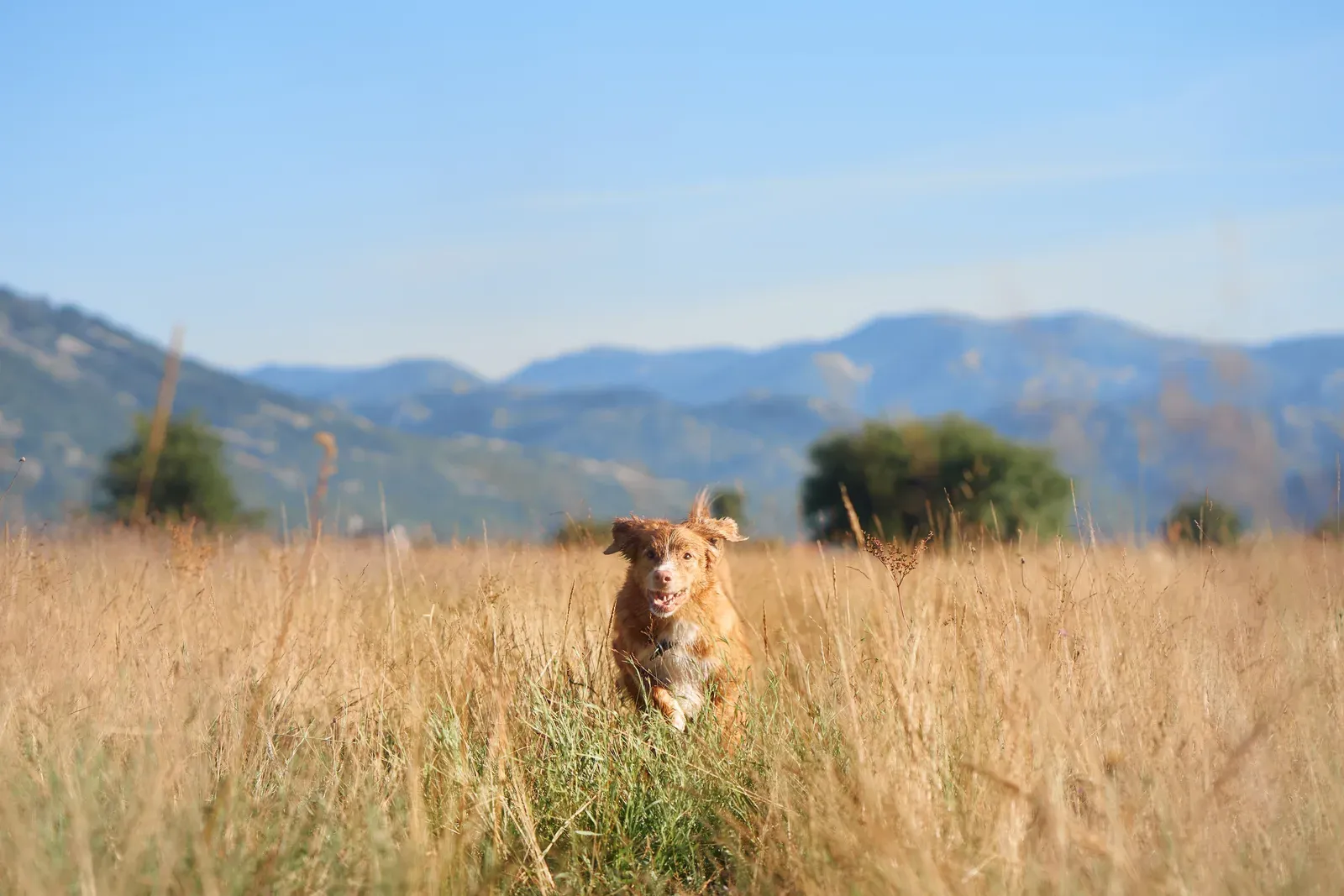
Everything in the on-leash program, then the next level: reliable off-leash recall even around distractions.
Includes handover lesson, follow-ups, Educator remote collar
Asked and answered
The questions people ask us.
Is spring dog walking in Calgary really that different?
Yes, between March and May it is. Sidewalks alternate between slush and refrozen ice, gravel covers everything and the grass is a buffet of thawed leftovers. Shorter leash, slower pace, and a paw check when you get home.
How do I deal with a muddy dog every spring?
Build a routine the dog can predict: stop on the mat, wait on place, towel, paws, release. Dogs accept it within a week if it happens every single time. A crate-trained dog can also dry off somewhere it cannot redecorate the couch.
Why does gravel hurt my dog's paws in Calgary?
Traction gravel is coarse, and by March it is everywhere the snow was. It lodges between the pads and in the webbing, and a dog will keep walking on it until it rubs raw. Spread the toes after each walk and pick it out.
What are the biggest spring hazards for dogs?
Refrozen ice under slush, gravel in the paws, thawed garbage and feces, and pond ice that looks walkable and is not. The bylaw says owners must pick up after their dogs year-round; the thaw shows exactly who did not. A reliable leave it covers most of the rest.
Keep reading
Tighten the basics before summer
Book a consultation and we will say plainly whether your dog needs a two-week stay or a couple of private sessions.
From real owners
Rated 5.0 on Google.
Real Northline dogs