
Training notes
Patio season manners
You can feel it coming. The snow shrinks, the tables come out, and every dog owner in Calgary starts wondering whether this is the summer their dog joins them for lunch. It can be, if the work starts about four weeks before the weather does. Here is the plan we give owners who want a dog people compliment instead of tolerate.
Last reviewed August 26, 2026
Three quiet skills
Settle, ignore and quiet carry the whole meal.
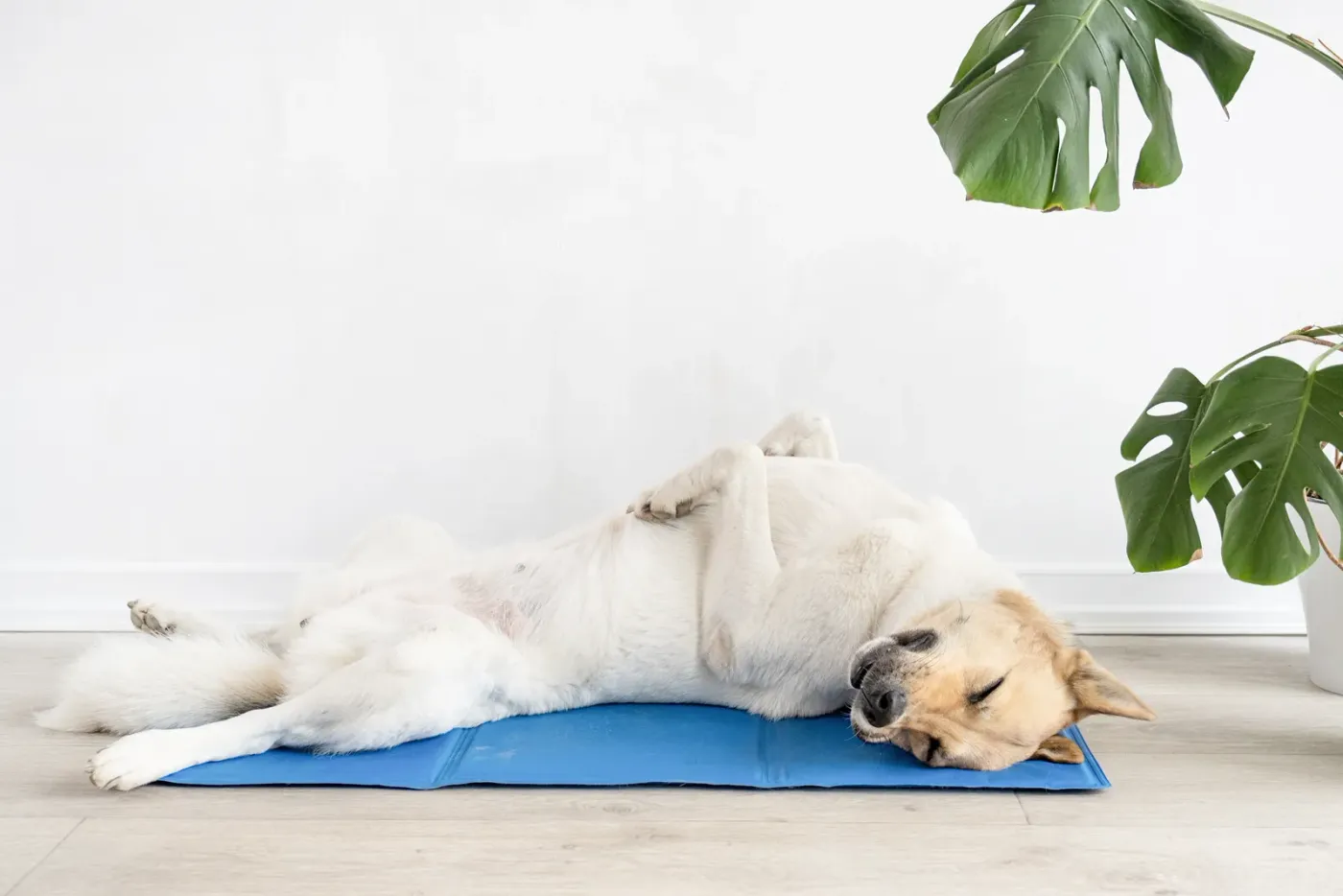
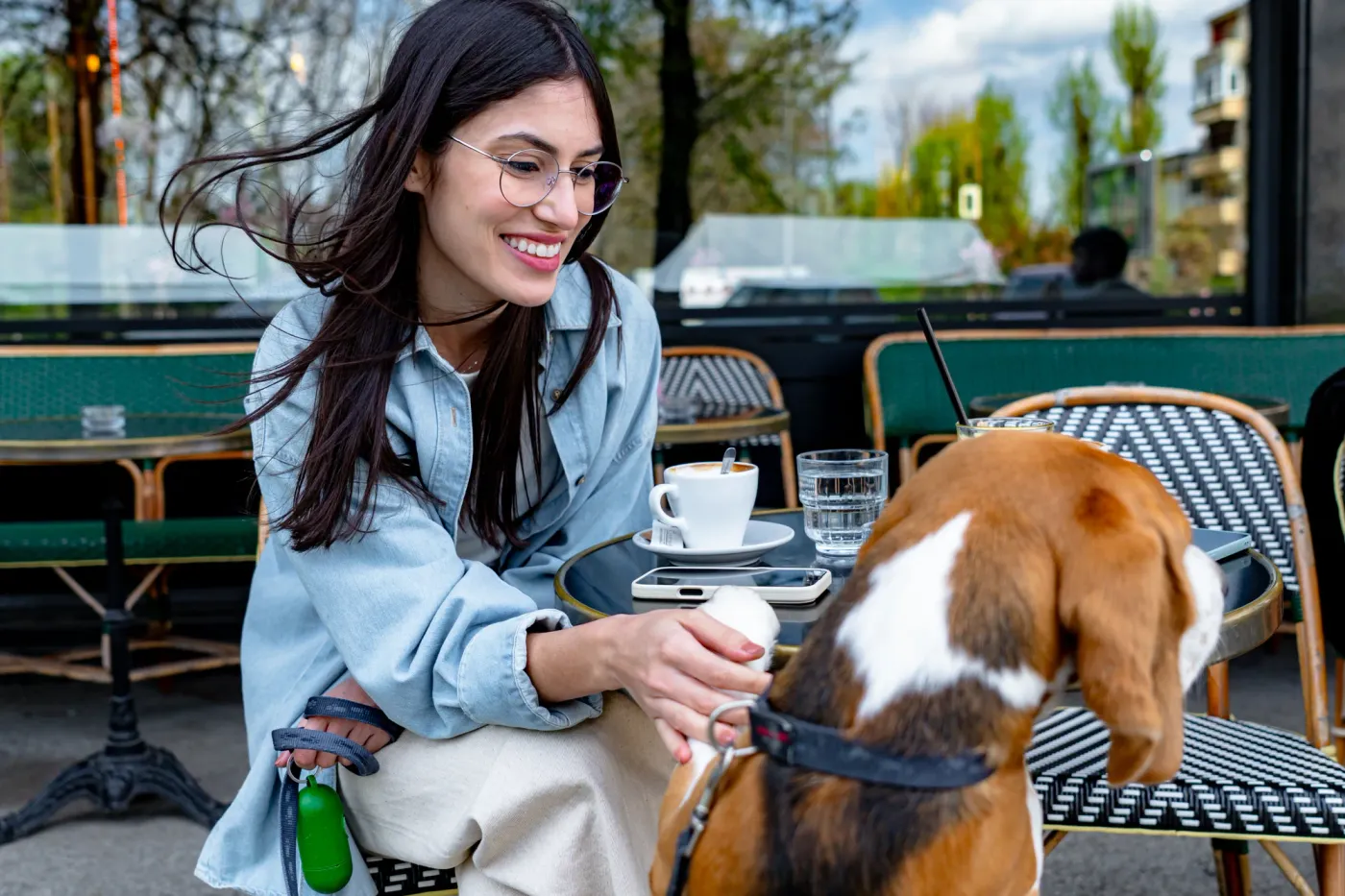
Settle means your dog lies on a mat beside your chair and stays there, not frozen in a formal stay but genuinely off duty, for the length of a meal. Ignore means dropped fries, passing dogs, toddlers and servers are scenery, not opportunities. Quiet means no whining at the table and no commentary when another dog walks past the railing. Notice what is missing: tricks, greetings, socializing. A great patio dog is not the centre of attention. The dog nobody at the next table notices until you stand up to leave is the one doing it right.
The mechanics are simple and unforgiving. The mat is the dog's anchor: it goes wherever the dog is expected to switch off, so it has to mean something before it ever sees a patio. The leash stays short and under your foot, not looped over a chair that follows your dog when it lunges. Food on the ground belongs to the ground; pay your dog for looking away from a dropped bite, never for hoovering it. And reward calm lavishly at home first: a settle that has never worked in your kitchen is not going to debut successfully downtown.
- Mat means off duty
- Leash under your foot
- Dropped food stays down
- Leave before the whine
Week by week
Four weeks gets you to the first warm Friday.
Week one lives at home: charge the mat, feed calm, build from thirty seconds of settle to fifteen minutes while you actually eat. Week two moves to the front step and quiet streets, where the dog learns that joggers, strollers and other dogs pass by and nothing is required. Week three adds cafés from the outside: sit near a patio railing at a distance your dog can handle, pay quiet observation, leave while it is still easy. Week four is the dress rehearsal, a real patio on a dead Tuesday afternoon, one drink, then home.
If four weeks of homework is not going to happen, we can carry the load. Private Training runs $150 plus GST per one-hour session and comes with a written weekly plan, which maps neatly onto this timeline: one session per week, each one setting up your homework for the next stage. For busy households, Day Training at $650 per week plus GST gives your dog daily one-on-one work Monday to Friday, with a weekly one-hour go-home lesson so the skills transfer to your hands. Either route beats winging it on a packed Saturday.
The programs
If this note hit home.
The programs below are how we turn a seasonal problem into a solved one.
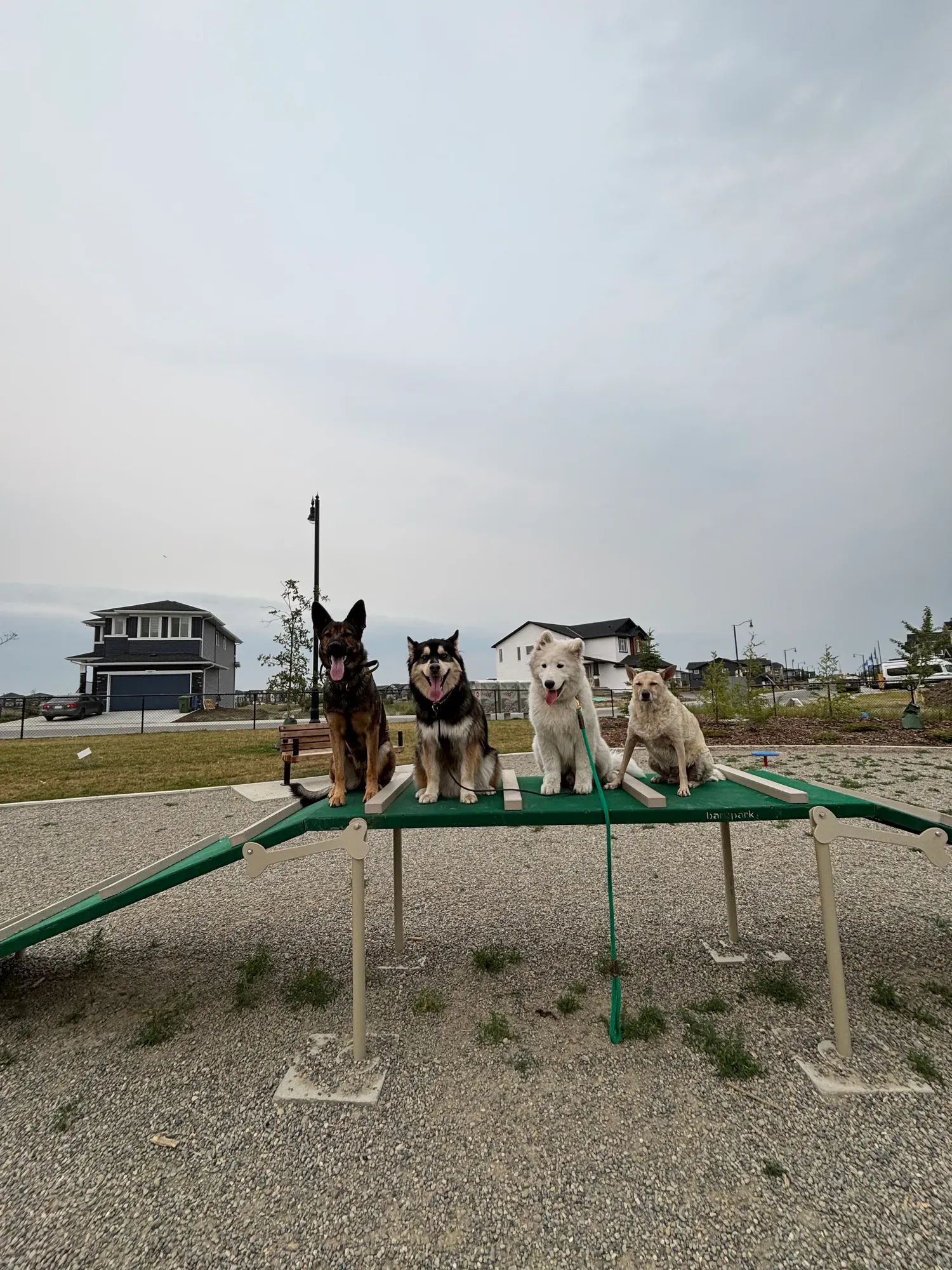
SW · Weekdays, drop-off 8–10 am · pick-up 5–7 pm
Day Training
Professional training all day, your couch at night.
Includes weekly one-hour go-home lesson, daily structure
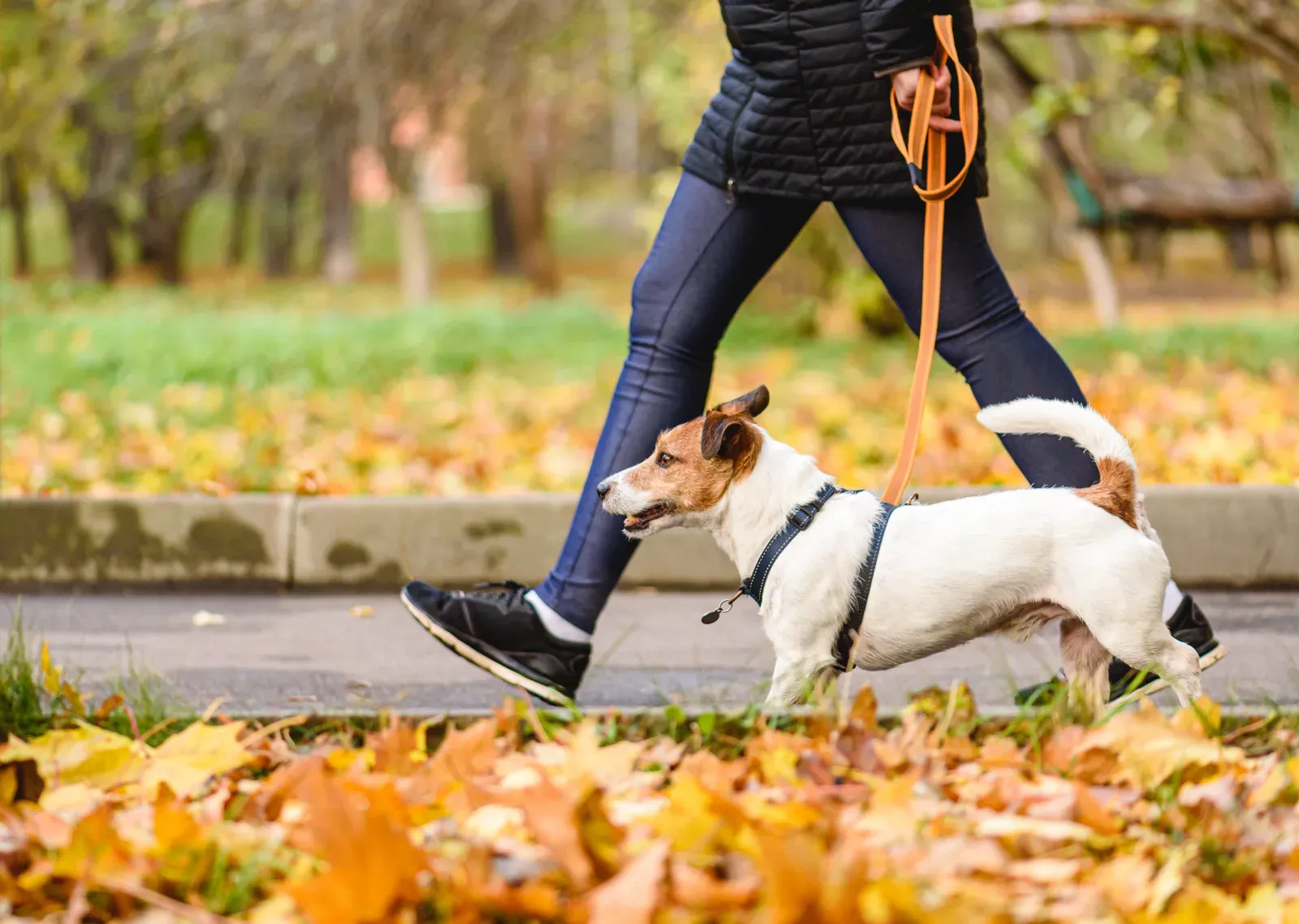
NE · 2-week board & train
On-Leash Foundations
If every walk is a wrestling match, pulling, barking, zig-zagging, this two-week program rebuilds the walk from the ground up with foundational on-leash obedience..
Includes handover lesson, follow-up session, lifetime support, slip lead + collar
Asked and answered
The questions people ask us.
How do I get my dog to settle at a restaurant patio?
Teach a mat settle at home first, then rebuild it in gradually busier places over a few weeks. On the patio, put the mat beside your chair, keep the leash short under your foot, and reward quiet lying down. Keep early visits under half an hour and leave on a success.
How do I stop my dog from begging when we eat outside?
Never pay attention, eye contact or food from the table, and reward your dog for looking away from dropped bites instead. Begging survives on the occasional win, so the whole household has to hold the line. A chew on the mat gives the dog a better job.
Why does my dog bark at other dogs on patios?
Usually frustration or worry at dogs passing close in a space your dog cannot leave. Add distance first: practise near patios, not on them, and pay calm watching. If the barking has real heat behind it, book an assessment before patio season rather than pushing through.
Can I take my puppy to a patio?
Yes, in short doses, and the earlier the calm habits start, the better. Keep visits brief, bring a mat, and ask for nothing more than relaxed observation. A ten-minute win beats an hour-long meltdown every time.
Keep reading
Earn the second invite
Four weeks is enough time if you start now. Tell us about your dog. Book a consultation.
From real owners
Rated 5.0 on Google.
Real Northline dogs