
Training notes
Halloween door manners for dogs
Halloween is the doorbell's big night. The bell every few minutes, strangers in masks, a bowl of chocolate at nose height, and a dog who was barely coping by the third visitor. We love the holiday and we plan for it, because the front door is where most dogs come apart. Here is the plan we give clients every October.
Last reviewed August 26, 2026
The place plan
One cot, one job, every single knock.
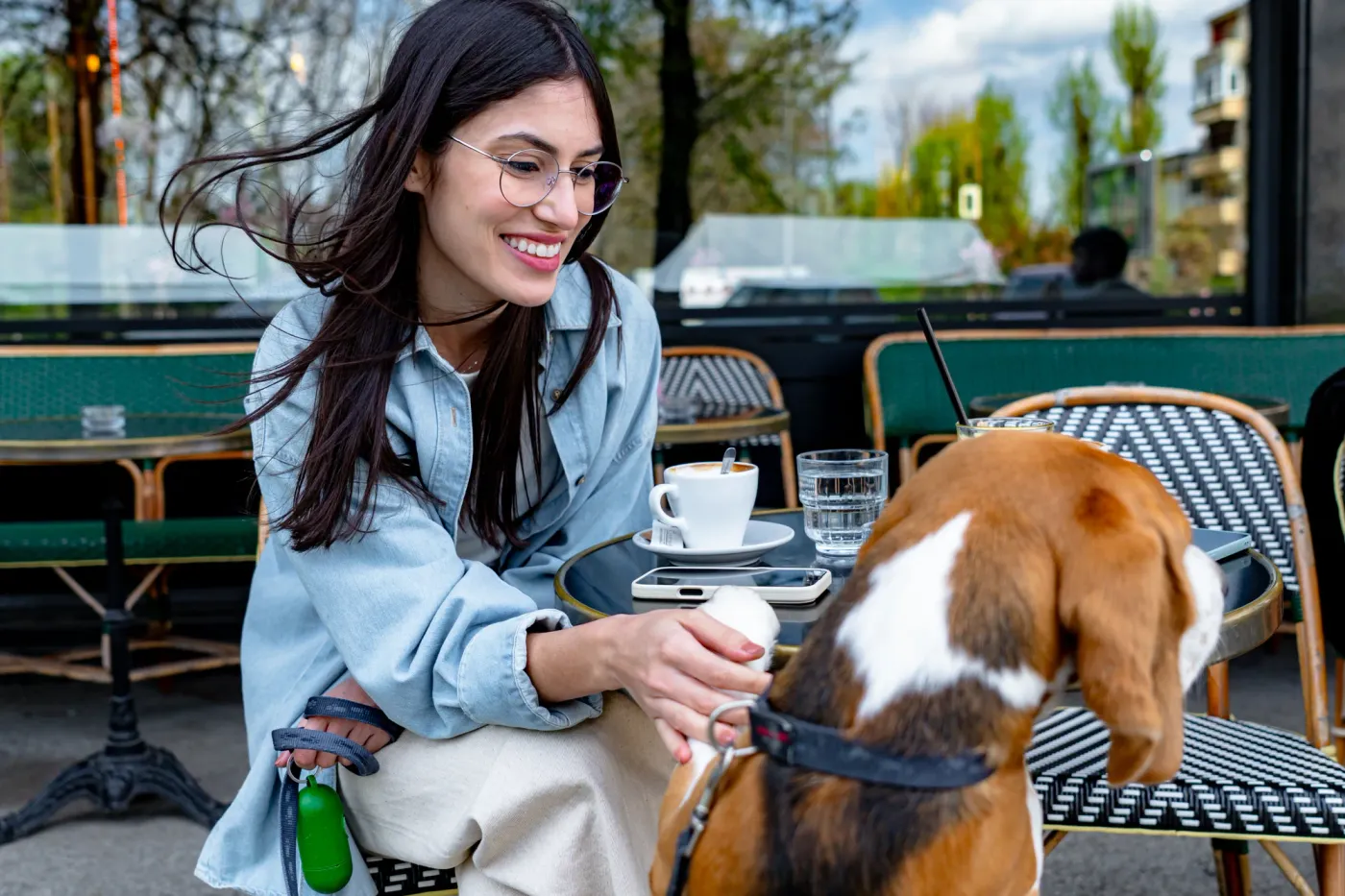
The fix is one clear job. Pick a cot or a mat, park it where your dog can see you but not the open door, and spend the two weeks before Halloween teaching that the cot pays. Send, reward, release, repeat. Then add the hard part: a knock. Start with a knuckle on the wall, pay for staying put, and work up to the real doorbell with a family member outside. By the time the first ninja rings the bell, holding the cot should feel like the best-paying job in the house.
On the night itself, stack the deck. Leash on for the first hour, because that is when your dog decides whether this is a party or a siege. Keep the candy bowl on a shelf, not the hall table, since chocolate and sugar-free sweets are a vet visit waiting to happen. If you can, sit outside with the bowl so the bell never rings at all. And lower the bar on purpose: a dog who holds place through five visitors has done real work. End the shift early, while your dog is still winning.
- Cot placed away from sightlines
- Doorbell drills before the night
- Candy bowl out of reach
- Leash on for the first hour
Who sits out
Some dogs should spend the night in the back bedroom.
Some dogs should not work the door at all, and we will say it plainly: opting out is not failure, it is management. A dog who bolts through open doors, a dog who barks himself hoarse at the window, a reactive dog who needs three days to come down from one bad guest: Halloween is not their training night. A holiday with masks, shrieking kids and a strobing porch light is the worst possible classroom. Set them up in the quietest room in the house with a stuffed chew, white noise, and the door closed, and let the evening pass them by.
If the door is a problem in July too, Halloween is just the loudest symptom. Door manners are one of the first things we build in our board and train programs, where place, thresholds and calm greetings get practised daily, one-on-one, then handed back to you with a proper lesson. For a dog whose door behaviour has teeth or panic behind it, Behaviour Rehab runs five to six weeks and is customized after a full assessment. Fix the door in November and next October becomes just another Tuesday with costumes.

The programs
If this note hit home.
The programs below are how we turn a seasonal problem into a solved one.

SW · Weekdays, drop-off 8–10 am · pick-up 5–7 pm
Day Training
Professional training all day, your couch at night.
Includes weekly one-hour go-home lesson, daily structure
NE · 2-week board & train
On-Leash Foundations
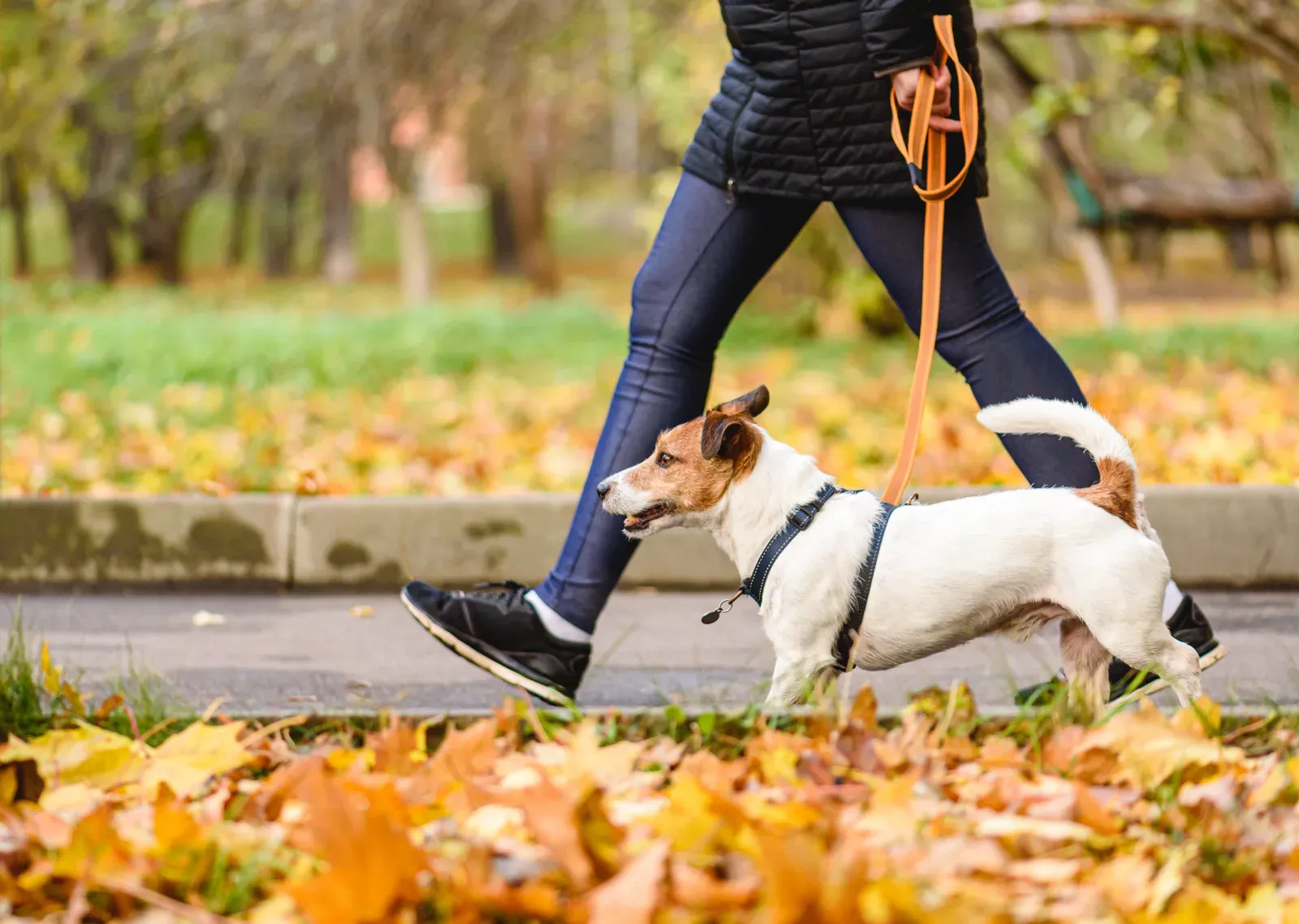
If every walk is a wrestling match, pulling, barking, zig-zagging, this two-week program rebuilds the walk from the ground up with foundational on-leash obedience..
Includes handover lesson, follow-up session, lifetime support, slip lead + collar
Asked and answered
The questions people ask us.
How do I stop my dog barking at trick-or-treaters?
Give the dog a competing job before the barking starts. A well-taught place command, rehearsed with knocks and doorbells in the weeks before, works far better than shushing in the moment. On the night, keep a leash on early and reward quiet holds generously.
Should I just put my dog away on Halloween?
For anxious, reactive or door-bolting dogs, yes, without guilt. A quiet back room, a long-lasting chew and some white noise beats a night of rehearsed panic at the door. Save the training for calm evenings and let Halloween be a management night.
How long does it take to teach a dog the place command?
Most dogs learn to go to a cot within a few sessions; holding it through a ringing doorbell takes a couple of weeks of short daily practice, so start well before October 31. In our board and train programs, place gets practised every day and handed over to you at the go-home lesson.
What do I do if my dog gets into the Halloween candy?
Call your veterinarian right away, especially for chocolate or anything sugar-free, and keep the wrappers so you can say what was eaten. Prevention is easier: bowl on a high shelf, dog on place or behind a gate while the door is busy.
Keep reading
Quiet doors by October.
Place, thresholds and calm greetings, built one-on-one and handed back to you. Book a consultation before the doorbell season starts.
From real owners
Rated 5.0 on Google.
Real Northline dogs