
Training notes
First snow: what changes for your dog
The first real snow lands and suddenly the dog who pottied on cue is standing at the back door looking betrayed. Footing changes, smells vanish under the white, walks get shorter, and habits you thought were finished start wobbling. We see it every year, and we treat it the same way every year: as a reset week, planned in advance.
Last reviewed August 26, 2026
The reset week
Shovel a spot and pay for bravery.
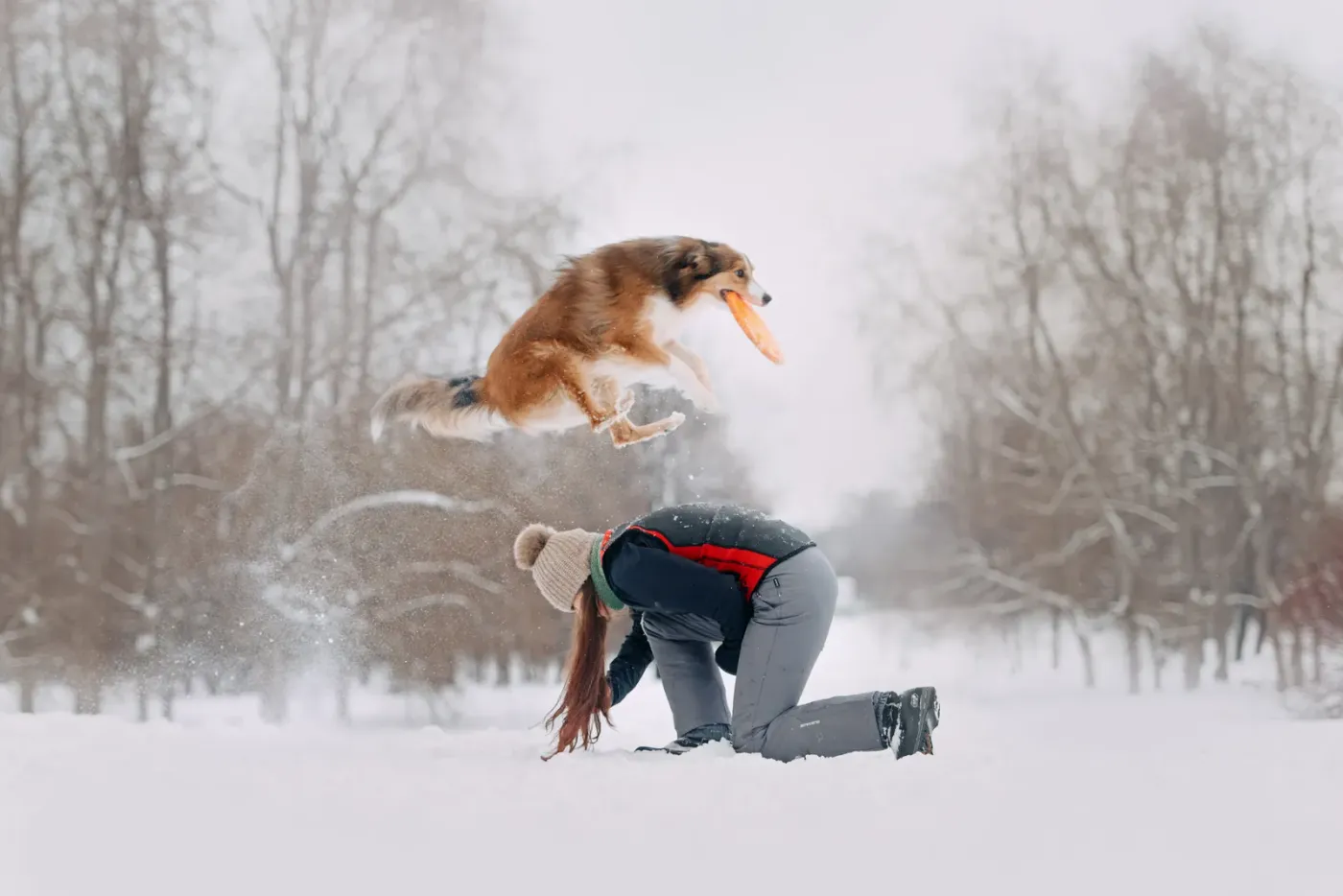
Potty regressions after the first snow are so common we would call them the rule. The spot your dog has used since spring now smells like nothing, feels like cold static underfoot, and may be buried entirely. So shovel a patch. Seriously: clear a small square near the door, walk your dog there on leash, and pay the first few outdoor pees like you paid them in puppyhood. Most dogs re-map the routine within a week when the deal is that clear. Skip the shovelling and you may be steam-cleaning carpet instead.
The rest of the reset is scheduling. Shorter walks, more of them, because a dog who is cold stops learning and starts enduring. Move training sessions indoors or into the yard and keep them crisp: five minutes of heel in the hallway does more than twenty minutes of shivering. Watch the daylight too. If your dog now only sees the neighbourhood in the dark, add one daytime outing on weekends so the world does not shrink to a black sidewalk. None of this is dramatic. It is a week of small adjustments that saves a winter of frustration.
- Shovelled potty spot by the door
- Shorter walks, more of them
- Paws checked after every outing
- Rewards back on the payroll
Ice and paws
Cold feet, slick sidewalks, small adjustments.
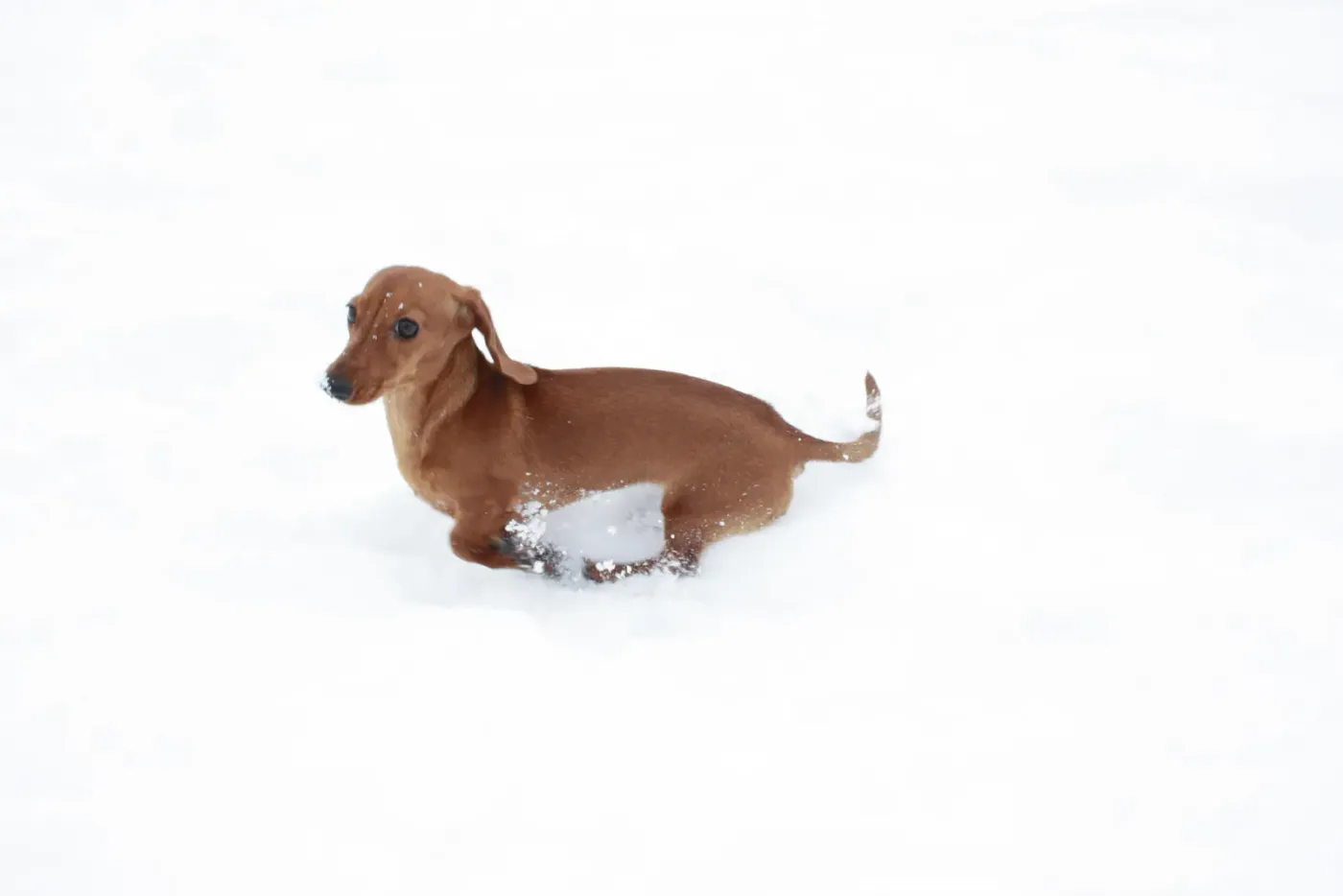
Paws take the first hit. Fresh snow packs into ice balls between the toes, sidewalk salt stings small cuts, and a dog who suddenly limps mid-walk is usually carrying a snowball, not an injury. Check feet after every outing for the first couple of weeks, trim the fur between pads if your dog grows it, and rinse or wipe paws after salted routes. Ice is your problem more than your dog's: four feet with claws grip better than two boots. Shorten your stride on hills, keep the leash loose so a lunge cannot pull you down, and give icy corners a wide, boring berth.
The biggest mistake we see is pressing pause on training until spring. Skills fade quietly over a winter of shortened walks, and April recalls show it. If the season is going to squeeze your time, borrow structure instead. Day Training runs Monday to Friday at $650 per week plus GST, with drop-off between 8 and 10 am, pick-up between 5 and 7 pm, and a one-hour go-home lesson every week. Your dog keeps learning through the darkest stretch of the year, and the first snow becomes a detail instead of a derailment.
The programs
If this note hit home.
The programs below are how we turn a seasonal problem into a solved one.
Asked and answered
The questions people ask us.
Why won't my dog pee outside after it snows?
The familiar spot suddenly smells and feels completely different, so many dogs simply do not recognize the bathroom. Shovel a small patch, take your dog there on leash, and reward outdoor pees like you did in puppyhood. Most dogs rebuild the habit within about a week.
Why is my house-trained dog suddenly having accidents in winter?
Cold, snow and shorter outings often shrink a dog's chances to go, and some dogs start holding it until they cannot. Go back to a schedule for a week or two: out on leash, reward, then freedom. If accidents continue past that reset, talk to your veterinarian to rule out a medical cause.
Do dogs' paws get damaged by snow and ice?
The usual culprits are ice balls packed between toes and salt on cleared sidewalks, both easy to manage. Check and wipe paws after walks, trim long fur between pads, and rinse after salted routes. A sudden mid-walk limp is usually a snowball, so check the foot before panicking.
Should I stop training my dog in the winter?
No, and we would argue winter is when structure matters most, because exercise drops and boredom rises. Keep sessions short and indoors, and hold your standards on leash. If time is the issue, our Day Training program at $650 per week plus GST keeps skills moving through the darkest months.
Keep reading
Keep training through winter.
One-on-one training that does not hibernate. Book a consultation and turn the first snow into a schedule change, not a setback.
From real owners
Rated 5.0 on Google.
Real Northline dogs