
Training notes
Winter gear for Calgary dogs, honestly
Every November the pet aisle fills with parkas, and every January we watch huskies trot past in nothing but their own coats while a whippet shivers in two sweaters. Winter gear is not one answer, it is a match to your dog. Here is what we think actually earns a spot by the door in a Calgary winter, and what can stay on the shelf.
Last reviewed August 26, 2026
Earns its keep
Boots, balm, and a light that clips on.
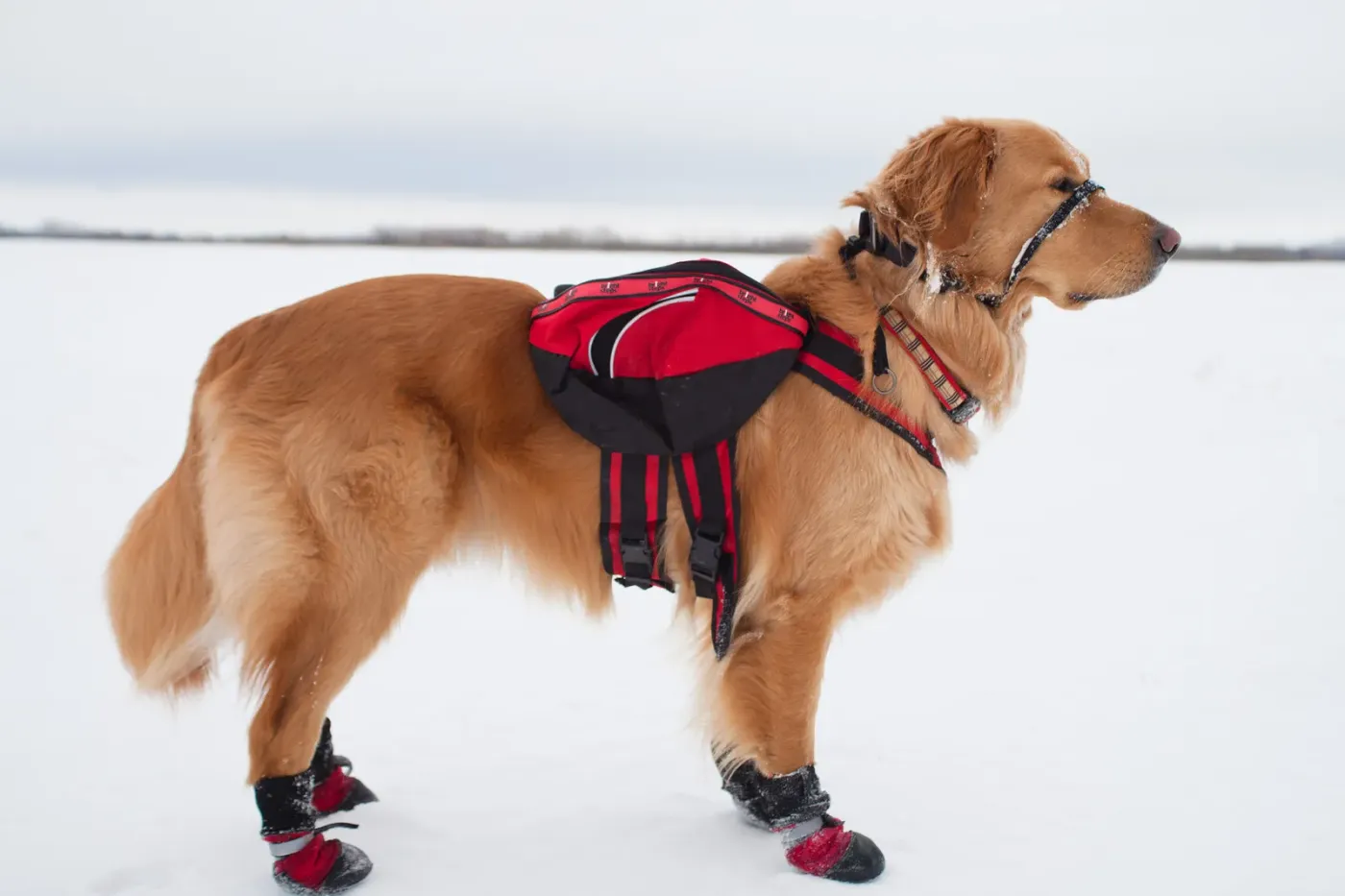
Boots are the divisive one, so here is our honest read: most dogs hate them for exactly one walk, then forget they exist, and they earn their keep in two situations. Deep cold snaps, when even tough feet start lifting off the pavement, and heavily salted routes, where the melt gets into every crack of a pad. If your dog does the penguin shuffle at the end of the driveway in January, boots are not fashion, they are mileage. Fit matters more than brand: snug at the cuff, tread on the sole, and a spare in your pocket for the one that always disappears.
Three more items earn shelf space. Paw balm, for the freeze-thaw yo-yo that cracks pads when a chinook melts everything on Tuesday and refreezes it Thursday. A real coat, for the dogs winter was not built for: short coats, lean frames, seniors, and puppies on their first season. And a clip-on light, because Calgary walks from November to February happen mostly in the dark, and a driver should spot your dog before the crosswalk does its job. All three together cost less than one emergency vet visit, which is our bar for gear that is worth it.
- Boots for salt and deep cold
- Paw balm for chinook cycles
- A coat for thin-coated dogs
- Clip-on light for dark walks
Mostly marketing
The shelf you can walk past.
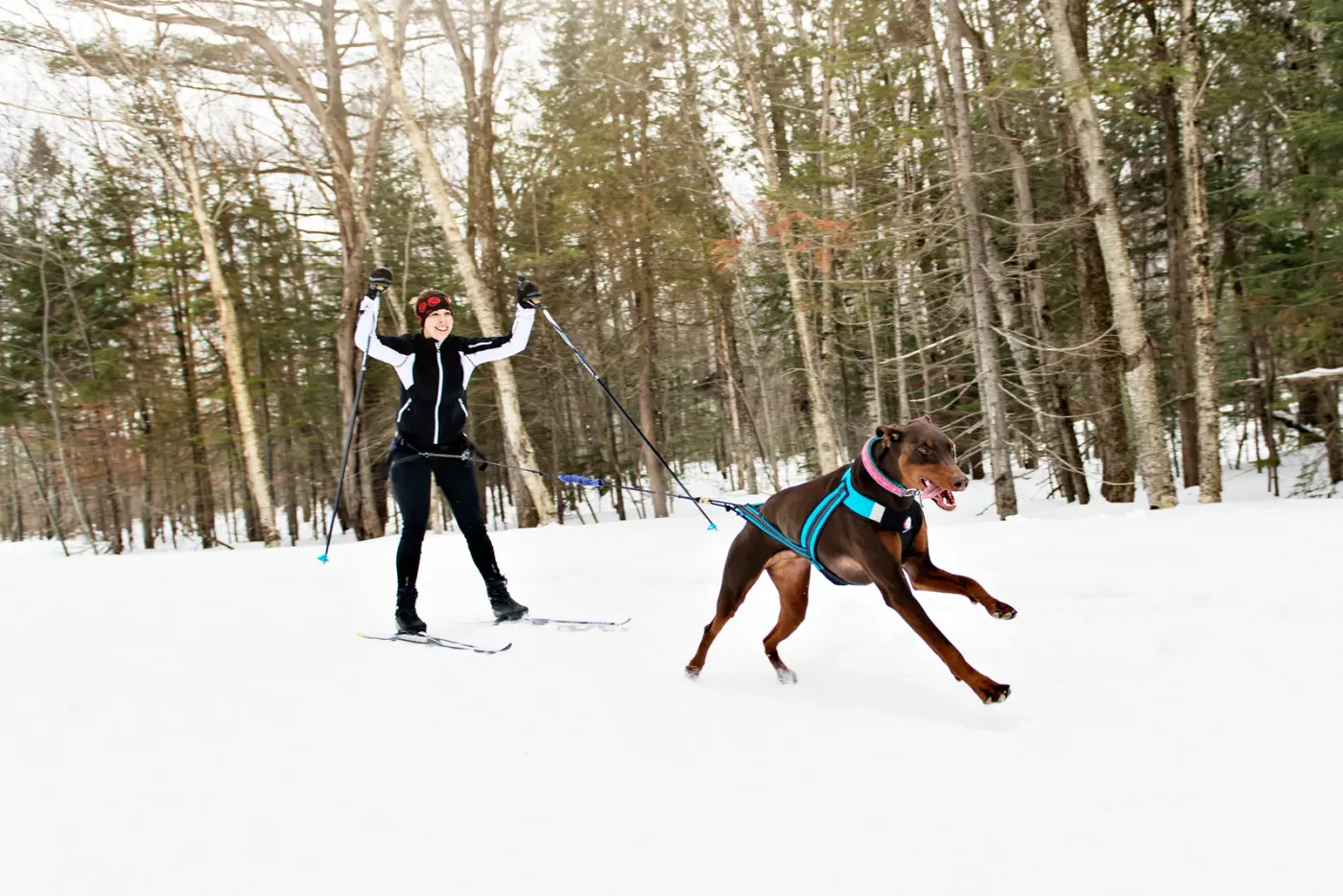
Now the other shelf. A double-coated dog in a parka is not cozy, it is overheating: huskies, shepherds and most northern breeds carry better insulation than anything with a zipper. Heated beds, heated bowls and heated anything are solving a problem indoor dogs do not have. Costume-adjacent knitwear is for your camera roll, which is a fine reason, as long as nobody pretends it is for the dog. And no piece of reflective, insulated, ergonomic equipment makes an untrained dog easier to walk on ice. We would rather see a plain slip lead on a taught dog than a hundred dollars of gear on a chaotic one.
That last point is the entire gear conversation, really. The thing that keeps a Calgary dog safe at minus 25 is not on any shelf: it is a loose leash on ice, a rock-solid recall when a glove blows across a field, and a dog who can pass a snowplow without theatrics. That is trained, one-on-one, and it transfers to every season. Our On-Leash Foundations program is a two week board and train at $1,865 plus GST, and it does more for winter walks than every coat in the store combined. Buy the boots, skip the parka aisle politics, and put the difference into skills.
The programs
If this note hit home.
The programs below are how we turn a seasonal problem into a solved one.
Asked and answered
The questions people ask us.
Does my dog really need boots in the winter?
Only sometimes. They pay off in deep cold snaps and on heavily salted sidewalks, and most dogs adjust to them within a walk or two. A thick-pawed, double-coated dog on short outings can usually skip them; a thin-coated dog doing real mileage usually cannot.
Do dogs need coats in Calgary winters?
It depends entirely on the dog. Short-coated breeds, lean dogs, seniors and puppies benefit; double-coated northern breeds mostly overheat in them. Watch your own dog: shivering, tucked tails and lifted paws say more than any sizing chart.
What temperature is too cold to walk a dog?
There is no single number, because a husky and a whippet live in different winters. Judge by your dog: shivering, slowing down or lifting paws means head home. In deep cold, several short outings beat one long march.
What is the best winter gear for dog walking at night?
A clip-on light or lit collar so drivers see your dog, decent traction for you, and a leash you can grip with gloves. The rest is comfort. Honestly, the best night-walking equipment is a dog who stays with you, and that is training, not shopping.
Keep reading
Skills outlast every coat.
The best winter kit is a dog who listens. Book a consultation and build skills that work at minus 25.
From real owners
Rated 5.0 on Google.
Real Northline dogs