
Training notes
Back-to-school routines for Calgary dogs
Every September the same thing happens across Calgary: the backpacks go on, the front door closes early, and the dog who spent two months as the centre of attention is suddenly alone with his thoughts. Some dogs nap through it. Plenty do not. Here is how we help families rebuild the routine so the first month of school is boring, in the best way.
Last reviewed August 26, 2026
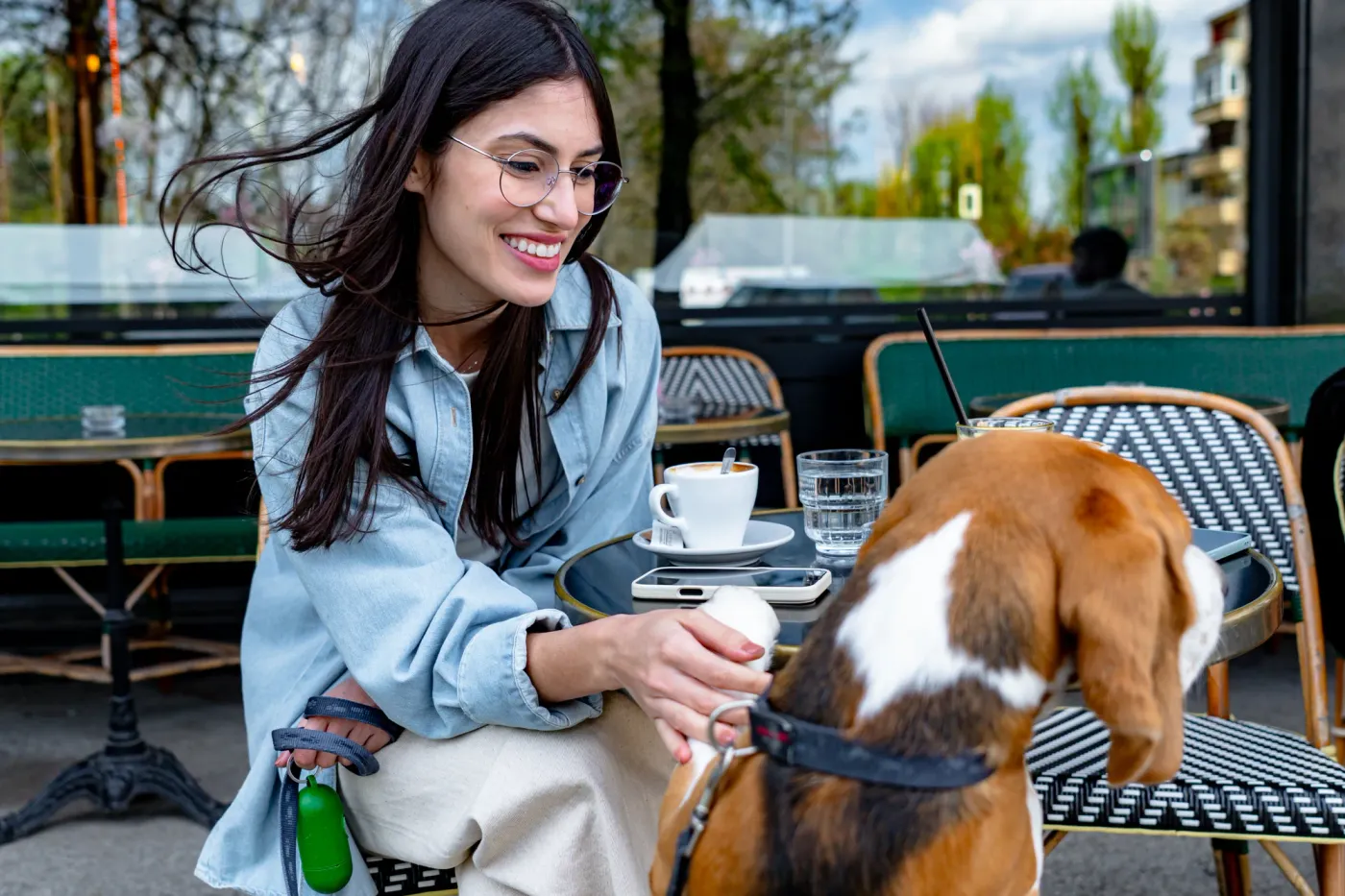
September shift
The first week of school, from the dog's side of the door.
Think about what summer looked like from the dog's perspective. Kids home all day, snacks falling from the sky, a walk whenever someone was bored, backyard traffic from morning to night. Then one Tuesday it stops. The house is silent by nine, nobody comes home until mid-afternoon, and the dog's social calendar has been cancelled without notice. The behaviour that follows is predictable: pacing, whining at the door, chewed shoes, barking at every sound in the empty house, and the over-the-top greeting when the kids walk in. None of this is spite. It is a dog whose routine vanished and who has no idea what the new one is.
Our opinion, for what it is worth: most September problems are routine problems, not anxiety problems. A dog that gets a proper morning walk, a fed-and-settled start, and something to do at lunch usually handles six quiet hours just fine. The dogs who struggle are the ones whose alone-time skills were never actually taught, because summer meant they were never actually alone. If your dog cannot settle behind a closed door while you are still home, the empty house is not the place to start practising. That is the week-one lesson we give every family, and it costs nothing to apply.
- Rebuild the daily shape
- Practise short absences first
- Calm exits, calm returns
- A real after-school walk
The new routine
A school-day schedule your dog can bank on.
Start a week early. Shift meals to their school-year times, take the morning walk before the morning rush, and rehearse the departure: shoes on, calm goodbye, out the door for five minutes, back in without a party. Stretch those absences day by day. Keep the exit boring and the return even more boring; the dog reads your drama as proof that departures are a big deal. A stuffed frozen food toy handed over as you leave gives the first ten minutes a job, and those minutes set the tone. When the kids burst in after school, teach them to let the dog settle before the wrestling starts.
The after-school walk is the piece we defend hardest. Not a quick backyard break: a real walk, on leash, before homework and screens swallow the evening. It burns the day's stored energy, gives the kids a job, and turns reunion chaos into something useful. If the schedule truly does not work and the house sits empty from eight to six, that is what Day Training is for: $650 per week plus GST, Monday to Friday, drop-off 8 to 10 am, pick-up 5 to 7 pm, with a one-hour go-home lesson. And if September has exposed real panic at departures, not boredom, book a consultation; that needs a plan, not patience.

The programs
If this note hit home.
The programs below are how we turn a seasonal problem into a solved one.
W · One-hour session
Private Training
One-on-one coaching with you on the other end of the leash.
Includes a written weekly plan to work from
SW · Weekdays, drop-off 8–10 am · pick-up 5–7 pm
Day Training
Professional training all day, your couch at night.
Includes weekly one-hour go-home lesson, daily structure
Asked and answered
The questions people ask us.
How long can a dog be left alone during the school day?
It depends on the dog, not the calendar. An adult with practised alone-time skills and a morning walk can usually manage a school day; a puppy or a dog with separation issues cannot, and needs a midday break or Day Training. Build up in steps rather than testing it cold on the first Tuesday.
How do I prepare my dog for back-to-school season?
Start shifting the routine a week before classes do: school-year meal times, an earlier morning walk, and short rehearsed absences that grow daily. Keep departures and returns calm. By the first real school day, an empty house should already feel familiar.
Why is my dog acting out now that school has started?
Because the routine collapsed, not because the dog is misbehaving on purpose. Chewing, barking and door-scratching in September usually track the sudden loss of company and structure. Rebuild a predictable day and most of it fades.
Is it separation anxiety or just boredom?
Boredom looks like mischief: chewed items, counter raids, a dog thrilled to see you but otherwise fine. Panic looks different: drooling, howling, damage at doors and windows, accidents in a house-trained dog. Boredom needs a job and a walk; panic needs a structured plan.
Keep reading
Make September boring
If the new schedule is not landing, book a consultation. We will build a school-year routine your dog can actually live with.
From real owners
Rated 5.0 on Google.
Real Northline dogs