
Straight answer
When should puppies start leash training?
Most new owners wait for the puppy to be old enough and then find themselves being towed down the sidewalk by a four-month-old who has never felt a leash go slack. The better plan starts sooner and asks less. A leash is just a piece of equipment, and a puppy can learn that it means good things during week one, in the kitchen, before anyone goes anywhere.
Last reviewed August 26, 2026
Start at home
It starts in the kitchen, not on the sidewalk.
The first job is not walking at all. It is teaching the puppy that a collar and a light leash predict food, play and your attention. Clip the leash on for a few minutes while the puppy eats or chews, let it drag under supervision, then pick up the end and follow the puppy around the room. No steering, no corrections. You are building an association, and the puppy should finish every session wanting more.
Once the leash is boring, play the follow-me game. Take two steps backward, say the puppy's name, and pay with a treat when it arrives at your leg. Add a step, then a turn, then a hallway. This is the seed of loose-leash walking and it costs nothing but a handful of kibble. Keep sessions under three minutes and stop while the puppy is still winning.
- Leash on during meals
- Drag it, supervised, indoors
- Follow-me game for treats
- Sessions under three minutes
Stages by age
Each stage asks for something different from the leash.
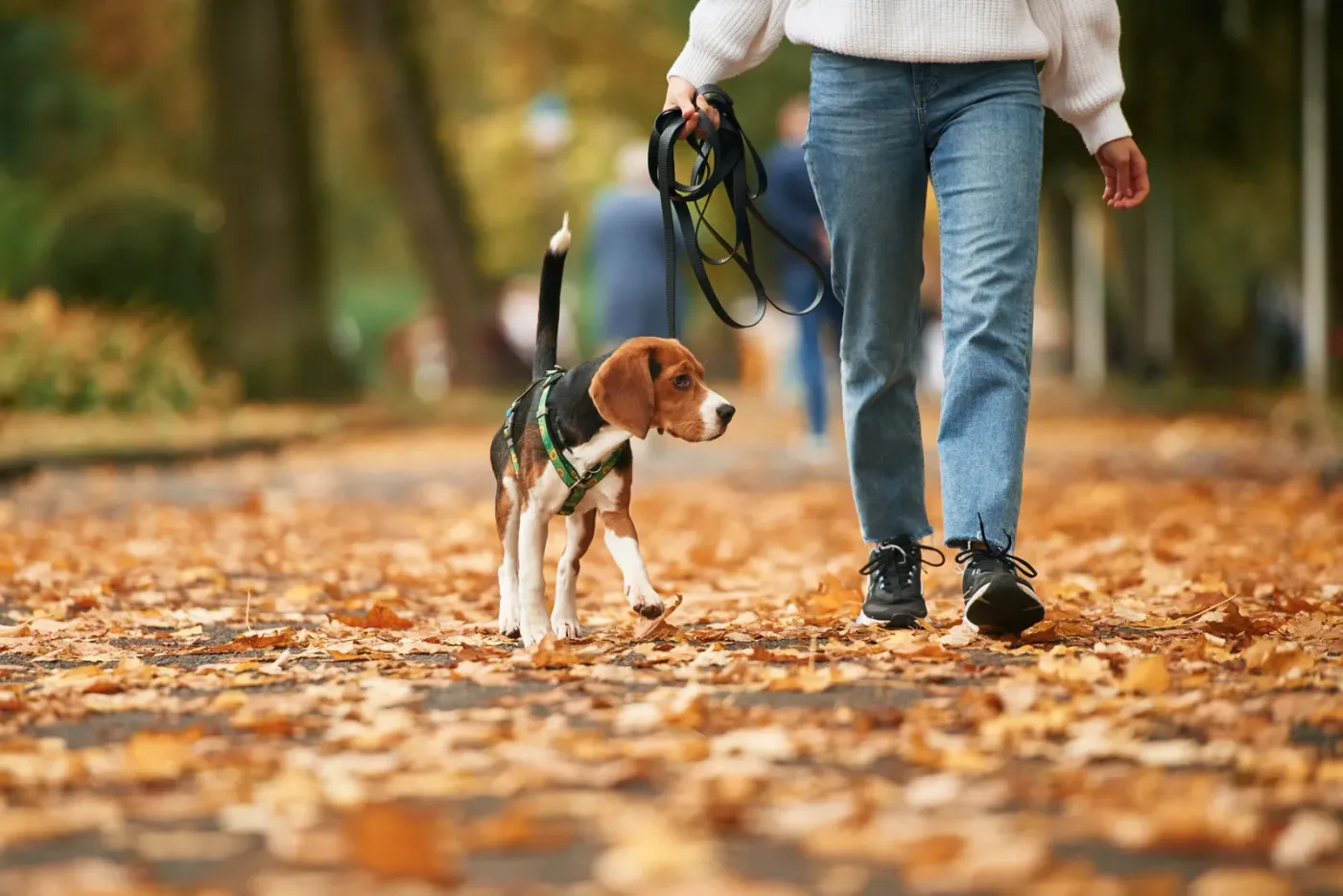
First week home: leash means treats, indoors only. Once your vet clears outdoor time: short sniff-walks on the front lawn and quiet streets, where the puppy sets the pace and the leash stays slack because you are not going anywhere in particular. These walks are about the world, not about heel. Around three months you can start rewarding the puppy for checking in and for walking on one side, still with plenty of sniffing between reps.
From about four months, real loose-leash work begins: a clear marker when the leash is slack, a stop or a direction change when it tightens, and a slip lead if the puppy is big enough to ignore a flat collar. This is the stage Puppy Fundamentals covers, three weeks with us at $2,775 plus GST, where leash manners are built one-on-one and handed to you in a handover lesson with a follow-up within 60 days.
The programs
The puppy-window programs.
The early weeks only happen once. These are the ways we help you spend them well.
Asked and answered
The questions people ask us.
When should puppies start leash training?
The first week home, indoors, as a game. Let the puppy wear a light leash during meals and play, then follow it around the room. Outdoor walks come once your vet clears the puppy, and real loose-leash training starts around four months.
What age is best for puppy leash training?
There is no single age because the job changes. Leash comfort starts on day one, sniff-walks start when your vet says so, and loose-leash walking with rules starts at roughly four months, when the puppy can hold attention for more than a few seconds.
When can puppies walk on a leash outside?
Ask your vet, since that timing depends on your puppy's vaccinations and your neighbourhood. Until then, a leash in the yard and short carries around the block cover the socialization side. Once cleared, keep the first outings short and sniffy.
When to start training a puppy on a leash if it is already pulling?
Today. A pulling puppy has learned that tension gets it places, so start the follow-me game indoors, stop moving when the leash tightens outdoors, and consider a slip lead once the puppy is a few months old. If it is past four months and towing you, Puppy Fundamentals or a $150 private session is the fastest reset.
Keep reading
Start the leash right
Book a consultation and we will map your puppy's leash timeline, from kitchen games to real walks, one-on-one.
From real owners
Rated 5.0 on Google.
Real Northline dogs