
Straight answer
What age can a puppy wear a training collar?
Training collar covers a lot of ground. It can mean a flat buckle collar with a name tag, a slip lead, a prong collar or a remote e-collar, and those four belong to very different moments in a dog's education. The honest answer to the age question depends on which one you mean, and on whether the puppy has been taught anything yet for the tool to reinforce.
Last reviewed August 26, 2026

Tool by tool
Four collars, four different starting points.
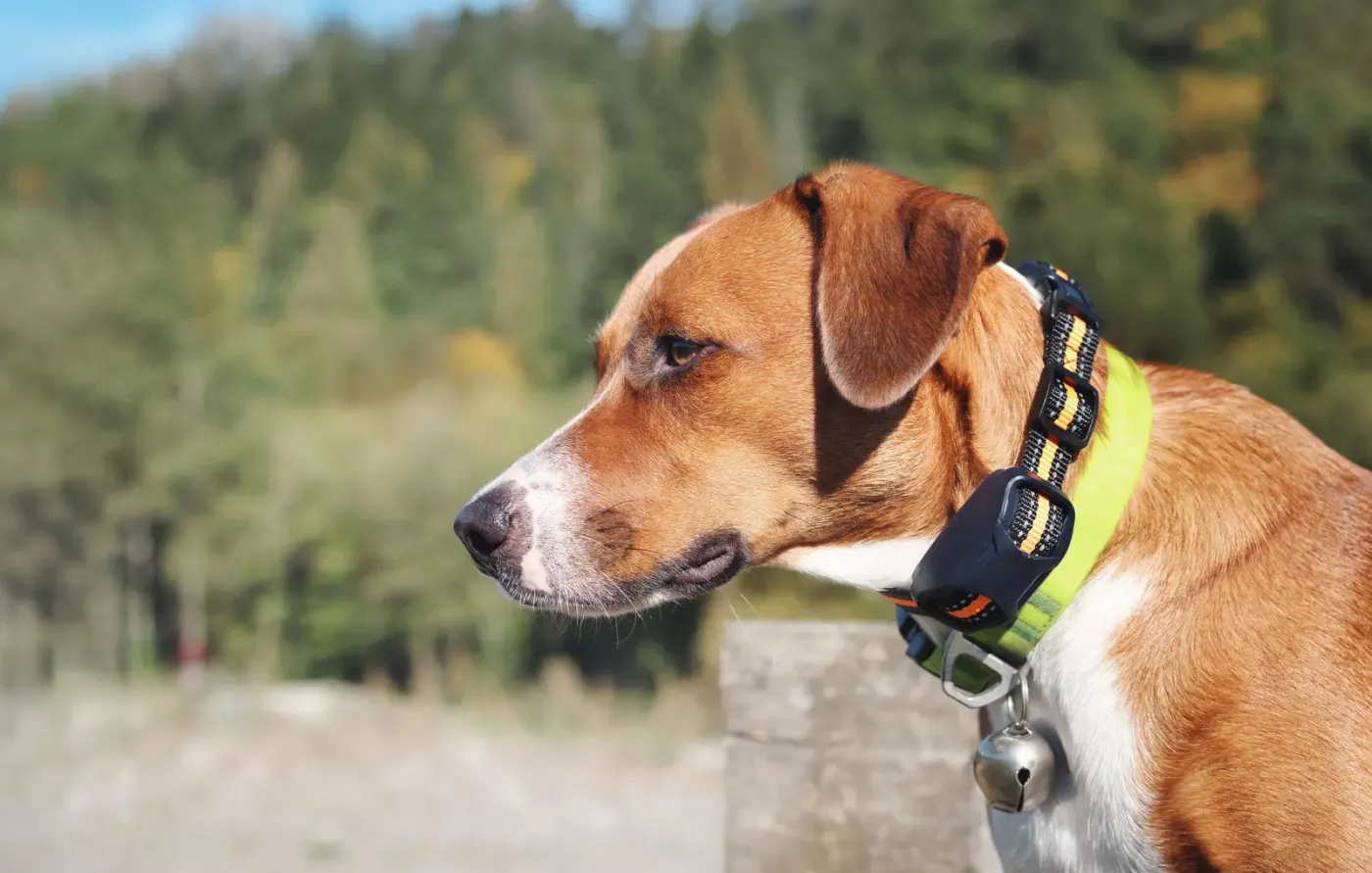
A flat collar or a well-fitted harness can go on the first day, mostly so the puppy gets used to wearing something and so your contact details travel with it. A slip lead comes next, usually from a few months, once the puppy follows you happily on a loose leash indoors. Used correctly it sits high and loose and gives gentle steering information, which is why we send one home with every Puppy Fundamentals graduate.
Prong collars and e-collars are a different category. They are correction and communication tools, and a correction only makes sense to a dog that already knows what it was supposed to do. So the sequence is fixed: teach the skill with markers and rewards, proof it on a leash, then introduce the tool at low levels and show the owner how to use it. The Educator collar included in Functional Off-Leash, our three-week recall program, is introduced at exactly that point.
- Flat collar from day one
- Slip lead from a few months
- Prong only after skills exist
- E-collar at off-leash stage
Readiness over age
Why the calendar matters less than the dog in front of you.
Two dogs can share a birthday and be months apart in readiness. A ten-month-old who has never been taught a recall is not ready for an e-collar, while a well-started adolescent with a solid marker history and a calm temperament might be. The questions we actually ask: does the dog know the command on a leash, is it physically mature enough for the collar to fit and sit correctly, and is the handler willing to learn the tool before using it?
This is why a puppy in Puppy Fundamentals goes home with a slip lead and not a remote, and why a dog in Functional Off-Leash goes home with an Educator collar and an owner who has practised with it in the handover lesson. Skipping a step does not save time. A tool put on a dog that has no idea what is being asked creates confusion, and confusion on a young dog is expensive to undo later.
The programs
The puppy-window programs.
The early weeks only happen once. These are the ways we help you spend them well.

N · 3-week board & train
Puppy Fundamentals
Your puppy's first months decide the habits of a lifetime.
Includes handover lesson, follow-up session, slip lead + collar

E · 3-week board & train
Functional Off-Leash
Everything in the on-leash program, then the next level: reliable off-leash recall even around distractions.
Includes handover lesson, follow-ups, Educator remote collar
Asked and answered
The questions people ask us.
What age can a puppy wear a training collar?
A flat collar or harness from the day it arrives, a slip lead from a few months once it walks happily beside you indoors. Prong collars and e-collars wait until the dog has learned the skill and is mature enough for the tool, whatever the birthday says.
What age can a puppy start on an e-collar?
In our programs, the e-collar comes in at the off-leash stage, after recall and leash manners have been taught with markers and rewards. That is a readiness milestone, not a birthday. Puppies in Puppy Fundamentals do not wear one.
Is there a prong collar puppy age?
Not a fixed one. A prong collar needs a dog that already understands leash pressure and a handler who has been shown how to fit and use it. On a young puppy that has only ever followed a treat around the kitchen, a slip lead does the same job with far less on the line.
What age puppy training collar is right for a big breed?
Size changes the fit, not the sequence. A large-breed puppy still starts on a flat collar, moves to a slip lead once it has leash comfort, and only sees a prong or e-collar once the skills are taught and the body has grown into the tool. Bigger puppies do sometimes reach the slip lead earlier, simply because a flat collar stops giving them any information.
Keep reading
Right tool, right time
Book a consultation and we will tell you which collar your puppy is actually ready for, and teach you to use it.
From real owners
Rated 5.0 on Google.
Real Northline dogs