The method
How to stop resource guarding
A dog hunched over a bone, gone stiff and low-growling, is not plotting a takeover. It is afraid of losing something it values, and every confrontation confirms the fear. That reframe changes everything about the fix. You stop policing possessions and start proving that human hands near valuables are good news. Done carefully, most mild guarding fades. Done wrong, it escalates into biting.
Fear of loss
Protect the growl and trade up.
The growl is not the problem, it is the warning system. Punish it and you get a dog who skips straight to the bite. So the first rule is to leave the growl alone and change what triggers it. Second rule: stop taking things. When you must recover a stolen sock, trade for something clearly better, cheese for cotton, and let the dog make the swap willingly.
Manage the environment so guarding cannot rehearse: feed in a quiet spot nobody walks through, pick up contested chews when children are around, and give high-value items in the crate. Then build the good-news association: walk past the bowl at a distance and toss something better than kibble, without stopping. Teach drop and leave as games with big payouts, long before you need them near a real prize.
- Never punish the growl
- Trade up, never snatch
- Feed somewhere calm and private
- Teach drop as a game
Severity triage
Know which league you are in.
Grade the guarding honestly. A dog who stiffens and grumbles over the food bowl, with no history of contact, sits at the mild end and usually responds well to the trading work above. A dog who guards spaces, chews, or a favourite person, follows people away from the item, or has ever made contact with teeth is playing a different game. The escalation ladder is real, and skipped warnings are how bites happen.
With a bite history, or guarding aimed at children, professional help is non-negotiable. This is not a place for internet protocols and hope. Our Behaviour Rehab board and train runs five to six weeks, is customized after a full assessment, and includes deep owner education plus two follow-ups, because guarding lives in the household routine as much as in the dog. Until then, manage strictly: no contested items loose, no tests.
The programs
When the problem outlasts the guide.
Some behaviours need more repetitions than evenings allow. These formats deliver them.
W · One-hour session
Private Training
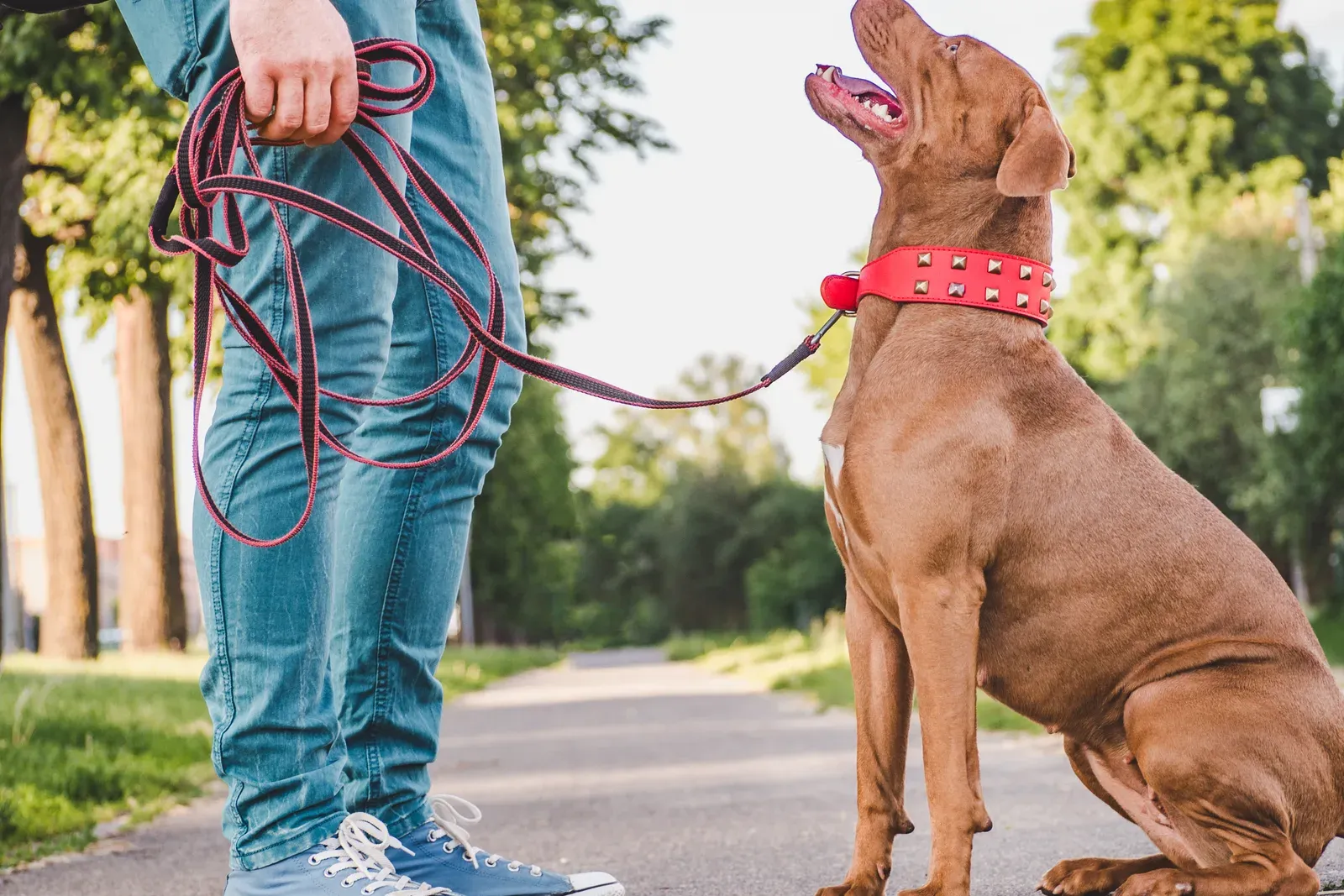
One-on-one coaching with you on the other end of the leash.
Includes a written weekly plan to work from
S · 5–6 week board & train
Behaviour Rehab
Kaitlin's specialty, and the work she loves most.
Includes assessment-built plan, 2 follow-ups, deep owner education
Asked and answered
The questions people ask us.
Why does my dog growl over food?
Growling at the bowl means your dog expects to lose its meal when people approach. It is fear, not dominance. Stop hovering, feed somewhere calm, and toss a better treat as you pass at a distance so approaches predict gain, not loss.
How do I stop resource guarding of toys?
Stop confiscating and start trading: offer something better, let the dog release the toy, then usually give the toy back. Teach a cheerful drop cue through play. A toy that always comes back is not worth guarding.
How do I stop food aggression toward my other dog?
Separate feeding completely: different rooms or crates, and pick bowls up after meals. Dog-to-dog guarding is managed first and trained second, because rehearsed fights undo everything. If either dog has connected with teeth, get professional help before changing anything else.
Should I punish my dog for growling?
No. The growl is the warning layer, and punishing it teaches the dog to bite without notice. Take the growl as information, back off in the moment, then change the situation that produced it.
Keep reading
Guarding beyond home fixes?
Behaviour Rehab is a customized five to six week program for serious guarding. Book a consultation and get an honest assessment first.
From real owners
Rated 5.0 on Google.
Real Northline dogs