
Breed guide
How to train a Rottweiler
A well-raised Rottweiler is one of the steadiest dogs you will ever meet: confident, devoted, unbothered by much. Getting there is the work. The same confidence that makes the breed steady also means a Rottweiler will not be bullied into behaving, and its strength means you cannot out-muscle bad habits. Boundaries set early and held calmly do what confrontation never will.
Last reviewed August 26, 2026
Know the dog
Steady, strong, and sure of itself.
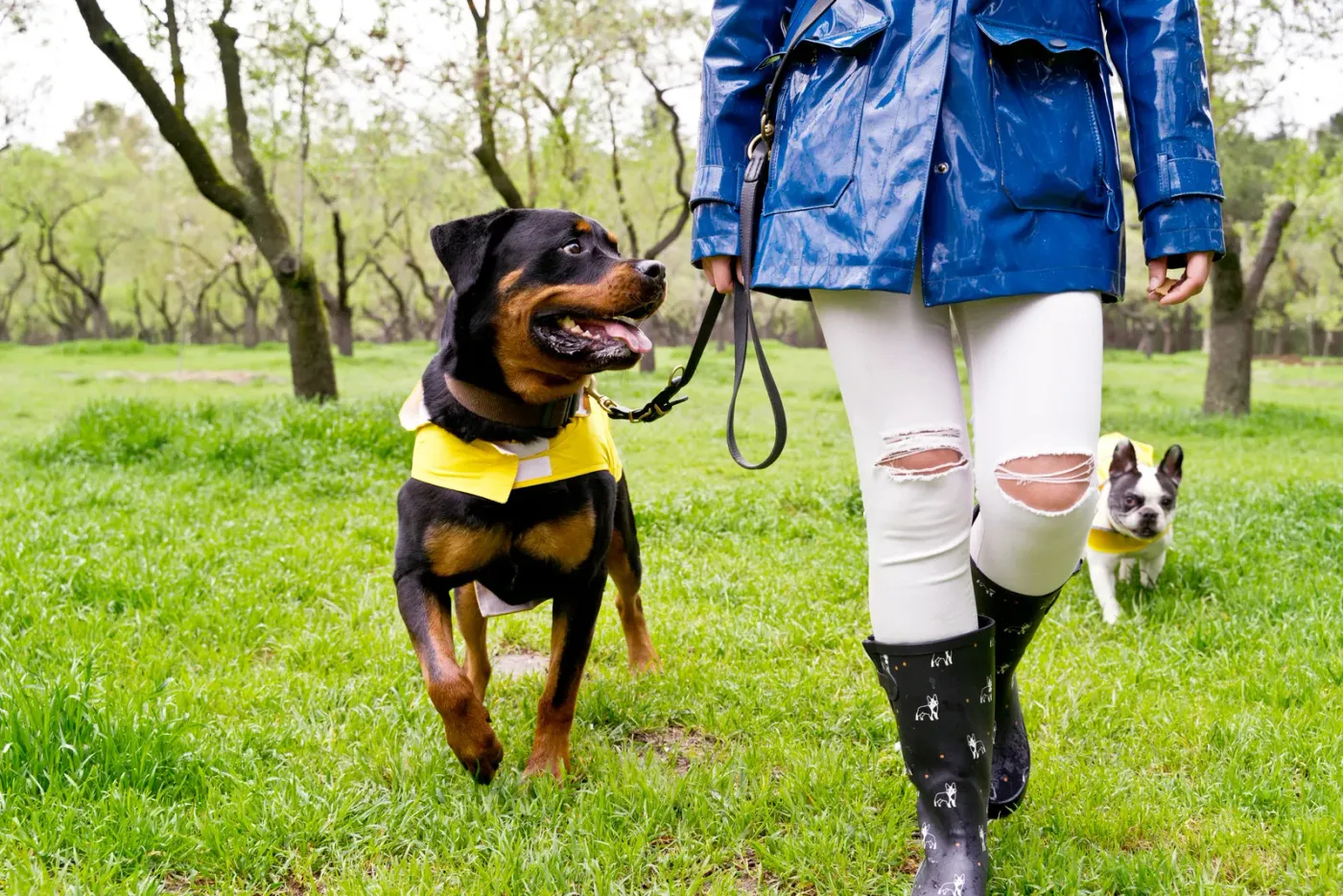
Rottweilers move through the world like they own it. That confidence is the breed's best quality and the reason it needs shaping: a confident dog with no boundaries promotes itself to head of household and starts screening your visitors. Wariness of people at the door is common, loyalty to the family is total, and the line between the two is exactly where training lives.
Day to day, the issues are physical before they are behavioural. Leash strength shows up first: a Rottweiler that pulls turns every walk into a workout the human loses. Door manners come next, because a powerful dog that greets visitors on its own terms is intimidating even when friendly. Left unsocialized, that natural reserve around strangers hardens into genuine suspicion, and suspicion in a dog this strong is not a quirk you live with.
- Leash strength from adolescence on
- Wariness of visitors
- Needs generous early socialization
- Responds to calm, not confrontation
The right approach
Quiet consistency wins the argument.
Everything starts with rewards and markers, because a Rottweiler that finds training worthwhile brings its considerable focus to the job. Set boundaries early and enforce them the same way every time: where the dog sleeps, how it exits doors, what happens when the leash tightens. Socialize generously through the first year, in calm, controlled doses, so new people become background noise. Skip the yelling entirely. Calm structure beats confrontation with this breed, every single time.
The mistake we see most with Rottweilers is escalation: owner gets louder, dog gets harder, and the relationship turns into an argument neither side can win. The second mistake is under-socializing a dog that seemed fine at home. All of our Calgary training is one-on-one, a good match for a breed this loyal to its own people. On-Leash Foundations, 2 weeks at $1,865 plus GST, covers the leash and door work; committed owners often continue to Functional Off-Leash at $3,030, with the Educator e-collar included.
The programs
Where this breed usually lands.
The programs below are the ones this breed most often needs; the consultation confirms it for your dog.
NE · 2-week board & train
On-Leash Foundations
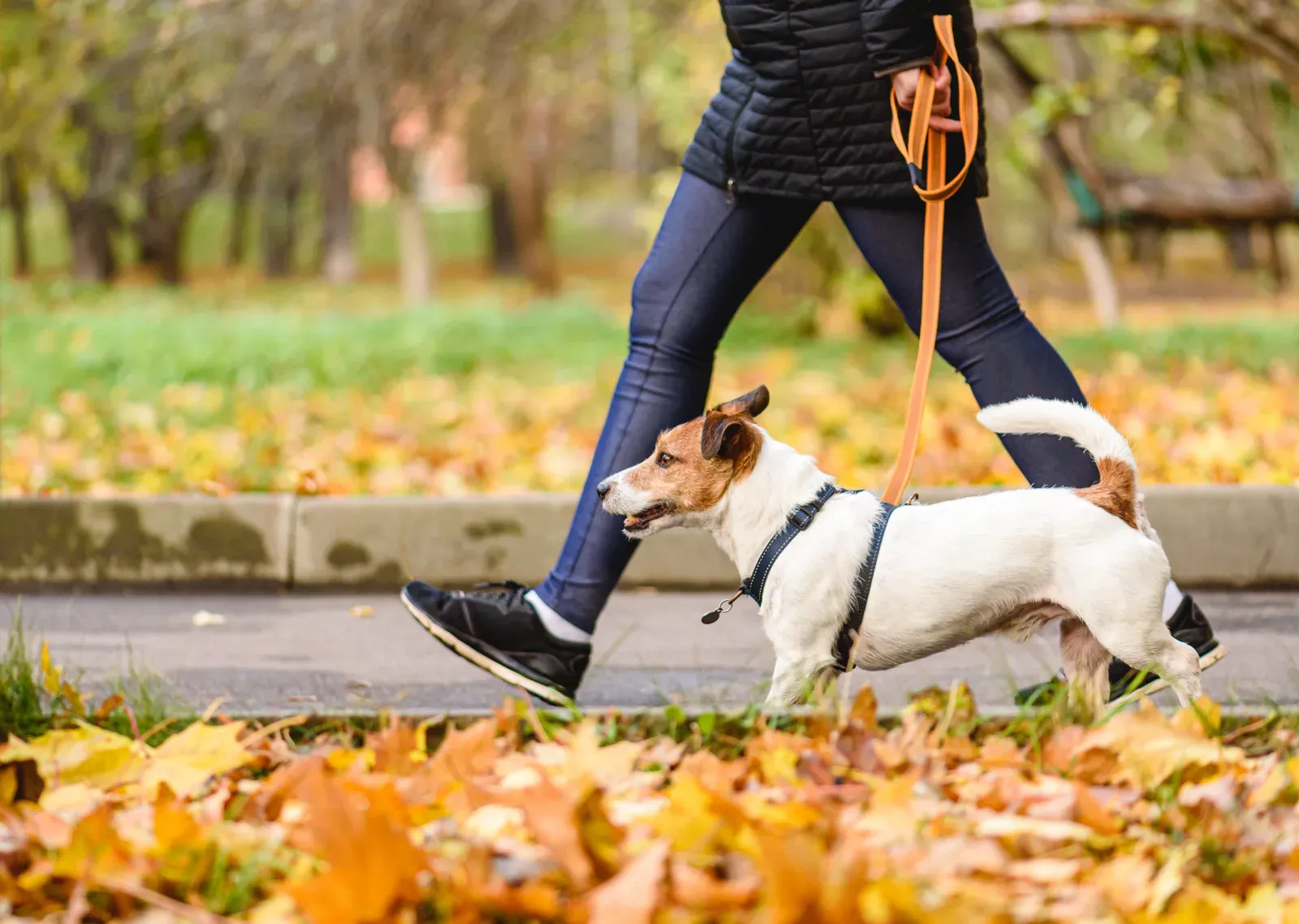
If every walk is a wrestling match, pulling, barking, zig-zagging, this two-week program rebuilds the walk from the ground up with foundational on-leash obedience..
Includes handover lesson, follow-up session, lifetime support, slip lead + collar

S · 5–6 week board & train
Behaviour Rehab
Kaitlin's specialty, and the work she loves most.
Includes assessment-built plan, 2 follow-ups, deep owner education
Asked and answered
The questions people ask us.
Are Rottweilers easy to train?
For a committed owner, yes: they are focused, food-motivated and genuinely enjoy working. They are not easy for owners who want obedience without consistency, because a confident dog notices every rule you fail to enforce.
What are common Rottweiler behaviour problems?
Hard leash pulling, pushy door greetings and growing wariness of visitors top the list. Each one is a strength-plus-confidence problem rather than a broken dog. Early boundaries and generous socialization prevent nearly all of it.
How should Rottweiler puppy training start?
Begin boundaries and socialization the week the puppy arrives. Let it meet plenty of calm people, practise doorway manners early, and build loose-leash habits while the pulling is still easy to manage. Rules that predate adolescence survive it.
What are your best Rottweiler training tips?
Stay calm when the dog tests you, because escalation teaches a Rottweiler that volume is how arguments work. Reward the behaviour you want relentlessly, keep boundaries identical from every family member, and socialize past the point that feels like enough.
Keep reading
Strong dog, steady hands
Calm structure turns a powerful breed into a steady partner. Book a consultation to start.
From real owners
Rated 5.0 on Google.
Real Northline dogs