
Training notes
Cold snap survival for dogs and owners
The forecast says minus 35 and the group chat says nothing but screenshots. Meanwhile the dog still has to pee, still has energy, and still has opinions about being cooped up. We spend a few weeks of every Calgary winter coaching people through exactly this, so here is the honest playbook: potty logistics, realistic exercise math and what cabin fever actually looks like before it becomes a habit.
Last reviewed August 26, 2026
Logistics first
Make every potty trip a mission.
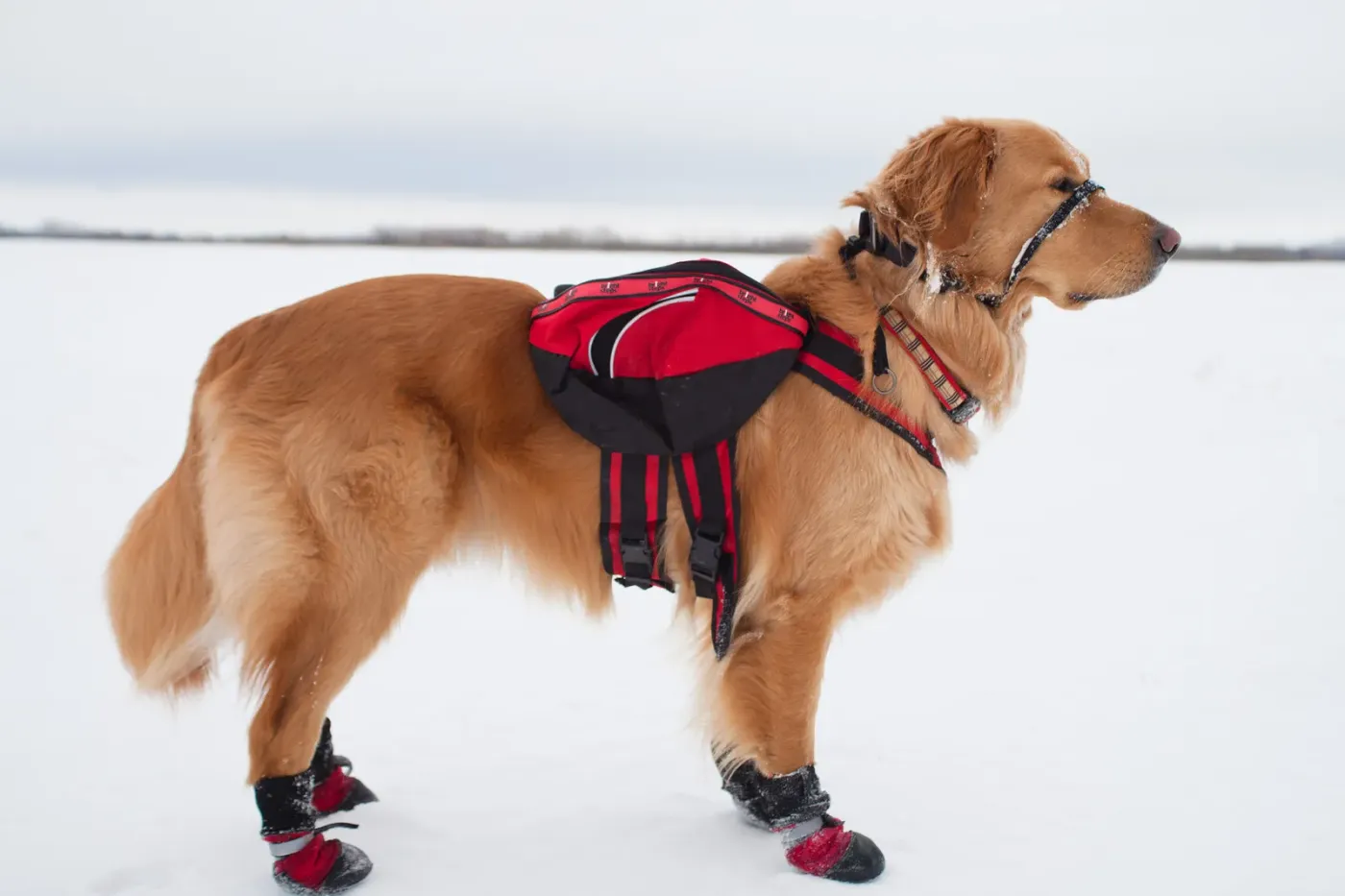
Shovel a patch of grass or gravel a few steps from the door before the worst of it arrives, and keep re-shovelling it. Dogs empty faster on a familiar surface they can actually smell. Go out with the dog, on leash, every time: a dog left to its own devices at minus 35 will stand at the door and hold it, then have an accident at 2 am. Short coat, small dog or puppy? A jacket and booties are equipment, not fashion, and paw wax helps between the toes.
The exercise math matters more than people think. An hour of walking does not translate to an hour of fetch in the basement; hard repetitive sprinting on slick floors mostly builds adrenaline and sore hips. Trade the hour for minutes of concentration instead: two or three sessions of food searches, obedience reps and settle-on-a-mat work. Outside, watch the feet. A dog lifting paws, hunching or refusing to move is done, and pushing through it teaches the dog that the back door predicts misery.
- Shovelled potty patch by the door
- Leashed trips, out and back
- Jackets and booties for short coats
- Minutes of thinking over fetch
Day three
Cabin fever is a routine problem.
Cabin fever rarely announces itself. It shows up as a dog that follows you room to room, paws at your elbow while you type, barks at sounds it ignored in October, or suddenly rediscovers chewing. Most owners respond with more freedom and more toys, which usually makes it worse. What the dog is actually asking for is a schedule: work, rest, potty, repeat. Crate naps or place time between sessions are not punishment, they are the reset button that keeps a housebound dog civil.
Owners need survival tactics too, because a bored dog and a stir-crazy human amplify each other. Decide the plan the night before so you are not negotiating with yourself at 7 am in the dark. If the week reveals something deeper, a dog that spirals into barking or cannot settle even with structure, that is worth a conversation. Behaviour Rehab exists for the serious cases, and one Private Training session at $150 plus GST buys an hour with us and a written plan built around your actual floor plan.
The programs
If this note hit home.
The programs below are how we turn a seasonal problem into a solved one.
Asked and answered
The questions people ask us.
How do I get my dog to pee outside when it is minus 35?
Shovel a small patch near the door and keep it clear so the dog has a familiar surface to sniff. Go out together on leash, keep the trip short and businesslike, and reward the moment it happens. Then straight back inside, no lingering.
How long can my dog stay outside in extreme cold?
For most dogs at minus 30 and colder, think minutes, not hours, and less for puppies, seniors and short coats. Watch for lifted paws, shivering or refusal to move; those are exit signs. Northern breeds tolerate more but still need monitoring.
Why is my dog misbehaving during a cold snap?
It is almost always a routine problem: less exercise, less stimulation and a household that is also stir-crazy. The fix is structure, short training blocks with enforced rest between them. More freedom and more toys usually make it worse.
Do dogs need a walk every single day?
Not when the walk itself is a hazard. A dog's needs are exercise, mental work and routine, and for a week those can be met indoors. The walk is one tool for the job, not the job itself.
Keep reading
Get through the week
Book a consultation and get a realistic plan for a dog, a small house and a long Calgary winter.
From real owners
Rated 5.0 on Google.
Real Northline dogs