
Straight answer
What makes a good dog trainer?
Every trainer's website says they are experienced, positive and results-driven, which tells you nothing. The useful signs are the ones you can observe on a first visit: how they talk, how they handle a dog they have never met, whether they answer the money question straight. Below is the checklist we would use if we were shopping for a trainer ourselves, followed by the warning signs worth walking away from.
Last reviewed August 26, 2026
Observable signs
Six things you can see in one meeting.
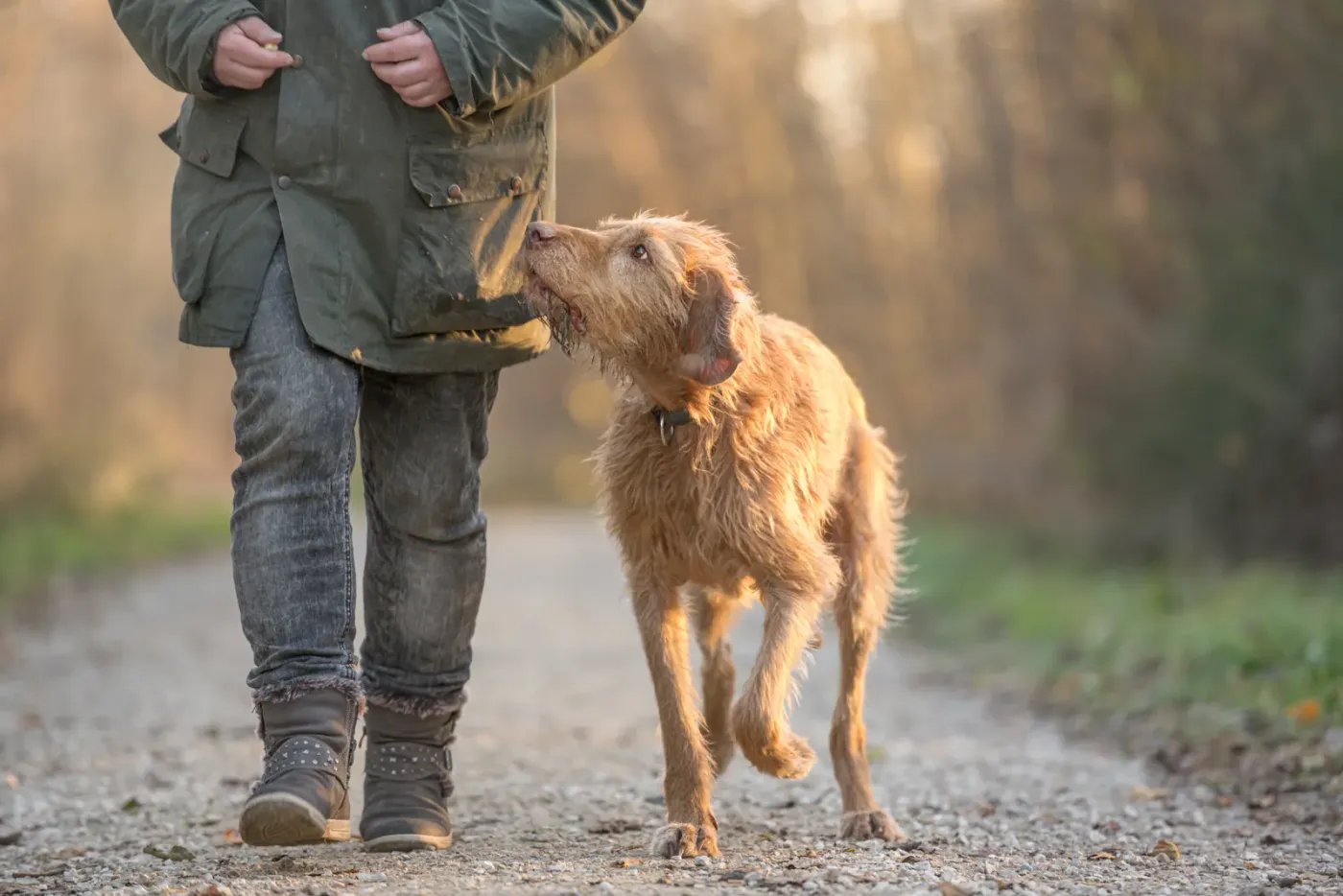
Start with how they explain things. A good trainer can say what a marker word is, why the dog earns rewards for the right choice first, and what a slip lead, prong collar or e-collar does. Then watch their hands. Calm, unhurried handling of a dog pulling, barking or shutting down tells you more than any certificate. Notice who they talk to. If the session is aimed at the dog and none of it at you, the results leave when they do.
The other three are about honesty. Prices should be on the website, not revealed after a sales call; ours run from $150 for a private session to $5,760 for the longest Behaviour Rehab stay, all plus GST. Timelines should be specific and unglamorous: two weeks for leash foundations, five to six for serious reactivity. And when something looks like pain, illness or hearing loss, a good trainer sends you to the vet first.
- Explains methods without jargon
- Handles your dog calmly
- Prices published, timelines realistic
- Refers medical issues to vets
Red flags
Four reasons to walk away.
The first is a promised outcome. Nobody can promise what a living animal will do in six months, and a trainer who pledges a fixed result before meeting the dog is selling relief, not training. The second is secrecy about tools. If you ask what goes on the dog's neck and get a vague answer, assume the answer is something they would rather you did not see. We use slip leads, prong collars and Educator e-collars, and we say so up front.
The third is volume. A trainer running many dogs at once cannot give yours daily one-on-one work, whatever the brochure says; everything we do is one-on-one, and we do not run group classes. The fourth is what happens after pickup. If there is no handover lesson and no follow-up, the trainer has trained the dog and abandoned the owner, which is the part that fails. Every board and train we run ends with a handover lesson and includes free follow-up sessions.
The programs
What choosing us looks like.
The formats below are how most owners start; prices are public on every one.
Asked and answered
The questions people ask us.
What makes a good dog trainer?
Skill with dogs, honesty with people, and the patience to teach both. In practice that looks like calm handling, plain explanations, published prices, realistic timelines and a willingness to send you to the vet when the problem is not behavioural.
How do I know if a dog trainer is good?
Book one session and watch. A good trainer explains what they are doing as they do it, keeps your dog calm without wrestling it, and hands you something to practise before you leave. If you leave knowing more than when you arrived, that is the sign.
What are the signs of a good dog trainer?
The signs are all observable: they name their tools and say why, they work one dog at a time, and their programs end with a handover lesson and follow-ups rather than a goodbye. A trainer who recommends a smaller program than you asked for is usually a keeper.
What should I look for in a dog trainer?
Look for one-on-one attention rather than a crowd, a clear plan with a timeline, and structured follow-up after the program ends. Ask how many dogs they work with at once, what goes on the dog's neck and why, and what happens if the training slips at home. The answers should be specific.
Keep reading
Judge us by these
Ask us every question on this page. Our prices are public, our tools are named, and our follow-ups are free. Book a consultation.
From real owners
Rated 5.0 on Google.
Real Northline dogs