
Straight answer
What is a leash-reactive dog?
Ask ten owners what leash reactivity means and you will get ten different dogs: the husky that screams at every bike, the lab that flings itself toward playmates, the rescue that goes rigid and silent when a stranger approaches. What they share is a leash and a feeling too big to hold. This page defines the term properly, so you know what you are dealing with before you spend anything fixing it.
Last reviewed August 26, 2026
Signs and causes
The signs to look for and the three feelings behind them.
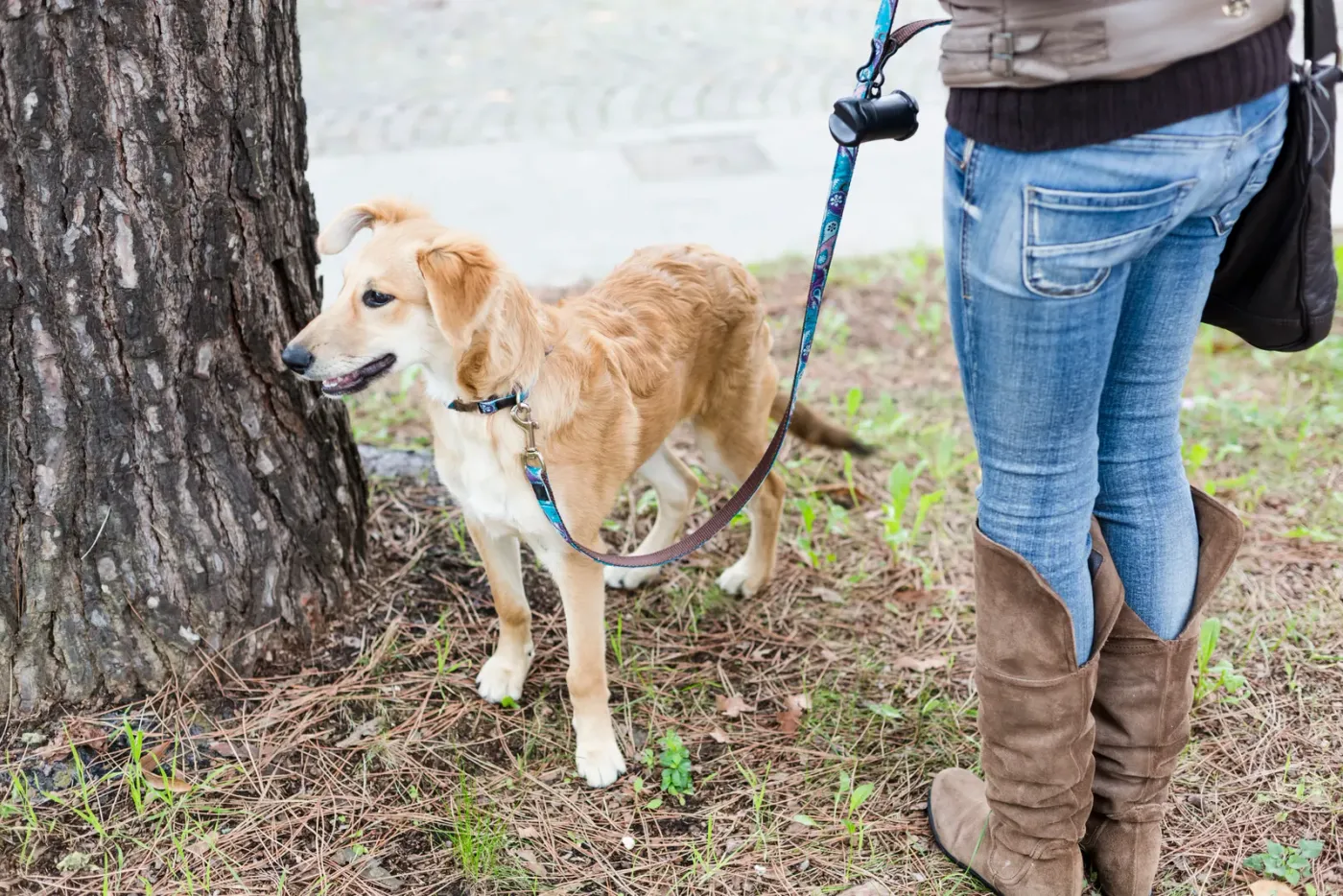
The obvious signs are loud: barking, lunging, growling, spinning at the end of the leash, sometimes redirecting a nip onto the leash or your leg. The quieter signs get missed. Watch for a hard stare that locks on before the explosion, a closed mouth, hackles up, a body that goes stiff and forward, or a dog that suddenly refuses to walk. Most reactive dogs give you a few seconds of warning. Learning to read that window is the first skill.
Three feelings drive it. Frustration: the dog wants to reach the other dog, cannot, and boils over. Fear: the dog wants distance, the leash removes the option to leave, so it tries to make the threat go away with noise. Barrier: the leash acts like a fence or a window and turns mild interest into a tantrum. Aggression is different. An aggressive dog intends to make contact and do damage. A reactive dog is shouting because it does not know what else to do.
- Hard stare before the bark
- Stiff, forward, closed mouth
- Fine off leash, wild on it
- Frustration, fear or barrier
What helps now
What you can change this week, and what a program adds on top.
This week, stop rehearsing. Every explosion the dog practises gets easier to trigger next time, so walk at quieter hours, cross the street early, and use parked cars and hedges as visual blocks. Trade the retractable for a fixed six-foot leash so you can feel the dog tighten before it goes. Feed the entire day's food on walks, one piece for every calm glance at a distant dog. And watch the dog, not the trigger.
A program adds what a week at home cannot: a trainer who sees the dog daily, set-ups with steady dogs at the right distance, and repetitions the owner cannot easily engineer. Frustration cases often fit On-Leash Foundations, a two-week board and train at $1,865 plus GST that builds loose-leash walking and heel around everyday distractions. Fear-based reactivity usually belongs in Behaviour Rehab, five to six weeks, $4,850 to $5,760 plus GST after a full assessment. The assessment decides which.
The programs
The behaviour-first formats.
Assessment before plan, thresholds before pressure. These programs run that way.
W · One-hour session
Private Training
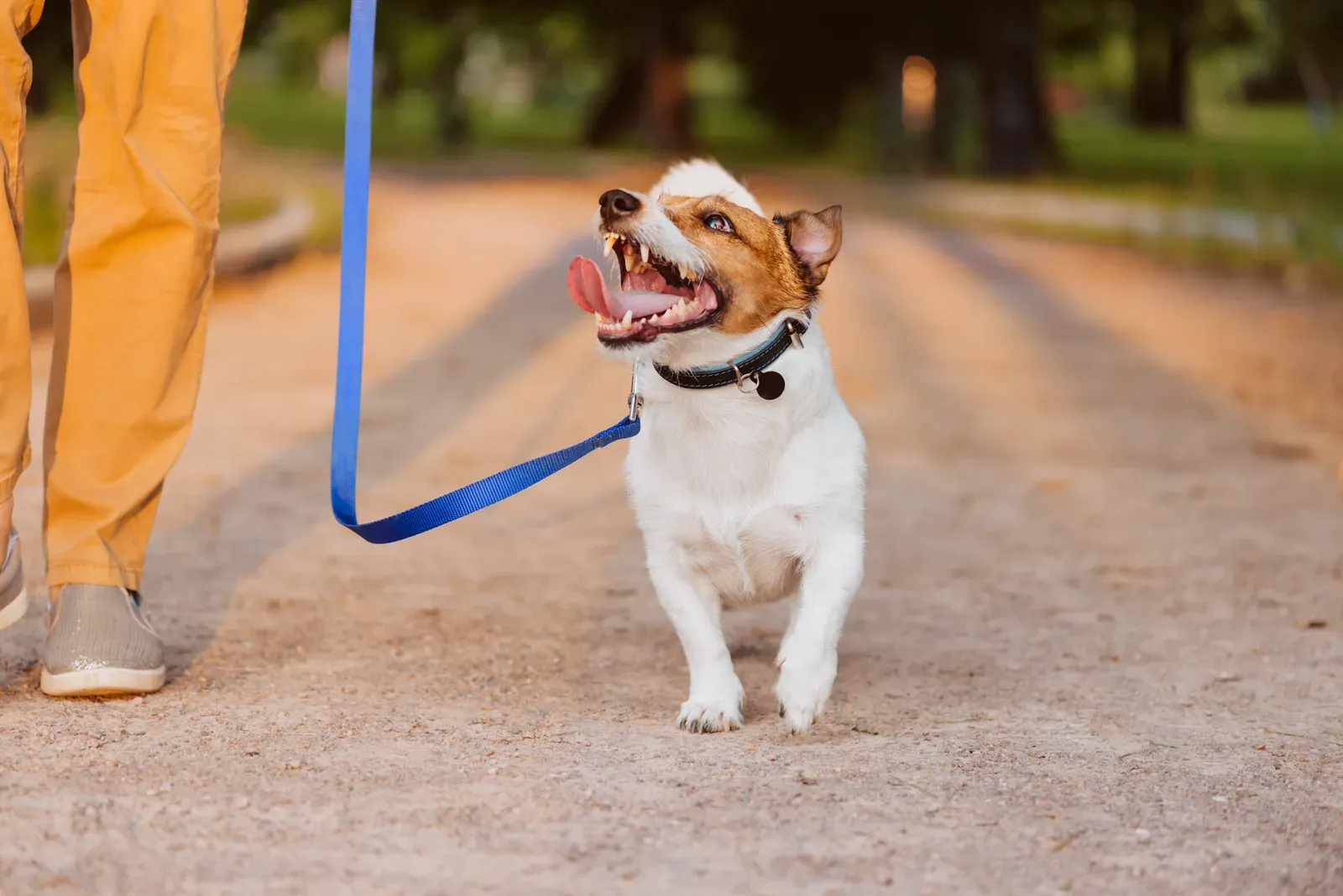
One-on-one coaching with you on the other end of the leash.
Includes a written weekly plan to work from
S · 5–6 week board & train
Behaviour Rehab
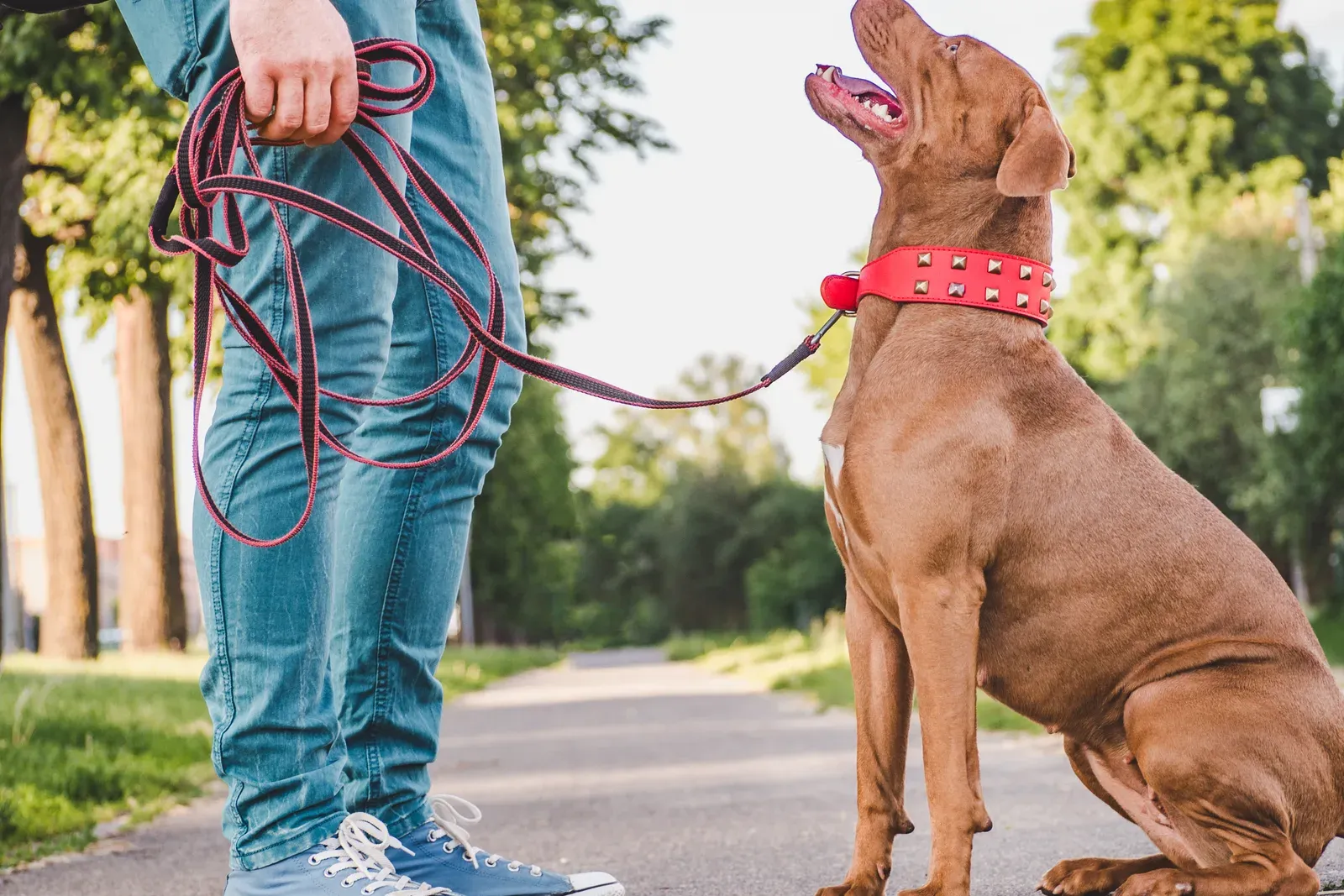
Kaitlin's specialty, and the work she loves most.
Includes assessment-built plan, 2 follow-ups, deep owner education
Asked and answered
The questions people ask us.
What does it mean if a dog is leash reactive?
It means the dog has a big emotional response to certain triggers only, or mostly, when it is on leash. The leash removes the dog's ability to move away or go say hello, and the feeling comes out as barking, lunging or freezing. It is a training and emotional problem, not a character flaw.
What are the signs of a leash-reactive dog?
Loud ones: barking, lunging, growling and spinning at the end of the leash. Quiet ones: a locked stare, closed mouth, raised hackles, stiff forward posture, or refusing to walk on. The quiet signs come first and are your chance to act.
Is leash reactivity the same as aggression?
No. A reactive dog is overwhelmed and trying to make the trigger go away or come closer; an aggressive dog intends to make contact and do harm. Some reactive dogs can escalate if they rehearse the behaviour for years, which is why it is worth addressing early.
What is the meaning of leash reactivity, and will a dog grow out of it?
Leash reactivity means an oversized reaction to a trigger while restrained on leash. Dogs do not tend to grow out of it, because every walk is a rehearsal and the habit deepens. They do grow out of it with structured work, which is where private sessions or a board and train come in.
Keep reading
Name it, then fix it.
Describe what your dog does on leash. We will tell you which kind of reactivity it is and what helps. Book a consultation.
From real owners
Rated 5.0 on Google.
Real Northline dogs