
Straight answer
What does obedience training do for a dog?
Obedience sounds like a word for show rings and stern voices. It is really a translation service. Before training, a dog and its owner are two species guessing at each other all day. After it, sit means sit, place means stay there until released, and come means now. The dog stops guessing, the household stops repeating itself, and everyone relaxes. That relaxation is the part most people miss.
Last reviewed August 26, 2026
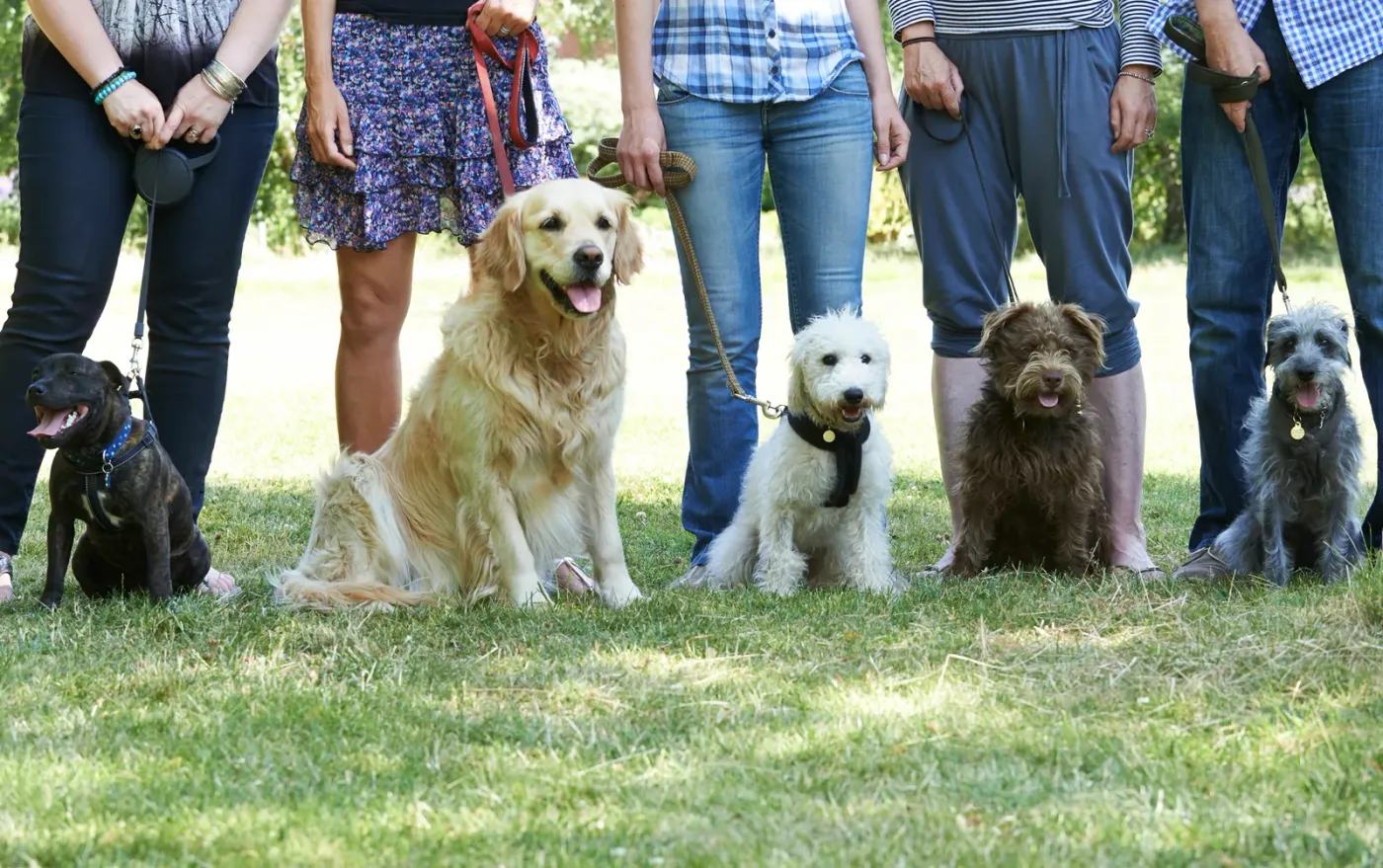
Language and freedom
A language, a job and a calmer nervous system, in everyday examples.
Start with language. A marker word that means 'yes, that, reward is coming' and a release word that means 'you are done' turn a dog from a mind reader into a colleague. Then a job. Place is a job: go to the mat, stay there, ignore the doorbell. Heel is a job: match this pace, watch this leg. Dogs that are bred to work, which is nearly all of them, get visibly steadier when they have one.
Predictability is the quiet benefit. Anxious dogs are often dogs that cannot tell what happens next. When crate time, meals, walks and a down-stay at dinner arrive in the same order every day, and the dog knows exactly what each cue asks for, the guessing stops and so does much of the pacing and whining. Freedom follows. A reliable recall is the price of an off-leash river walk. A solid place is the price of guests without a dog on their lap.
- Marker and release words
- Place, heel and recall as jobs
- Same routine, calmer dog
- Recall buys off-leash trails
Honest limits
What obedience does not fix, and when behaviour work has to come first.
Obedience does not cure fear. A dog that is terrified of strangers can learn a beautiful sit and still shake through it, and a sit that is only holding down panic will break the moment the stranger reaches out. It does not resolve aggression either. A dog that bites over its food bowl needs its relationship with the bowl, and with you, rebuilt, not a faster down. And it does not fix separation distress, which is about being alone, not about listening.
That is why the programs are split. On-Leash Foundations, two weeks at $1,865 plus GST, and Advanced Off-Leash, four weeks at $3,940 plus GST, are obedience programs: heel, stay, distance commands, public manners. Behaviour Rehab, five to six weeks at $4,850 to $5,760 plus GST, is built after a full assessment for anxiety, reactivity and aggression, and obedience is only one tool inside it. Not sure which side of the line your dog is on? Ask. Sometimes the honest answer is the cheaper one.

The programs
When teaching it yourself stalls.
The guide above is the real method. These are the faster routes.
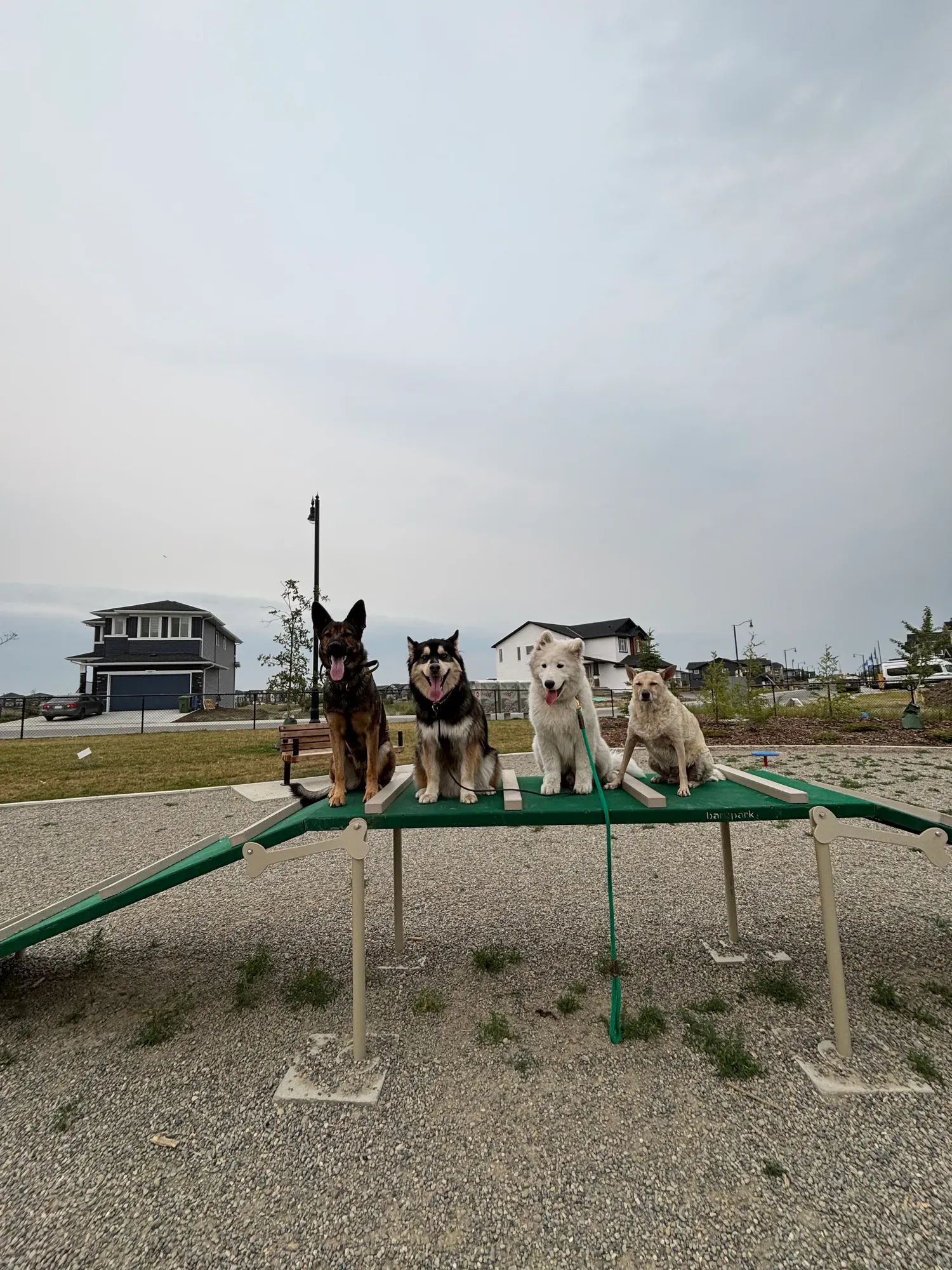
SW · Weekdays, drop-off 8–10 am · pick-up 5–7 pm
Day Training
Professional training all day, your couch at night.
Includes weekly one-hour go-home lesson, daily structure
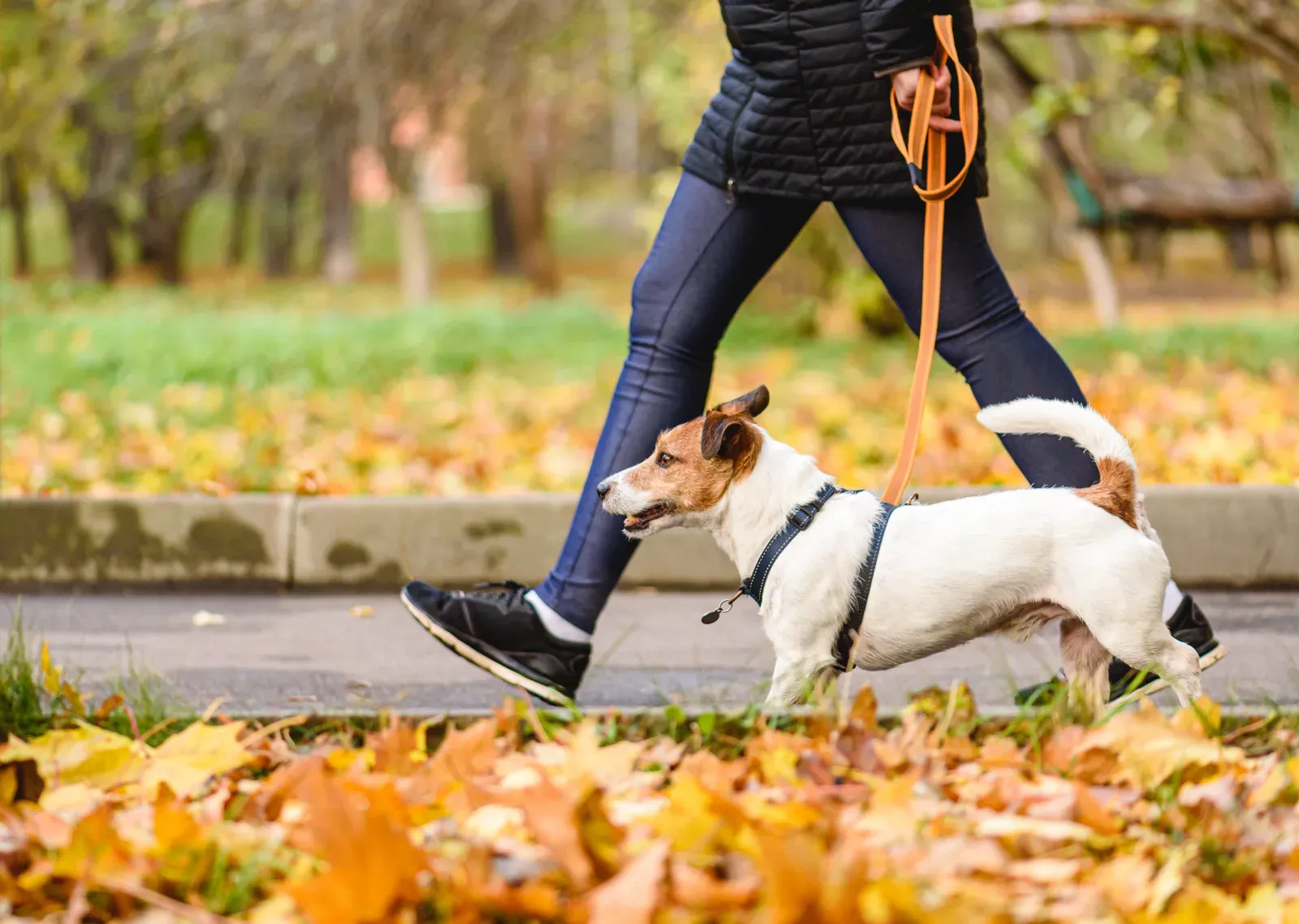
NE · 2-week board & train
On-Leash Foundations
If every walk is a wrestling match, pulling, barking, zig-zagging, this two-week program rebuilds the walk from the ground up with foundational on-leash obedience..
Includes handover lesson, follow-up session, lifetime support, slip lead + collar
Asked and answered
The questions people ask us.
What is obedience training for dogs?
It is teaching a dog a small set of cues, sit, down, stay, place, heel and come, until the dog performs them reliably around real distractions. Done well, it is less about commands and more about building a shared language and a routine. The cues are the vocabulary; the relationship is the grammar.
What are the benefits of dog obedience training?
A dog that understands what is being asked, a household that stops repeating itself, and a calmer dog because its day is predictable. The practical payoff is freedom: off-leash trails, patios, guests and car rides all become possible once recall, place and heel are reliable.
Does obedience training help with behaviour problems?
It helps with the manners problems: pulling, jumping, counter surfing, bolting through doors, ignoring recall. It does not by itself fix fear, aggression or separation distress, which need behaviour work first. Obedience then becomes one tool inside that bigger plan.
Does a dog need obedience training if it is already easy at home?
Home is the easiest place a dog will ever be. Obedience training matters most in the places where the dog is not easy: the vet lobby, a busy pathway, a friend's backyard with other dogs. Private Training at $150 per one-hour session with a written weekly plan is a light way to build that.
Keep reading
Teach the dog the language.
Tell us what your dog knows and where it falls apart. We will suggest obedience or behaviour work. Book a consultation.
From real owners
Rated 5.0 on Google.
Real Northline dogs