
Straight answer
How long does crate training take?
Crate training has a reputation for being either instant or impossible, and it is neither. The crate is a bed with a door, and the dog's opinion of that door is built one entry at a time. Get the first week right and the rest is mostly patience. Get the first week wrong and you will spend a month undoing it. Here is what a realistic timeline looks like.
Last reviewed August 26, 2026
Week by week
Acceptance in days, real calm in weeks.
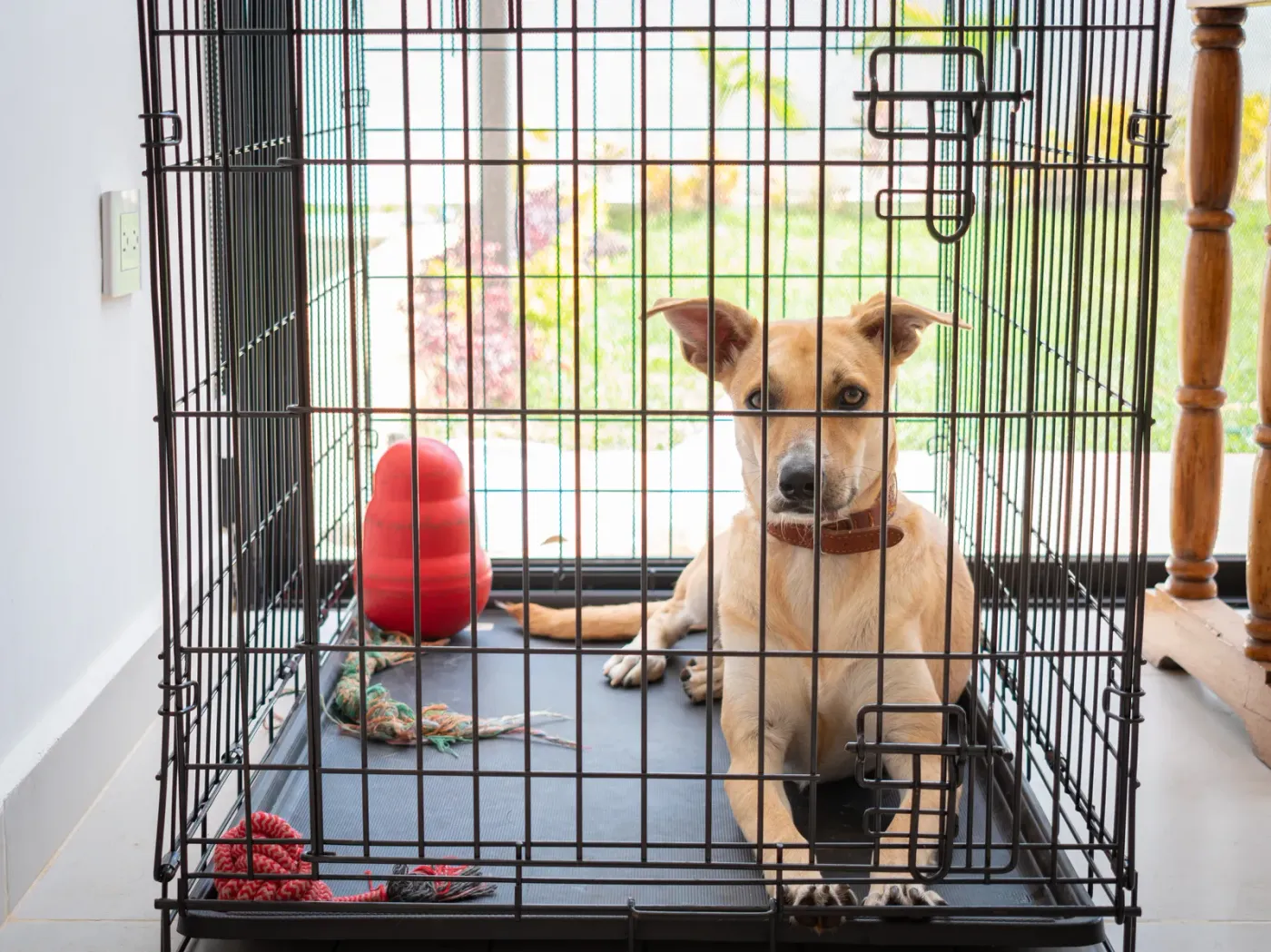
Days one to three are about the door staying open. Meals go in the crate, a stuffed chew goes in the crate, and the puppy wanders in and out while you ignore it. The door closes for seconds, then minutes, always opening before the whining starts. By night three, a puppy who is tired and has just emptied out will usually sleep in a crate beside your bed, with a trip outside when they stir at two or three in the morning.
Weeks two and three build duration. Daytime crating stretches from twenty minutes to a couple of hours, always after exercise and a bathroom trip, and the crate moves to its permanent spot if the bedroom was only for the first nights. Night waking fades as the bladder grows. A dog who has been crated as punishment, or left in one for entire days, starts from below zero, and that rebuild can take a couple of months of short, boring, pleasant sessions.
- Feed every meal in the crate
- Door closed only after exercise
- Open before the whining starts
- Bedroom crate for early nights
What slows it
Rescuing at the first whimper resets the clock.
A puppy whines, you open the door, and the puppy has just learned the exact sound that opens doors. Do that for a week and you have a dog who escalates to screaming, because quiet never worked. The honest move is to tell the difference between a complaint and real distress. A complaint tapers off within a few minutes when ignored. Distress climbs, comes with drooling or frantic digging, and means the step was too big, not that the dog needs rescuing.
Adult dogs follow the same steps at a different speed. A calm adult with no crate history can be sleeping in one within a week, since the bladder and the self-control are already there. An adult with a bad history needs the crate taken apart, literally: start with the tray and no walls, add the top, add the door last, and feed every meal there until the dog chooses it on their own. Puppy Fundamentals covers crate comfort, nights included, over its three weeks.

The programs
The puppy-window programs.
The early weeks only happen once. These are the ways we help you spend them well.

W · One-hour session
Private Training
One-on-one coaching with you on the other end of the leash.
Includes a written weekly plan to work from

N · 3-week board & train
Puppy Fundamentals
Your puppy's first months decide the habits of a lifetime.
Includes handover lesson, follow-up session, slip lead + collar
Asked and answered
The questions people ask us.
How long does it take to crate train a puppy?
Acceptance takes a few days when meals and chews happen inside and the door closes only briefly at first. Quiet nights with one potty trip usually arrive within two to three weeks. A full quiet workday in the crate is a later milestone and depends on age and bladder.
How long does crate training last?
The active teaching phase lasts a few weeks. After that the crate simply stays part of the routine: naps, car trips, nights when guests are over, and the occasional vet recovery. Dogs who keep using it stay comfortable with it.
What is a realistic crate training timeline for a rescue dog?
Slower than a puppy if the crate meant punishment before. Rebuild it in pieces, feed meals inside with the door open, and expect a couple of months before you trust a closed door for hours. Some adults surprise you and settle in a week.
Can a trainer speed up crate training?
Yes, mostly by keeping the steps small and never rescuing at the wrong moment. Puppy Fundamentals is a three-week board and train at $2,775 plus GST that covers crate comfort including nights, and the handover lesson shows you how to keep it going at home.
Keep reading
Quiet crate, quiet nights
Bring the crate history and the current bedtime routine. We will lay out the next three weeks step by step. Book a consultation.
From real owners
Rated 5.0 on Google.
Real Northline dogs